Grocery APIs aren’t just “data pipes”, they’re operational infrastructure that keeps inventory, prices, orders, loyalty, and delivery promises consistent across systems. The right API layer reduces manual fixes, prevents checkout mismatches, and lowers substitution rates by syncing real-time stock. This guide breaks down the core API types grocers rely on and what to look for when evaluating integrations.
Most grocery retailers turn to technology when margins start feeling tight. But they often approach APIs as abstract “data pipes” rather than operational tools. In practice, a grocery API delivers value only when it reduces labor waste, prevents bad data from spreading across systems, and helps stores maintain control over inventory, pricing, and delivery promises.
An API that doesn’t reduce substitutions, tighten stock accuracy, or support delivery planning is just another tool to manage. It shouldn’t work that way.
This guide explains how grocery APIs work within a store or a multi-location operation and what matters when choosing them.
Most retailers think of APIs as abstract data pipes. In practice, they're operational tools—valuable only when they stop staff from fixing avoidable mistakes across inventory, pricing, and delivery systems.
The six API types that run a grocery operation:
- Catalog & product data — keeps SKUs, weights, and prices consistent everywhere
- Inventory & stock — syncs real counts to prevent overselling and substitutions
- Order management — moves orders from placement to fulfillment without manual handoffs
- Delivery — ties slots and zones to actual capacity so promises hold
- Loyalty & pricing — applies promos and rewards correctly across channels
- POS/ERP integration — eliminates double-entry and keeps core systems aligned
The payoff isn't the API itself—it's removing the small daily problems that slow staff down: price mismatches at checkout, loyalty disputes, refunds from stock errors, and deliveries that can't be fulfilled.
Bottom line: A well-integrated API layer shifts labor from fixing mistakes to fulfilling orders accurately.
What is a grocery store API?
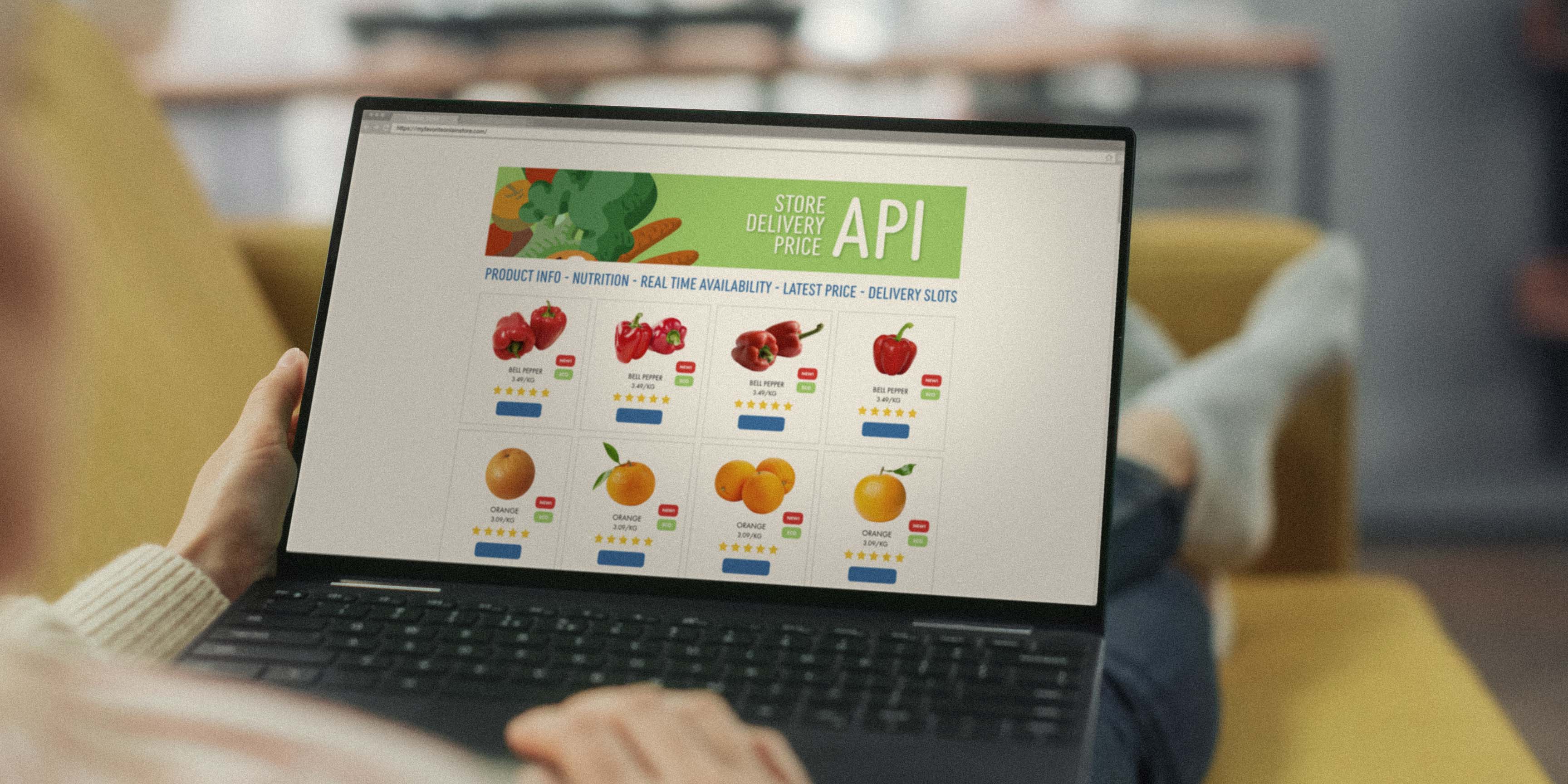
A grocery store API is a structured way for different software systems to exchange information.
Instead of staff updating data in multiple places, an API sends and receives requests automatically: prices, stock levels, delivery windows, product attributes, and store details.
In a grocery environment, the value is straightforward:
✅ fewer manual updates,
✅ less inconsistency,
✅ fewer errors.
In short, a grocery API keeps store data synchronized so staff aren’t correcting avoidable mistakes later in the workflow.
A robust grocery API typically provides:
- Real-time product availability,
- Up-to-date pricing (including regional variations),
- Store hours and service details,
- Delivery slot availability and window logic,
- Order and substitution rules,
- Discount coupons and customer rewards handling.
What happens when APIs fail or aren't in place
Before diving into API types, it's worth understanding what grocers deal with when systems don't talk to each other, or when they fail silently.
Price mismatches at checkout: A customer orders online at the advertised price, but the POS has a different price. Staff either override manually (slowing the line and frustrating customers) or process refunds later.
One mid-sized grocer reported their team was correcting 40-60 price discrepancies per week before implementing a unified pricing API, each one a 3-5 minute interruption.
Overselling and substitutions: Without real-time inventory sync, online orders get placed for items that are already out of stock.
The result: pickers substitute, customers complain, and refund rates climb. Industry data suggests grocers without live inventory integration see substitution rates 2-3x higher than those with real-time stock feeds.
Delivery promises that can't be kept: When delivery slots aren't tied to actual picking and driver capacity, stores overcommit. Customers select a 2-hour window that looked available online, but the store can't fulfill it. Late deliveries erode trust faster than almost any other failure.
Loyalty and promo disputes: A customer expects double points from a promotion. The website showed it, but the POS didn't apply it. Now a staff member is manually crediting points while the line backs up. Multiply this by dozens of customers per week, and it becomes a real labor drain.
Double-entry and reconciliation work: Without POS/ERP integration, staff enter sales data twice, once in the ecommerce system, once in the back office. End-of-day reconciliation becomes a 30-60 minute task instead of a 5-minute check.
These aren't hypotheticals. They're the daily reality for grocers running disconnected systems. The right APIs eliminate them.
What to expect from a grocery price API
A grocery price API is one of the most sensitive integrations in online grocery. It reduces rework and prevents price mismatches across systems.
Here are the expectations that matter in day-to-day operations.
Store-specific pricing accuracy: You should expect your API to pull prices exactly as they show in each store, including regional differences, weighted-item rules, and complex grocery promotions. If prices don’t reflect the store’s reality, staff will be fixing receipts manually later.
Historical price visibility: Useful for forecasting demand, planning promotions, and spotting price drift. Without history, grocers lose context for why margin changes over time.
High data reliability & no silent failures: A grocery price API must fail visibly, not quietly. Silent mismatches create refund-heavy orders and customer disputes that staff catch too late.
Integration with inventory and POS: Price data should tie back to inventory counts and the core POS system. When these systems drift apart, substitutions and incorrect totals multiply.
Types of APIs used in grocery operations
1. Catalog & product data APIs
APIs that update and align your product catalog everywhere it’s used. These endpoints let you:
- Retrieve and update product lists (SKUs, descriptions, weights, prices, category data).
- Reflect weighted item pricing and fresh goods attributes.
- Sync product metadata with ERPs, POS systems, and storefronts.
Objective: To keep product listings accurate and consistent across web, mobile, and store systems.
The impact: Synchronized catalogs eliminate the manual cleanup that bogs down merchandising teams when SKU data drifts between systems. A common issue when product updates are entered separately into POS, ERP, and ecommerce platforms.
2. Inventory & stock level endpoints
These APIs connect your online store with inventory counts in real time. They support:
- Pulling stock levels from POS/ERP: Retrieves real grocery inventory directly from your POS/ERP, so online stock always reflects reality.
- Returning availability for web and mobile ordering: Reflects real stock levels online so customers build baskets that the store can actually fulfill.
- Two-way updates when orders are picked or canceled: Adjusts inventory automatically as items are picked or canceled, preventing stock drift and errors.
Objective: To avoid overselling and substitutions by keeping live stock status synchronized.
The impact: According to Columbus Consulting, 56% of perpetual inventory records in grocery stores are inaccurate. Grocers that expose real-time inventory data to their ecommerce platform can mitigate up to 95% of item exceptions for same-day orders, according to Upshop research published in Progressive Grocer—translating to roughly $73,500 in recovered revenue and labor savings per store annually.
3. Order management & fulfillment APIs
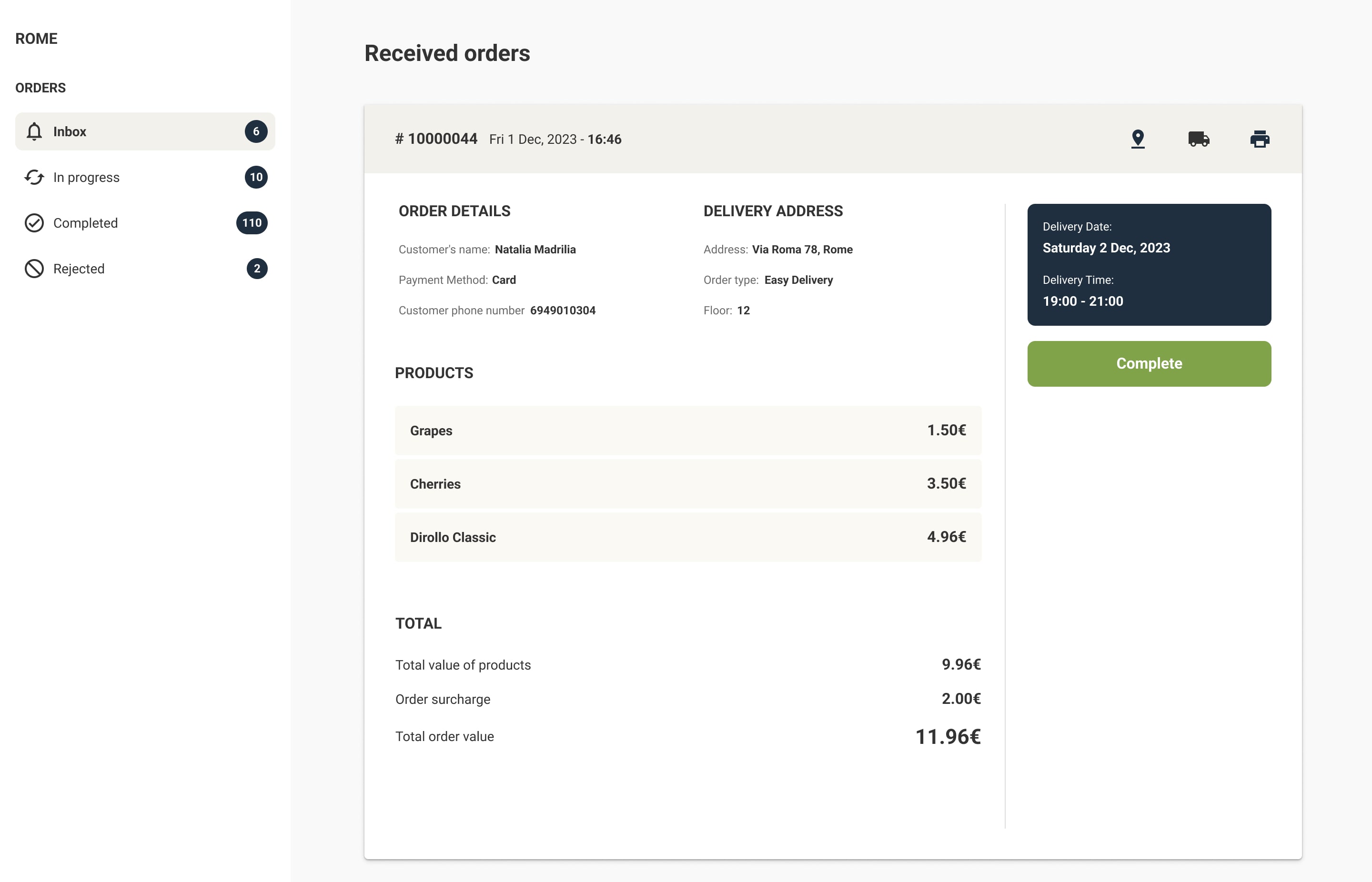
This group handles the lifecycle of an order from placement to completion. It typically includes:
- Creating, updating, and cancelling orders.
- Tracking order fulfillment status (picked, packed, delivered).
- Pushing order events downstream to logistics or delivery partners.
Objective: To keep order workflows moving without requiring manual intervention.
The impact: According to Deloitte, companies with intelligent order automation in place see a 32% average drop in fulfillment costs. Retailers using automated order management also report a 29% improvement in on-time delivery and pick-to-ship cycle time, freeing staff to focus on picking and customer service instead of manual data entry.
4. Delivery delivery APIs
Delivery operations work best when the delivery app and partner networks exchange data cleanly. APIs in this category include:
- Delivery window and zone configuration: Sets the delivery limits your team can realistically handle, ensuring customers only select slots the store can fulfill without overloading pickers or drivers.
- Dispatching orders to drivers or delivery systems: Routes orders to the right driver or partner based on distance, workload, and timing, so deliveries stay predictable and operational pressure stays manageable.
- Real-time tracking and status updates: Shows accurate delivery progress as it happens, reducing customer calls and helping staff spot delays before they turn into service issues.
Objective: To let stores set delivery rules and slot availability based on real capacity and adjust quickly when drivers or stock run tight.
The impact: Retailers that adopted flexible, capacity-linked delivery windows reported an 18% improvement in on-time deliveries, especially during peak demand. The same research found that grocers who improved their order management systems saw a 35% reduction in delivery delays.
5. Loyalty, promotions & pricing APIs
Loyalty, promotions, and pricing APIs enable:
- Promotion rules and discounts: Makes the actual mechanics of promotions visible to every system, so staff aren’t correcting misapplied deals after orders are placed.
- Loyalty balances and rewards: Keeps loyalty points, earned rewards, and customer tiers aligned across in-store and online activity, preventing mismatches that lead to customer complaints and manual adjustments.
- Consistent pricing across channels: Ensures the same base price, promo price, and loyalty price appear everywhere (POS, web, mobile), so shoppers see accurate totals, and staff avoid refunding differences at pickup.
Objective: To keep loyalty rewards and promotions working the same across web, mobile, and POS, rather than handled separately.
The impact: Research from Miquido found that 19% of loyalty program users identify manual coupon activation as a major friction point. Unified promotion logic that automatically applies discounts at checkout eliminates these disputes and the labor spent issuing manual corrections.
6. POS & ERP integration APIs
ERP and POS REST APIs typically support:
- Syncing sales and inventory back to core business systems: API sends online sales and updated stock levels directly into the store’s main systems, so inventory and reporting stay accurate without extra reconciliation work.
- Publishing product and price updates from ERP to e-commerce channel: Pushes item changes, new prices, and promotions from the ERP into the online store, preventing mismatched catalogs and manual updates.
- Two-way data exchange so workflows stay aligned: Keeps information moving so all systems reflect the same reality and staff don’t work around conflicting data.
Objective: To prevent data silos and redundant updates across retail systems.
The impact: According to industry analysis, automating reconciliation through ERP integration can cut processing time by up to 70% and reduce reconciliation errors by up to 50%. For grocery retailers, this often means eliminating daily manual reconciliation work that previously consumed 30–60 minutes per store.
Product & API types table
| Product or function | Supporting API type |
|---|---|
| Grocery Storefront (web & mobile) | Catalog & Product Data, Inventory |
| Picker App | Inventory, Order Management |
| Delivery App | Delivery & Timeslot APIs |
| Loyalty Program | Loyalty & Pricing APIs |
| Admin Panel / Management System | POS/ERP Integrations, Order APIs |
| Phone Ordering | Order & Customer Data APIs |
| Integrations with external systems (POS/ERP/CRM) | POS/ERP Integration APIs |
What retailers can actually do with these APIs
APIs only matter when they improve daily work inside the store. A grocery price API, for example, helps keep online prices aligned with what the POS shows. When prices match across systems, staff spend less time issuing refunds or adjusting baskets at pickup, and customers aren’t surprised by totals that change at checkout.
A supermarket API can also support competitive benchmarking. Retailers don’t use it to undercut every item; they use it to spot categories where their pricing has drifted away from the market and is starting to affect sales volume or customer perception.
Inventory-related APIs have a direct impact on waste and labor. By linking actual stock levels with demand patterns, stores can avoid over-ordering perishables ****and reduce the number of items thrown out at the end of the week. This matters more than any “forecasting feature”, because it protects margin and reduces workload for staff handling shrinkage.
Lastly, promotion and loyalty APIs reduce the problems that usually show up late in the process – during picking or at checkout. When promotion rules are accurate, staff don’t spend time fixing discounts by hand. Matching loyalty balances across systems prevents customers from questioning their points. So, the real benefit isn’t the API itself; it’s the removal of small daily issues that slow down staff and create avoidable complaints.
How to evaluate grocery API vendors
Not all grocery API integrations are equal. The right API setup should help retailers reduce manual work, protect margins, and keep ecommerce, fulfillment, delivery, and store systems aligned.
Before choosing a grocery ecommerce platform or API vendor, retailers should ask:
1. Does it integrate with our POS and ERP systems?
A grocery platform should connect with the systems the retailer already uses. If POS, ERP, ecommerce, and inventory tools do not sync properly, staff may still need to update products, prices, and orders manually.
2. Does it support real-time stock availability?
Online grocery customers expect products shown online to be available in-store. Real-time stock visibility helps reduce overselling, refunds, and unnecessary substitutions.
3. Can it connect storefront, fulfillment, and delivery workflows?
APIs should not only move product data. They should help orders move from checkout to picking, packing, pickup, or delivery without disconnected manual steps.
4. Can delivery slots reflect real operational capacity?
Delivery and pickup promises should be based on actual store capacity, picking workload, driver availability, and delivery zones. Otherwise, retailers risk late orders and poor customer experience.
5. How does the system handle failures?
Retailers should know what happens when data does not sync correctly. A strong platform should make errors visible, provide logs, and help teams fix issues quickly.
6. Will this reduce manual work?
The best API setup is not just technically flexible. It should reduce double entry, prevent pricing mismatches, keep inventory aligned, and make daily operations easier for store teams.
The main question is simple: will this integration make grocery operations more accurate and efficient, or will staff still need to work around disconnected systems?
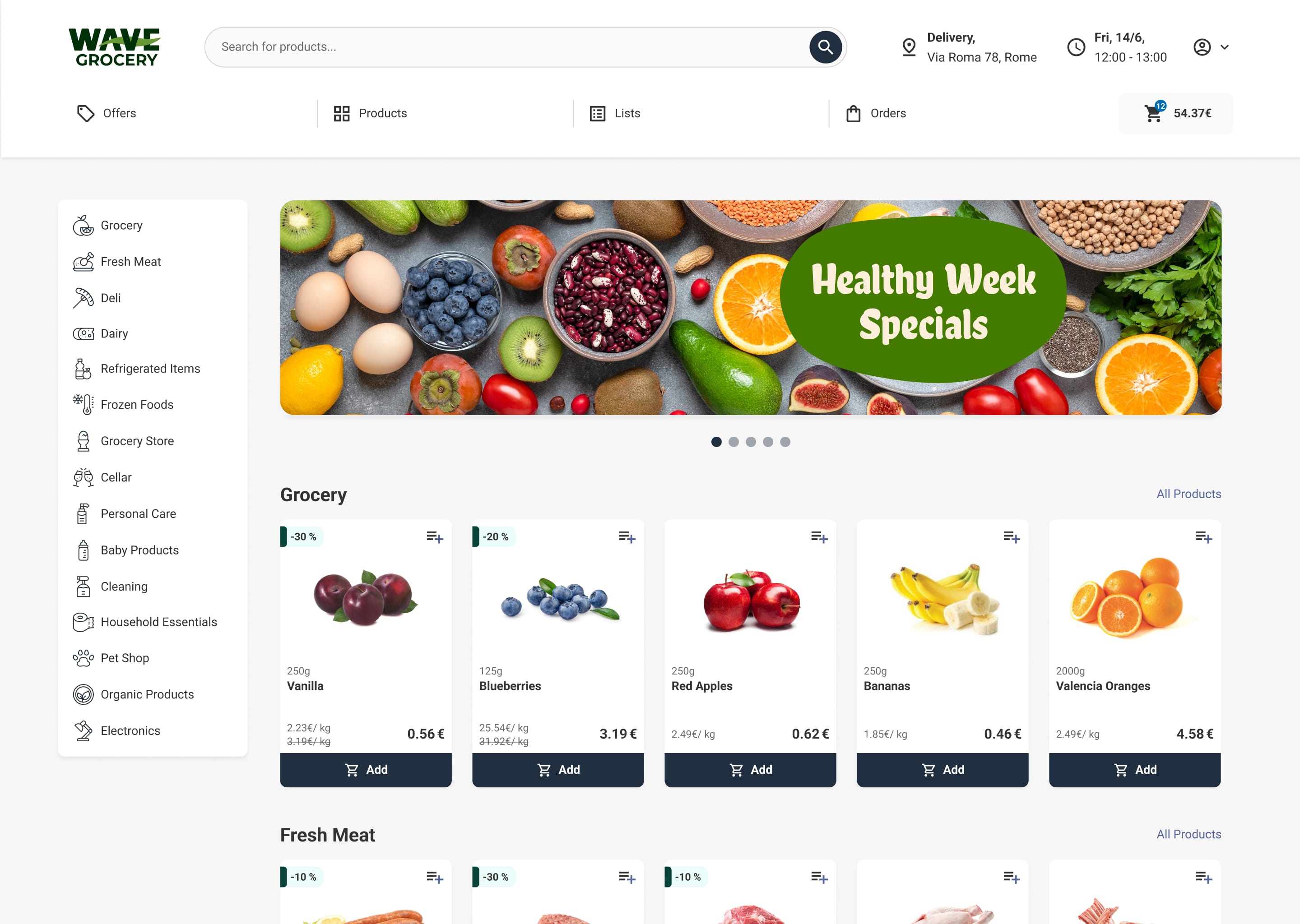
Grocery APIs by Wave Grocery
Structured retailers use APIs to centralize operational logic so staff don't have to work around system inconsistencies.
Organized operators typically:
- Maintain a single source of truth for product, inventory, and price data.
- Link delivery slots to real picking capacity.
- Automate catalog updates.
- Use real-time stock feeds to reduce substitutions.
- Validate pricing changes before publishing.
- Route orders based on store workload.
This shifts labor away from fixing mistakes and toward fulfilling orders accurately.
Wave Grocery keeps picking, delivery, pricing, and inventory rules aligned across channels, without staff performing double-entry work.
Book a short demo with our customer success manager to identify where tighter data flows can cut labor and errors.
%2520copy.jpeg)
Tasos Koskolos is Head of Product, applying an engineering mindset to e-grocery tools that boost throughput, accuracy, and customer loyalty.

Our editorial team works hand-in-hand with grocery experts and digital specialists to deliver actionable content designed to help your business thrive online. Each article is built on real industry insights and practical guidance for grocers, providing actual solutions to real problems.