Inventory control is a critical aspect of supply chain management. It helps ensure that your store always has products in stock to meet demand, which in turn helps minimize costs and ensure customer satisfaction.
But what is inventory control? It manages a company's stock to ensure the correct quantity is available at the right time while reducing costs from excess inventory or shortages.
Despite its importance, many retailers struggle to understand their inventory. In fact, over 50% of global retailers had an inventory accuracy rate lower than 80%. This alarming statistic gets worse in countries like the United States and Australia.
Embracing modern stock control practices can be a game-changer in this challenging landscape. Armed with the right strategies, data, and systems, these practices can significantly optimize inventory, offering a bright future for inventory management.
In this article, we'll break down inventory control's meaning and outline best practices for implementation. It's a lot to cover, so let's dive in.
What is inventory control?
Retailers, grocery stores, and supermarkets have thousands of items in stock at any given point. These goods could be spread across multiple storefronts, stock rooms, and warehouses. Inventory control refers to the practice of managing all these goods.
The process begins when an item comes into stock. The levels of each item are tracked, monitored, and accounted for until they reach the customer. This data helps optimize space, prevent overselling and stockouts, and reduce losses when used correctly.
Controlling inventory involves a combination of processes and technology. For example, it could require establishing Standard Operating Procedures for your staff or using barcode scanners or RFID tags to track the movement of goods.
Retailers control inventory differently, depending on the size of their operations. Some prefer to take stock manually with pen and paper, while others use spreadsheets to capture data electronically. Another choice is to rely on inventory software to receive automatic stock updates.
Inventory control vs Inventory management
Although similar, these are two distinct concepts.
Inventory control is indeed a subsect of inventory management. However, while the latter takes an all-encompassing approach, inventory control is more limited in scope. It refers to only managing inventory that is already in stock.
Inventory management could include processes like ordering, replenishment, and forecasting. It deals with raw materials and finished goods through a product’s lifecycle.
On the other hand, inventory control focuses on items in stock and where they’re kept. It helps assess their condition and organize them to improve operational efficiency.
Despite their differences, however, inventory control enhances inventory management.
What is the purpose of inventory control?
Understanding the importance of inventory control is crucial. It's not just about maximizing cash flow or reducing excess stock. It's about ensuring your business's survival in a competitive market.
One primary goal of inventory control is to maximize cash flow by reducing excess stock. This is a huge problem, especially for perishable goods. One report suggests a staggering $163 billion worth of inventory is wasted globally annually.
Moreover, warehouse rental prices have been on a meteoric rise since the pandemic. Being in control helps bring down these costs and optimize space usage.
Beyond that, inventory control systems can help:
- Improve inventory accuracy: As mentioned, many retailers notice discrepancies between their records and physical inventory. RFID tags and barcode scanners offer real-time updates to improve this accuracy.
- Maintain quality: The inventory control process helps you identify and account for damage-prone products. It also lets you track the quality of goods you receive from a supplier.
- Fulfill orders: Enhanced visibility allows you to prevent understocking and meet customer demand, improving sales and optimizing buffer stock levels.
- Accounting: Maintaining accounts of your inventory helps streamline financial and tax obligations.
How to control inventory
Businesses use different approaches to control their inventory, depending on their size, budget, and operational complexity. Here are the most common inventory control methods—from simple to sophisticated:
Manual inventory counting
The most basic inventory control method is a physical count. Staff members walk through the warehouse or store and manually tally each item. While straightforward, manual counts are time-consuming, prone to human error, and impractical for large operations. They work best for small businesses with a limited number of SKUs.
Stock cards (bin cards)
A stock card is a physical record kept alongside each product in the warehouse. It logs every movement—receipts, issues, returns, and current balance. Stock cards provide item-level visibility without technology but require disciplined updates by warehouse staff. They're a step up from pure pen-and-paper counting and are still used in smaller retail and grocery operations.
Spreadsheets
Many growing businesses transition to spreadsheets (e.g., Excel or Google Sheets) to track inventory electronically. Spreadsheets allow you to record quantities, costs, supplier details, and reorder points in one place. However, they depend on manual data entry, are difficult to scale, and don't offer real-time updates—making them best suited for small-to-medium operations.
Inventory control systems and software
For businesses that need accuracy, speed, and scalability, dedicated inventory control software is the gold standard. An inventory control system integrates with point-of-sale terminals, barcode scanners, and warehouse management tools to provide real-time stock visibility across multiple locations.
Key benefits include:
- Real-time tracking of stock levels, movements, and orders
- Automated alerts for low stock, expiring products, or reorder points
- Multi-location management for businesses with several stores or warehouses
- Data-driven insights through reporting dashboards and demand analytics
Modern inventory control systems range from standalone software to fully integrated platforms. For grocery retailers, solutions like Wave Grocery offer purpose-built tools—including analytics dashboards and automated stock alerts—that make controlling large, perishable inventories significantly easier.
Common inventory control methods & techniques
You could implement several stock control systems to see the benefits mentioned above. There are dozens of other inventory control solutions. Each has pros and cons, depending on the size or nature of your operations. However, certain practices are consistent across grocery stores. For instance, manual inventory counts or frequent cycle counts are beneficial.
Let’s go through some advanced techniques:
- Just-in-time: Involves buying stock only as and when it’s needed. It keeps goods fresh, reduces storage time, and minimizes excess stock.
- Vendor-managed inventory (VMI): With a VMI approach, the supplier is responsible for monitoring and replenishing inventory. This helps because suppliers may have more insight into demand and lead times.
- First-in, first-out (FIFO): This technique prioritizes the sale of older stocks before new ones. Conversely, a last-in, first-out approach prioritizes sending fresh goods to shelves first.
- ABC analysis: Involves categorizing items based on their value or demand. Items are classified as “A,” “B,” or “C” based on priority, and inventory controls are scheduled appropriately.
No matter what technique you choose to implement, Wave Grocery can efficiently support the central stock control systems with an analytic dashboard that allows grocery managers to make data-driven decisions about restocking, shelf life management, and demand forecasting.
Best practices for efficient stock control
Once a stock control system is in place, these practices can help improve its efficacy:
- Real-time inventory tracking: Accurate information from various sources is essential when dealing with multiple sales channels. Real-time tracking achieves this while reducing costs and waste.
- Smart labeling: Properly labeled bins and products are easier to control. When coupled with RFID tags or barcode scanners, visibility improves significantly.
- Reorder points: When the stock of a particular item reaches a certain level, you can trigger automated reordering. The threshold can be determined based on ABC analysis or economic order quantity.
- Manage supplier relationships: You can return unsold products and restock faster by forging better supplier partnerships. Increased collaboration also improves demand forecasting efforts.
- Organize warehouse: Goods in a warehouse can be stocked by demand, value, or on a FIFO basis. This improves employee productivity. Coupled with a warehouse management solution, a fresh layout gives you much more control.
- Collect and analyze data: You can make smarter decisions using the latest inventory records and sales data.
Inventory control procedures
While methods and techniques define what system you use, inventory control procedures are the step-by-step operational processes that keep your stock accurate and organized day to day. Establishing clear procedures ensures consistency, reduces errors, and makes it easier to scale your operations.
Here are essential inventory control procedures every business should implement:
1. Organize your warehouse layout
A well-organized warehouse is the foundation of effective inventory control. Assign logical locations for every product category, ensure clear aisle labeling, and place high-demand items in easily accessible areas. A smart warehouse layout reduces picking time and minimizes errors.
2. Verify stock upon delivery
Every incoming shipment should be checked against the purchase order. Verify quantities, inspect product quality, and flag discrepancies immediately. Refusing damaged or incorrect items at the point of delivery prevents inventory records from drifting out of sync.
3. Label and categorize all products
Every item should carry a clear label—product name, SKU, quantity, and expiration date (if applicable). Consistent labeling, combined with barcode or RFID systems, speeds up identification, reduces picking errors, and supports accurate stock counts.
4. Set a cycle count schedule
Rather than relying solely on annual full-inventory counts, establish a regular cycle count schedule. Count a subset of products on a rotating basis—daily, weekly, or monthly—so that every item is verified over time without disrupting operations.
5. Monitor expiration dates and shelf life
For perishable goods—especially in grocery—tracking expiration dates is critical. Implement FIFO (first-in, first-out) procedures and set up alerts for items approaching their sell-by date. Timely markdowns or promotions can help move near-expiry stock before it becomes waste.
6. Forecast demand and optimize stock levels
Use historical sales data, seasonal trends, and market signals to forecast demand accurately. Maintaining optimal stock levels—not too much, not too little—reduces carrying costs and minimizes the risk of both stockouts and excess inventory.
7. Assign clear inventory responsibilities
Designate specific team members to manage different aspects of inventory control. When individuals own a defined part of the process—receiving, counting, or reporting—accountability improves, errors decrease, and procedures are followed more consistently.
8. Automate reorder triggers
Set predefined reorder points for every SKU. When stock falls below the threshold, an automated alert or purchase order is triggered. This removes guesswork from replenishment and ensures you never run out of critical items.
9. Back up your inventory data
Regularly back up all inventory records—whether stored in spreadsheets or an inventory control system. Data loss from hardware failure, software errors, or cyberattacks can disrupt operations and damage customer trust. Automated cloud backups provide the safest protection.
10. Review and refine procedures regularly
Inventory control is not a set-it-and-forget-it process. Schedule periodic reviews to evaluate whether your procedures are working, identify bottlenecks, and adopt new tools or practices as your business grows.
What problems could stock control mismanagement cause in e-commerce stores?
Poor stock control often leads to various issues, potentially leading to cart abandonment and customer dissatisfaction. This underscores the need for effective inventory management strategies.
Poor stock control often leads to a range of issues potentially leading to cart abandonment, such as:
- Stockouts: A common problem is placing an order, paying for a product, and later realizing that the product is out of stock. This could lead to lost sales and decreased customer satisfaction. The same experience in-store is less dissatisfactory since consumers who can’t find the product they are searching for are likely to buy something else on the spot. This is where Wave Grocery steps in with the picker app’s smart product replacement suggestions, enhancing consumer experience.
- Overstocking: Conversely, if a company holds excess inventory that it can’t sell, this can lead to cash flow issues, storage costs, and even the need for discounts or write-offs.
- Inefficient fulfillment: Orders may be processed with incorrect or unavailable products, leading to delays, returns, and poor customer experiences. Intelligent order monitoring is an efficient way to prevent this. Wave Grocery integrates with OMS systems, enabling multiple store setups, multiple inventories, and local product collections. It also allows each store to set unique timeslots, including scheduling and capacity, and cover specific geographical areas with order fees.
MFCs (Micro Fulfillment Centers) & stock control
Micro fulfillment centers (MFCs) are small, local fulfillment hubs designed to streamline stock control and improve delivery efficiency. Here's how they help:
- Proximity to Customers: MFCs are closer to urban centers or key customer demographics. This reduces shipping times and costs and makes the stock more readily available to customers. A shorter distance from the warehouse to the customer leads to quicker order fulfillment and better stock availability.
- Real-Time Inventory Management: MFCs are often integrated with advanced inventory management systems, allowing real-time stock tracking. This ensures the accuracy of stock levels, helps prevent stockouts and overstocking, and enables quicker adjustments to inventory levels based on demand fluctuations.
- Faster Replenishment: Businesses can replenish stock faster with multiple micro fulfillment centers. This system allows for more frequent, smaller restocks, reducing the risk of overstocking or understocking in large, centralized warehouses. Stock can also be distributed dynamically based on real-time demand.
- Improved Forecasting: By analyzing local demand trends, MFCs can help improve inventory forecasting, allowing businesses to predict and manage stock more accurately. This can mitigate issues like overstocking and stockouts by aligning inventory with customer preferences in specific regions.
- Faster Order Fulfillment: Since MFCs are designed to fulfill smaller, localized orders quickly, the speed of delivery is significantly improved. This can reduce the delivery window from days to hours, helping ecommerce businesses meet customer expectations for fast shipping, which can be a competitive advantage.
- Cost Efficiency: By decentralizing fulfillment, micro fulfillment centers reduce the need for large, centralized warehouses, which cuts overhead costs. Additionally, shipping costs are reduced as products are stored closer to the customer. The result is a more cost-effective and agile supply chain.
Overall, MFCs enhance the customer experience. Faster shipping, accurate inventory management, and localized fulfillment directly contribute to this.
At Wave Grocery, we encourage our partners to leverage the benefits offered by MFCs, which can help you start a grocery store online at an advantage, using existing physical stores.
A good example of a success story is the Kritikos supermarket chain in Greece, whose online shop and mobile app we built.
Enhance inventory control with Wave Grocery’s features
In the face of various inventory management challenges, grocery store owners feel helpless. And to be fair — there’s an incredible number of moving parts to keep track of.
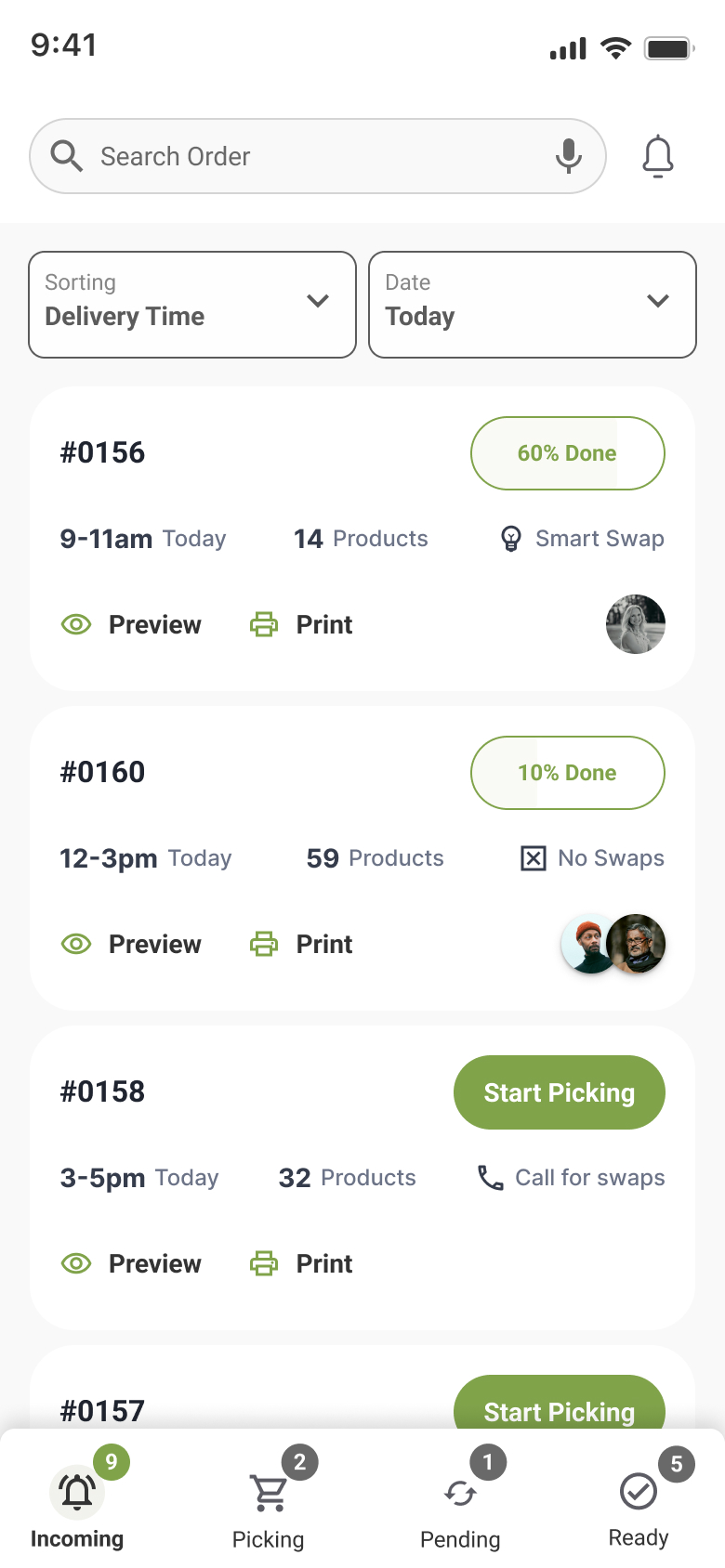
In e-commerce, poor stock control can be even more frustrating for customers: you place an order, pay, and never receive the product, leaving you with no control over the situation. Wave Grocery’s picker app addresses this by notifying customers about replacement options and offering smart replacement choices when a product is out of stock, either by automatically replacing it with the most similar product or by contacting the customer in order.
Contact our expert team and learn how Wave Grocery can help you take control of your inventory.
FAQs
What is store inventory control?
Store inventory control is the process of tracking, organizing, and managing all stock within a retail store—from the moment products arrive until they are sold or removed. It includes activities like receiving shipments, labeling items, monitoring stock levels, conducting counts, and preventing shrinkage. The goal is to ensure the right products are available in the right quantities at all times, minimizing waste and maximizing sales.
What are the four types of inventory?
The four main types of inventory are:
- Raw materials — Basic components or ingredients used to manufacture finished products.
- Work-in-progress (WIP) — Items that are partially completed but not yet ready for sale.
- Finished goods — Completed products ready to be sold to customers.
- Maintenance, repair, and operations (MRO) — Supplies used to support production and day-to-day operations, such as tools, packaging, and cleaning materials.
What is an example of inventory control?
A grocery store using FIFO (first-in, first-out) to manage dairy products is a practical example of inventory control. When new milk arrives, staff place it behind older stock on the shelf, ensuring that products closest to their expiration date are sold first. This reduces spoilage, minimizes waste, and ensures customers receive fresh products—all core objectives of effective inventory control.
What is an inventory control system?
An inventory control system is a technology-driven solution that helps businesses track, manage, and optimize their stock in real time. It can range from simple barcode-based tools to comprehensive software platforms that integrate with point-of-sale systems, warehouse management, and order fulfillment. Key features typically include real-time stock visibility, automated reorder alerts, multi-location tracking, and reporting dashboards.
What is the 80/20 rule in inventory?
The 80/20 rule in inventory—also known as the Pareto Principle—states that roughly 80% of a business's sales or revenue typically comes from just 20% of its products. In inventory control, this principle is often applied through ABC analysis: the top 20% of items (Category A) receive the most attention in terms of stock monitoring, reorder frequency, and demand forecasting, while lower-value items (Categories B and C) are managed with less intensity. This helps businesses focus resources where they have the greatest impact.
%2520copy.jpeg)
Tasos Koskolos is Head of Product, applying an engineering mindset to e-grocery tools that boost throughput, accuracy, and customer loyalty.

Our editorial team works hand-in-hand with grocery experts and digital specialists to deliver actionable content designed to help your business thrive online. Each article is built on real industry insights and practical guidance for grocers, providing actual solutions to real problems.