The journey from a single neighborhood grocery store to a multi-location digital chain represents one of the most significant growth opportunities in modern retail.
As online grocery continues its rapid expansion, small and medium-sized grocers are discovering that scaling their operations is no longer just about opening more physical stores, it's about building a digital infrastructure that can grow alongside your brick-and-mortar presence.
The path to scaling isn't always straightforward, but it's increasingly accessible thanks to modern ecommerce platforms designed specifically for grocery businesses.
Whether you're operating one store or preparing to expand to multiple locations, understanding the fundamentals of digital scaling can position your business for sustainable growth.
With 138+ million Americans shopping groceries online, expanding your store no longer means just opening new locations. Digital infrastructure now determines whether you scale smoothly or drown in operational chaos.
What successful multi-store grocers get right:
- Centralized control over inventory, pricing, and promotions across all locations
- Flexible fulfillment—delivery, curbside, and in-store—configured per store
- Real-time sync to eliminate stockouts and order errors
- Grocery-specific features like weighted items and substitution logic
The biggest risk? Losing what made you successful. Codify your sourcing standards, service protocols, and local touch—then use personalization tools to maintain that connection at scale.
Start digital first. Even if physical expansion is the goal, building online capabilities early validates demand, reveals operational gaps, and generates data to guide smarter growth decisions.
The changing landscape of grocery retail
Traditional grocery scaling meant securing real estate, hiring staff, and replicating your in-store experience across multiple locations.
While these elements remain important, today's most successful grocery chains are those that have embraced digital transformation as a core part of their growth strategy.
The numbers tell a compelling story. More than 138 million U.S. consumers now shop for groceries online, and this number continues to grow.
According to eMarketer, digital grocery sales will account for 19.0% of U.S. ecommerce sales in 2026, making it the largest ecommerce category and surpassing apparel and accessories.
For grocery store owners, this shift creates an unprecedented opportunity. You can now expand your customer base and revenue without the traditional constraints of physical expansion.
A well-executed digital strategy allows you to serve customers across broader geographic areas, operate around the clock, and scale your operations more efficiently than ever before.
Understanding the fundamentals of grocery business scaling
Scaling a grocery business successfully requires understanding what makes your operation work at a small scale and determining how to preserve those strengths while growing. The most common approaches to scaling include:
Geographic expansion: Opening new physical locations in different neighborhoods or cities while maintaining consistent quality and service standards across all stores.
Digital expansion: Building an online presence that extends your reach beyond your physical footprint, allowing customers to shop from your store regardless of their proximity.
Hybrid growth: Combining physical and digital expansion to create an omnichannel experience that meets customers wherever they prefer to shop.
Each approach has its merits, but the most sustainable path forward typically involves integrating digital capabilities from the beginning.
Even if you're planning to open additional physical locations, establishing your online presence first can provide valuable insights into customer demand, optimal inventory levels, and operational efficiency.
Why digital infrastructure matters for scaling
When you're ready to scale your grocery business, your technology infrastructure becomes just as critical as your supply chain.
A robust ecommerce platform serves as the foundation for growth, enabling you to manage multiple stores, handle increased order volumes, and maintain consistent customer experiences across all touchpoints.
The right platform should support your growth in several key ways:
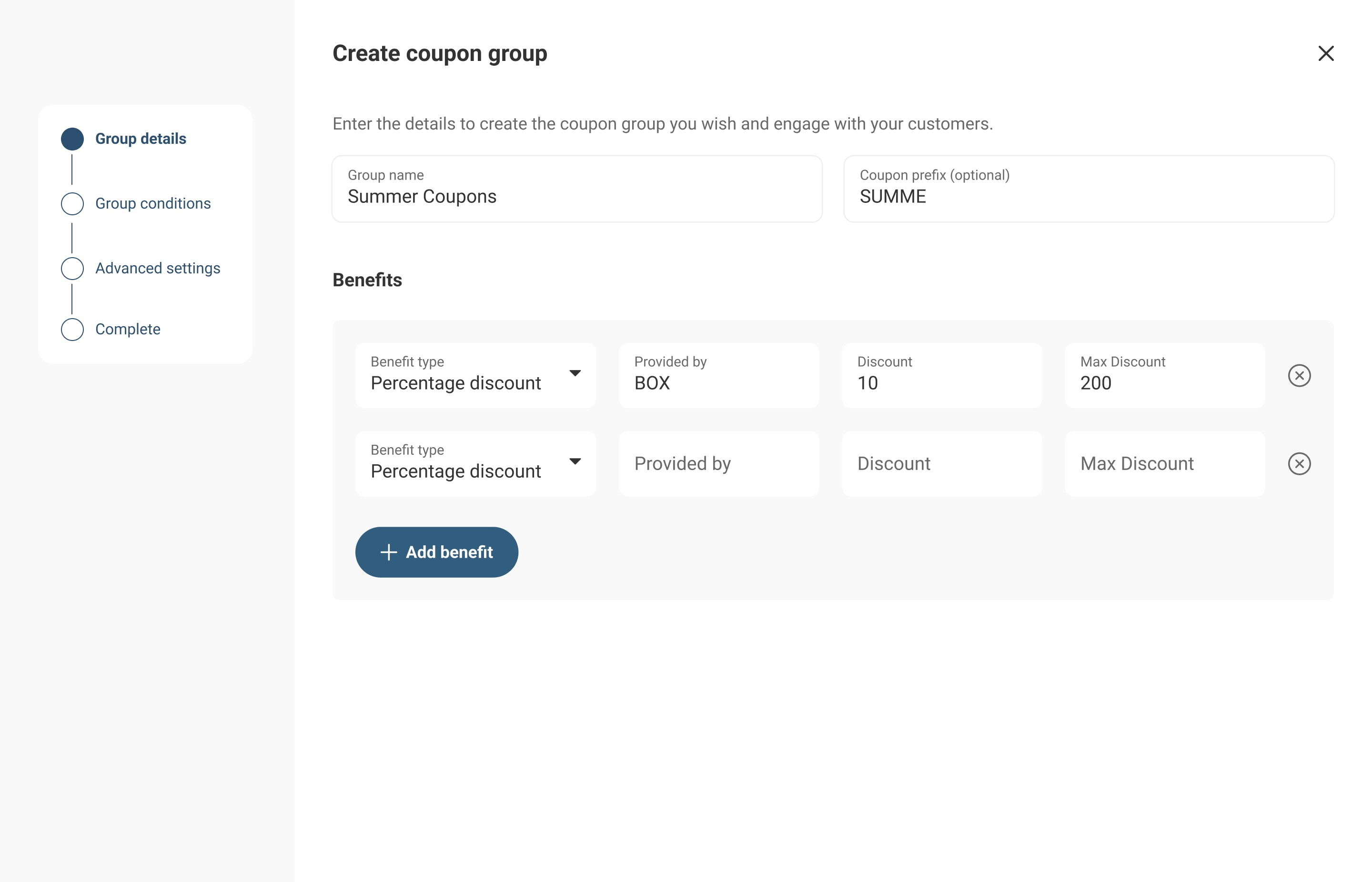
Centralized management: Coordinate inventory, pricing, and promotions across multiple locations from a single administrative dashboard.
Flexible fulfillment: Support different fulfillment models including delivery, curbside pickup, and in-store shopping across all your locations.
Real-time synchronization: Keep inventory levels, product information, and order data synchronized across your entire operation to prevent stockouts and order errors.
Scalable architecture: Handle growing order volumes without performance degradation or system instability.
Without these capabilities, attempting to scale can create operational chaos. Inventory discrepancies multiply, customer service suffers, and the cost of managing disconnected systems can quickly erode your profit margins.
The role of multi-store management
As you expand beyond a single location, managing multiple stores becomes one of your biggest operational challenges. Each location may serve different customer demographics, carry slightly different product selections, and operate on different schedules.
Effective multi-store management requires systems that can handle this complexity while maintaining operational efficiency.
Your ecommerce platform should allow you to configure each location independently while maintaining centralized control over core business functions.
This includes the ability to set location-specific inventory levels, create customized product assortments for different neighborhoods, manage separate delivery zones for each store, and track performance metrics at both the individual store and chain-wide levels.
Multi-location inventory management becomes particularly crucial as you scale, requiring standardized processes across all locations while allowing for local flexibility.
Building operational efficiency at scale
Scaling your grocery business amplifies both your strengths and your weaknesses. Inefficiencies that were manageable at a small scale can become major obstacles as you grow. Building operational efficiency should be a primary focus as you expand.
Key areas to optimize include:
Order fulfillment: Streamlined picking processes that minimize time from order receipt to delivery or pickup. This becomes even more critical as order volumes increase.
Inventory management: Accurate, real-time inventory tracking across all locations to prevent stockouts and reduce waste from overstocking perishable items.
Delivery logistics: Efficient routing and scheduling systems that maximize delivery capacity while minimizing costs and ensuring timely deliveries.
Staff training: Standardized processes and training programs that ensure consistent service quality across all locations and all team members.
Many grocery chains find that investing in specialized software for these functions pays significant dividends.
Dedicated picker apps help store staff fulfill online orders more efficiently, while delivery management software optimizes routing and provides customers with real-time tracking.
Technology considerations for scaling grocers
Choosing the right technology stack is one of the most important decisions you'll make when scaling your grocery business. The platforms and systems you implement will either enable or constrain your growth for years to come.
When evaluating technology solutions, consider how well they address these critical requirements:
Integration capabilities: Your ecommerce platform should integrate seamlessly with your existing POS, ERP, and inventory management systems. Manual data entry and disconnected systems create opportunities for errors and slow down operations.
Customization options: Every grocery business is unique, and your platform should accommodate your specific needs. Look for solutions that offer extensive customization without requiring complex development work.
Support for grocery-specific features: General ecommerce platforms often struggle with grocery-specific requirements like weighted products, substitution preferences, and freshness guarantees. Choose a platform built specifically for grocery retail.
Scalability: Ensure your chosen platform can handle not just your current needs but also your projected growth over the next several years. Switching platforms mid-growth is expensive and disruptive.
Managing growth while maintaining quality
One of the biggest challenges in scaling any business is maintaining the quality and personal touch that made you successful in the first place.
As you grow, it's easy to lose the connection with customers and the attention to detail that differentiated your store from larger competitors.
Successful scaling requires deliberate effort to preserve your core values and service standards. This means creating systems and processes that codify your best practices and make them repeatable across all locations.
Document your product sourcing standards so every store maintains the same quality levels. Standardize your customer service protocols while still empowering staff to solve problems and build relationships.
Use technology to maintain personalization at scale through features like order history, shopping lists, and customized product recommendations.
The goal is to make customers feel like they're still shopping at their trusted local grocery store, even as your business grows and reaches new markets.
Financial planning for sustainable scaling
Scaling a grocery business requires significant capital investment, whether you're opening new physical locations or building digital infrastructure.
Understanding the financial implications and planning accordingly is essential for sustainable growth.
Consider both the upfront costs and ongoing expenses associated with scaling. Physical expansion requires capital for real estate, renovations, equipment, and initial inventory.
Digital expansion involves platform fees, integration costs, and marketing investments to drive online adoption.
Wave Grocery offers a pay-as-you-grow pricing model that align costs with revenue, making it easier to scale without upfront investment.
This approach allows you to reinvest profits from growth directly into further expansion.
Expanding your customer base strategically
As you scale your grocery business, thoughtfully expanding your customer base becomes crucial. This isn't just about reaching more people—it's about identifying and serving the right customers in the right ways.
Start by analyzing your existing customer data to understand who shops with you and why. Look for patterns in demographics, shopping behaviors, and product preferences.
Use these insights to identify similar customer segments in new geographic areas or to develop targeted marketing strategies for online expansion.
Digital channels open up new possibilities for customer acquisition. Email marketing, social media advertising, and loyalty programs all become more powerful tools as you scale, allowing you to maintain relationships with growing customer bases without proportionally increasing staff.
How Wave Grocery supports business scaling
Wave Grocery addresses the specific challenges that grocers face when scaling their operations. Here's how the platform enables growth:
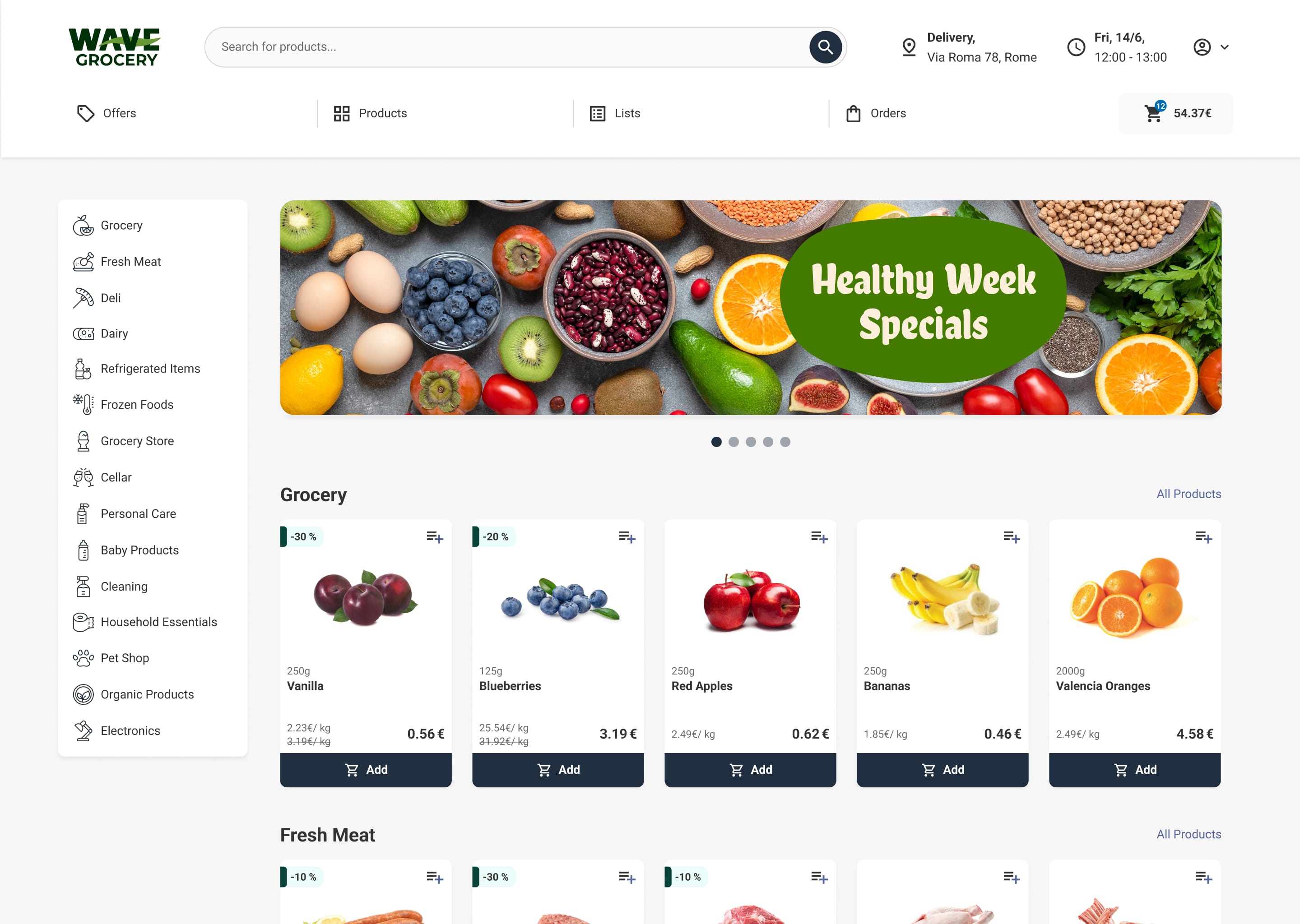
Multi-store architecture: Wave Grocery is designed from the ground up to support multiple locations. Each store can maintain its own inventory, product assortment, delivery zones, and operating hours while being managed from a central administrative panel. This means you can operate five stores or fifty stores with the same level of control and efficiency.
Seamless integrations: The platform integrates with existing ERP, POS, and CRM systems, ensuring that as you grow, your new stores connect smoothly to your existing technology stack. Data flows automatically between systems, reducing manual entry and preventing the errors that plague rapidly growing operations.
Flexible fulfillment options: Whether a location serves as a traditional store, a micro-fulfillment center, or both, Wave Grocery's order management system handles the complexity. You can offer delivery, pickup, or both at each location, with different delivery zones and time slots configured per store.
Pay-as-you-grow pricing: Unlike platforms that require massive upfront investment, Wave Grocery uses a scalable pricing model starting at $299/month. This allows you to add locations and features as your revenue grows, rather than committing large capital before you've proven the model.
Rapid deployment: The platform can be implemented in as little as 20 days, as demonstrated in the KH Glatt case study. This speed-to-market is crucial when you're trying to capture growth opportunities or respond to competitive pressures.
Real-time analytics: As you scale, data-driven decision making becomes essential. Wave Grocery provides detailed analytics at both the store and chain level, helping you identify what's working and what needs adjustment.
Dedicated support: Every Wave Grocery customer receives a Customer Success Manager who understands the grocery business. This ongoing partnership ensures you have expert guidance as you navigate the challenges of scaling.
Real-world success stories: How grocers scaled with the right platform
Lakeview Farm Store: See how they successfully took their community grocery experience online, expanding their reach while maintaining their commitment to locally sourced, nutrient-dense foods. The platform allowed them to showcase their unique product selection and continue building relationships with customers through digital channels.
KH Glatt: See how Wave Grocery completed their migration in just 20 days with zero downtime, allowing them to continue serving customers without interruption. The rapid implementation demonstrated that scaling doesn't have to mean lengthy disruption to your business operations.
ANEDIK Kritikos Supermarket: See how they increased their geographic coverage by 350% and fulfilled 7x more online orders after implementing Wave Grocery, demonstrating the platform's ability to support rapid growth without sacrificing operational quality.
The future of scaled grocery operations
Looking ahead, successful grocery chains will be those that continue to evolve their digital capabilities while maintaining strong community connections.
Emerging technologies like artificial intelligence for demand forecasting, automated fulfillment systems, and enhanced personalization will create new opportunities for efficiency and customer satisfaction.
The grocery retailers who thrive will be those who view scaling not as a one-time project but as an ongoing process of adaptation and improvement.
They'll leverage data and technology to make smarter decisions while never losing sight of the fundamental truth that grocery retail is ultimately about serving people and communities.
Taking the first steps toward scaling
If you're ready to scale your grocery business, start by assessing your current operations and identifying areas that need strengthening before you grow.
Ensure your core business is running efficiently, your financial foundation is solid, and your team is prepared for the changes that growth brings.
From there, developing a digital strategy should be your first major step. Even if you plan to open additional physical stores, establishing an online presence provides valuable experience with the technology and operations that will support your multi-location future.
It also begins generating the customer data and insights that will inform your physical expansion decisions.
Whether you're just beginning to think about scaling or you're ready to implement a growth plan, the key is approaching expansion strategically.
With the right planning, technology, and execution, your local grocery store can successfully evolve into a thriving digital chain that serves customers across broader markets while maintaining the quality and values that made you successful.
Contact our customer success manager to see how your store can scale digitally fast, without complexities.

Costas D. Aniston is Customer Success Manager, helping grocery retailers streamline operations, improve fulfillment accuracy, and achieve sustainable growth.

Our editorial team works hand-in-hand with grocery experts and digital specialists to deliver actionable content designed to help your business thrive online. Each article is built on real industry insights and practical guidance for grocers, providing actual solutions to real problems.