When grocers expand into multiple locations, inventory stops being a back-room task and becomes a daily coordination problem. Mistakes that were manageable in a single store now multiply.
A misplaced case, an inaccurate count, or a late transfer quickly turns into empty shelves, overtime hours, and frustrated customers.
But there are solutions you can implement for better multi-location inventory management.
What is multi-location inventory management?
Multi-location inventory management is the practice of maintaining accurate stock across multiple sites. For grocers, this usually means coordinating stores, dark stores, backrooms, and in some cases, micro-fulfillment hubs.
The challenge isn’t just knowing what sits on each shelf. It’s ensuring those numbers stay aligned as goods move, shrink occurs, and online orders pull stock at different rates.
Case study: Learn how Wave Grocery empowered Kritikos to turn brick-to-mortar stores into micro-fulfillment centers.
Challenges of multi-location inventory management
Even well-run stores struggle when grocery inventory is spread out. A minor problem in a single store becomes a much bigger problem once you operate multiple locations. These are the points that cause the most trouble:
1. Information gap between stores and departments
Most stores work on different rhythms. One team closes late, another starts early, and another handles online orders.
Without a shared system and standard procedures, each location develops its own tracking habits. Counts drift. Transfers go unrecorded. By the time the head office realizes something is off, the variance has already become expensive.
2. Inaccurate data caused by manual updates
Spreadsheets and verbal updates cannot keep up with live picking, substitutions, shrinkage, and vendor delays. When counts are wrong, replenishment becomes guesswork.
One location ends up overstocked, another runs dry, and – unavoidably – pulls pickers into damage control.
3. No consistent inventory standards
One store counts units, another counts cases. One labels produce differently. One audits weekly, another quarterly. These inconsistencies create a false sense of accuracy.
Operators often discover discrepancies only during write-offs or when customer complaints escalate.
4. Lack of a centralized, synchronized system
When every location keeps its own version of “truth”, operators lose visibility. Stockouts appear without warning. Transfers don’t match reality. Shrink patterns go unnoticed.
A unified multi-location inventory management system shared by all sites is the only way to prevent blind spots.
5. Supply chain and replenishment complexity
More locations require additional routing, more delivery windows, and more coordination with suppliers. Each new node introduces the risk of delays or misallocation.
Labor hours increase too, because teams need time to handle transfers and reconcile discrepancies.
Why accurate inventory management matters in practice
Controlling inventory for one store is already time-consuming. Multi-location operations multiply the labor, the movement of goods, and the number of things that can go wrong.
A miscount in fresh produce at one site often means replenishment decisions fail across the network. And because grocery margins depend on tight control, these inconsistencies erode profitability quickly.
In grocery, inventory accuracy is tightly linked to fulfillment performance.
When stock is not tracked at the location level, customers order unavailable items, pickers lose time searching, and substitutions and refunds rise while delivery and click-and-collect volumes grow.
Multi-location inventory management best practices
Below are practices that retailers use not because they sound good, but because they reduce mistakes, labor waste, and variance across sites.
1. Use multiple location inventory management software
Spreadsheets collapse under multi-site complexity. They cannot show real-time movement, they break under simultaneous edits, and they depend on manual discipline that rarely holds during peak hours.
Systems built for inventory management across multiple locations centralize data, track stock movements, and standardize updates from receiving to order picking. They reduce the number of places where errors can hide.
Wave Grocery gives retailers a single system to align picking, delivery, and inventory data across stores.
2. Standardize processes, naming conventions, and SOPs
If each store counts differently, you will never know what is actually on the shelf. Operators establish:
- shared units of measure,
- uniform receiving procedures,
- consistent shrink logging,
- shared naming conventions.
This reduces interpretation errors and forces a single operational language across sites.
3. Educate employees and assign clear responsibility for stock accuracy
Training is not optional. Teams need to understand why accuracy matters and how poor entries affect other stores. Photo logs, barcode scanning, and structured checklists help maintain discipline.
High-performing operators treat inventory as a daily habit, not a quarterly event.
4. Use location-based reporting to guide decisions
Each store behaves differently. Looking at blended inventory metrics sometimes hides problems. Location-level reporting helps operators identify:
- which stores frequently over-order,
- which categories shrink faster,
- where demand spikes require earlier replenishment.
This data informs better purchasing, more accurate forecasting, and smarter labor planning.
5. Optimize reordering with safety stock and reorder points
Running out of essentials forces unplanned transfers and frustrates customers. But overstocking ties up cash and storage space.
Safety stock and reorder points create a buffer without overcommitting capital. What matters is tuning them per location, based on sales velocity and variability, not setting a universal rule that practically fits no one.
6. Ensure inventory is searchable and traceable
Retailers lose hours when staff cannot locate items that the system says are in stock. A searchable, structured database, organized by aisle, shelf, or backroom zone, reduces walking time and prevents unnecessary reorders.
7. Conduct regular audits and reconcile fast
Audits catch discrepancies early, before they balloon into margin loss. Consistent cycle counts give operators insight into where processes break:
- incorrect receiving?
- poor shrink logging?
- outdated pick paths?
- a combination of the above?
The goal is not perfect accuracy; it is to reduce variance with each cycle.
Case study: Learn how La Mart Food Unified Multi-Store Grocery Operations with Wave Grocery
Why traditional ecommerce software can’t handle store-level grocery inventory
Most ecommerce platforms were designed for centralized warehouses, not live grocery stores. Their multi-location setups depend on manual tagging, static rules, and heavy configuration.
As volume grows and inventory shifts hourly, catalogs, picking workflows, and delivery promises fall out of sync.
How Wave Grocery supports multi-location grocery operations
Wave Grocery is designed for grocery operations running multiple stores and delivery zones. Location logic is built into inventory, ordering, and delivery from the start.
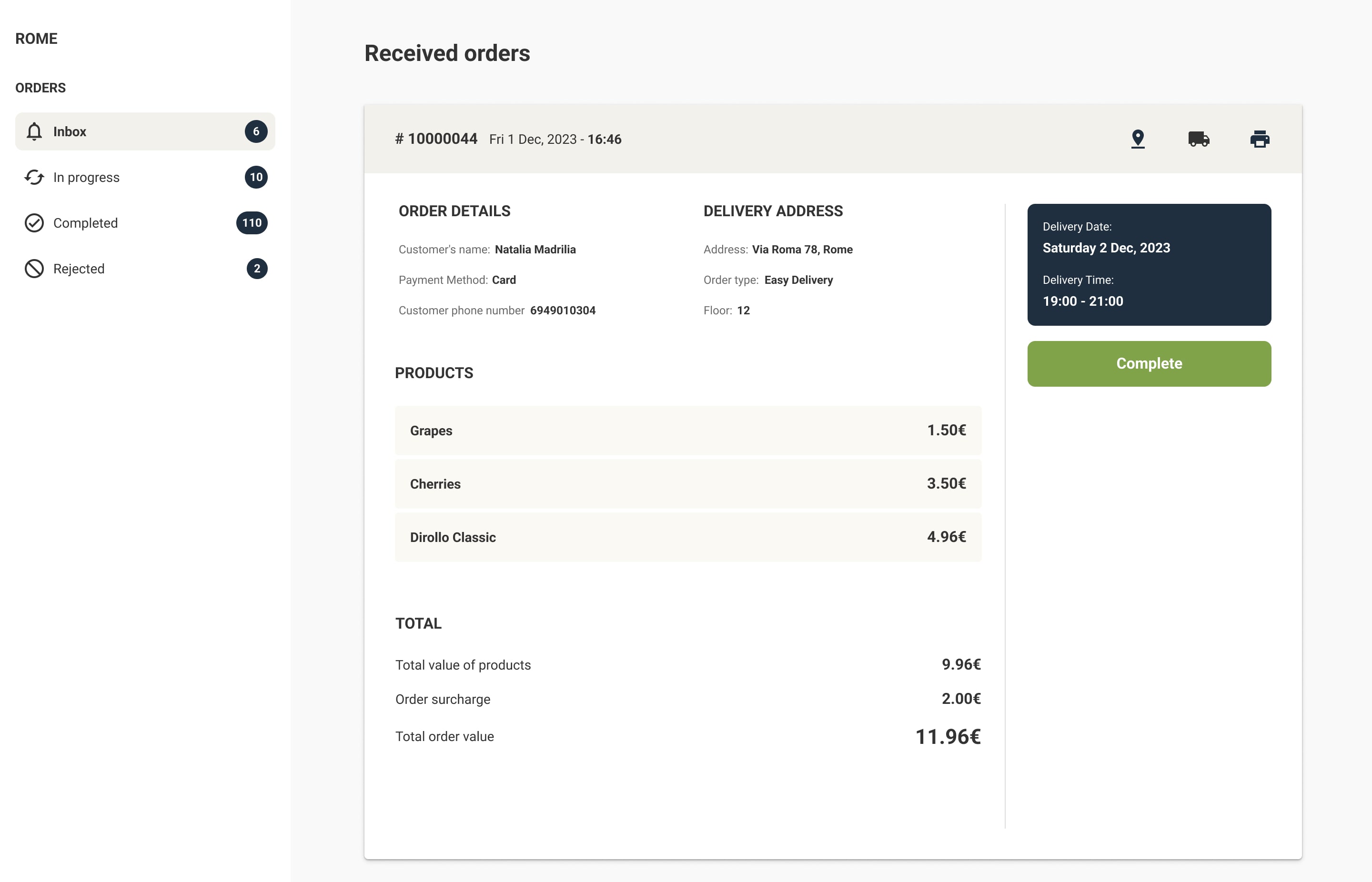
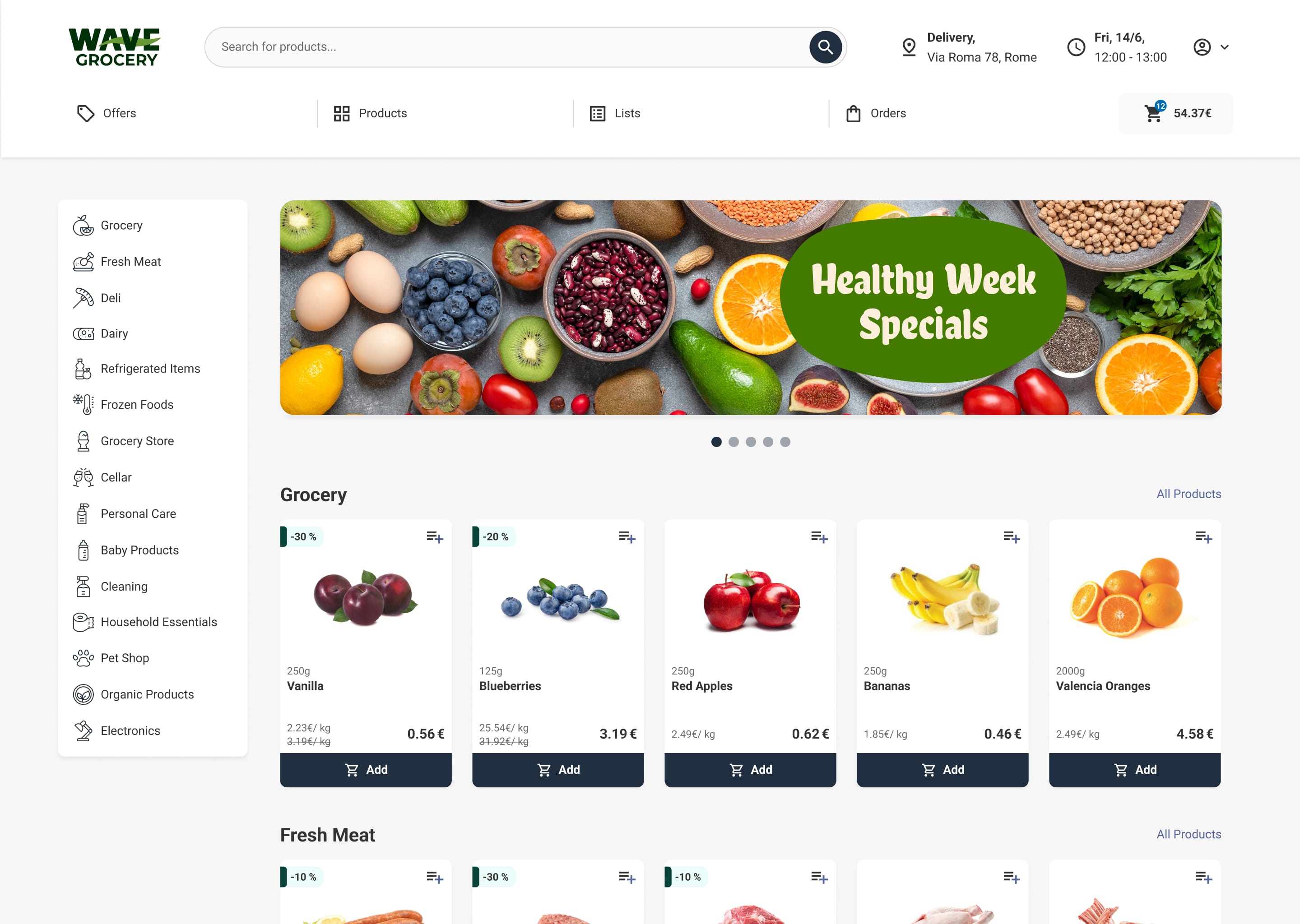
Inventory is tracked per store or fulfillment point in real time, so online availability reflects what will actually be picked. Catalogs can vary by store or zone, showing customers only items that can be fulfilled locally.
Product visibility also respects picking and delivery constraints, preventing issues before orders are placed. With inventory, catalogs, picking, and delivery managed in one system, execution stays consistent.
How to know whether your multi-location management approach is working
Forecast accuracy by location: Compare projections to actual movement. Stores with unpredictable variance often have process issues rather than demand issues.
Stock variance and reconciliation speed: Track how quickly each site can identify and fix discrepancies. Slow reconciliation usually signals poor discipline or unclear SOPs.
Audit results and recurrence patterns: If the same categories repeatedly show variance, the issue is systemic. Use the data to adjust workflows, retrain staff, or refine receiving procedures.
Catalog accuracy by location: Review how often customers see only items available in their selected store or delivery area. Frequent substitutions or last-minute removals usually indicate misalignment between assortments, sourcing rules, and fulfillment constraints.
Retailers that treat inventory as an ongoing operational practice – not a one-off software setting – maintain control as they scale. If you want to see how this model works in a real-world environment, book a brief call with one of our grocery operations advisors.

Costas D. Aniston is Customer Success Manager, helping grocery retailers streamline operations, improve fulfillment accuracy, and achieve sustainable growth.

Our editorial team works hand-in-hand with grocery experts and digital specialists to deliver actionable content designed to help your business thrive online. Each article is built on real industry insights and practical guidance for grocers, providing actual solutions to real problems.