Understanding how quickly a business moves through its stock is fundamental to sound financial management. The inventory turnover ratio is one of the most widely used efficiency metrics across industries, from retail and manufacturing to wholesale and ecommerce. It reveals how well a company converts inventory into sales, making it an essential tool for business owners, financial analysts, and operations managers alike.
In this guide, we'll break down the inventory turnover ratio definition, walk through the formula and calculation step by step, and show you how to use these insights to optimize your operations.
What is inventory turnover ratio?
The inventory turnover ratio (also called stock turnover ratio or merchandise turnover ratio) is a financial metric that measures how many times a company sells and replaces its inventory during a specific period—typically a fiscal year. In simple terms, it shows how efficiently a business turns its stock into revenue.
A company with a high inventory turnover ratio moves products quickly, which generally signals strong demand or effective inventory management. On the other hand, a low ratio may point to overstocking, weak sales, or obsolete inventory sitting in storage.
This metric is valuable because it sits at the intersection of sales performance and operational efficiency. Whether you're running a retail chain, a manufacturing operation, or an online store, understanding your inventory turns helps you make smarter purchasing, pricing, and stocking decisions.
Inventory Turnover Formula and Calculation
To calculate the inventory turnover ratio, you need two key figures from your financial statements: the cost of goods sold (COGS) and your average inventory value.
The inventory turnover ratio formula
Inventory Turnover Ratio = Cost of Goods Sold (COGS) ÷ Average Inventory
Where:
Average Inventory = (Beginning Inventory + Ending Inventory) ÷ 2
Using average inventory rather than a single point-in-time figure smooths out seasonal fluctuations and provides a more accurate picture of how your stock moves throughout the year.
How to calculate inventory turnover ratio: step by step
- Find your COGS. This figure appears on your income statement. It includes the direct costs of producing or purchasing the goods your company sold during the period.
- Determine your average inventory. Take the inventory value at the beginning of the period and the value at the end, then divide by two.
- Divide COGS by average inventory. The result is your inventory turnover ratio.
Some analysts use net sales instead of COGS in the numerator. While this approach is simpler, it can inflate the ratio because net sales include the markup. For the most accurate results, COGS is the preferred method.
Inventory turnover rate (Days Sales of Inventory)
You can also express inventory turnover as the number of days it takes to sell through your stock:
Days Sales of Inventory (DSI) = 365 ÷ Inventory Turnover Ratio
This metric—sometimes called inventory holding days or average inventory days—gives a practical sense of how long products sit in storage before being sold.
What does inventory turnover ratio tell you?
The inventory turnover ratio is more than just a number. It's a diagnostic tool that reveals important insights about your business operations.
High inventory turnover ratio
A higher inventory turnover ratio generally indicates:
- Strong sales performance. Products are in demand and moving quickly.
- Efficient inventory management. You're keeping lean stock levels and avoiding excess.
- Better cash flow. Less capital is tied up in unsold inventory.
However, an exceptionally high ratio isn't always positive. It could mean you're understocking, leading to frequent stockouts, missed sales opportunities, and dissatisfied customers.
Low inventory turnover ratio
A low inventory turnover ratio may signal:
- Weak sales or declining demand. Products aren't resonating with customers.
- Overstocking or excess inventory. You've purchased more than the market needs.
- Obsolete or dead stock. Items have lost their appeal or passed their useful life.
That said, there are scenarios where lower turnover is intentional—for example, businesses that stock up in anticipation of price increases, supply chain disruptions, or seasonal demand spikes.
Using the ratio for benchmarking
The real power of the inventory turnover ratio lies in comparison. Use it to:
- Track performance over time. Are you improving year over year?
- Benchmark against industry averages. How do you compare to similar companies?
- Identify problem categories. Which product lines are dragging your ratio down?
Different industries have vastly different benchmarks. A fast-fashion retailer might see turnover of 10–15 times per year, while a luxury goods company might average 2–4. Always compare within your own industry for meaningful insights.
Example of an Inventory Turnover Ratio Calculation
Let's walk through a practical inventory turnover ratio example to see the formula in action.
Scenario: A mid-size retail company reports the following for its fiscal year:
- Cost of Goods Sold (COGS): $800,000
- Beginning Inventory: $150,000
- Ending Inventory: $250,000
Step 1: Calculate average inventory
Average Inventory = ($150,000 + $250,000) ÷ 2 = $200,000
Step 2: Apply the inventory turnover formula
Inventory Turnover Ratio = $800,000 ÷ $200,000 = 4.0
Step 3: Interpret the result
This company turns over its inventory 4 times per year. To find out how long inventory sits before it's sold:
Days Sales of Inventory = 365 ÷ 4 = 91.25 days
On average, it takes about 91 days to sell through a batch of inventory. Depending on the industry, this might be healthy or a sign that stock is moving too slowly.
For comparison, if a competitor in the same industry has a turnover ratio of 6, they're moving inventory roughly every 61 days—significantly faster. This kind of benchmarking helps pinpoint where there's room for inventory turnover improvement.
What is a good inventory turnover ratio?
The answer depends on your industry, business model, and product type. There's no universal "ideal" number, but here are general guidelines:
IndustryTypical Turnover RatioGrocery & perishable goods10–20+Fast fashion & apparel8–15General retail5–10Electronics & technology4–8Luxury goods & furniture2–4Heavy manufacturing2–5
A good inventory turnover ratio for most retail businesses falls between 5 and 10. A ratio significantly below your industry average might indicate inefficiency, while a ratio well above could suggest you're running too lean.
How to improve your inventory turnover ratio
If your ratio is lower than you'd like, consider these strategies:
- Optimize your pricing strategy. Use dynamic pricing, promotions, or markdowns to move slow sellers before they become dead stock.
- Improve demand forecasting. Leverage historical sales data, seasonality trends, and market signals to stock the right products in the right quantities.
- Streamline your supply chain. Work with reliable suppliers who offer shorter lead times, reducing the need to hold excess safety stock.
- Audit your product assortment. Identify and discontinue slow-moving or obsolete SKUs that are dragging your ratio down.
- Automate reordering. Implement an inventory management or order management system that triggers replenishment at optimal thresholds.
- Negotiate better terms. Smaller, more frequent orders can help you maintain fresher stock without overcommitting capital.
Inventory turnover ratio in the grocery industry
Grocery is one of the most inventory-intensive industries, and the stakes around turnover are uniquely high. With perishable goods making up a large share of stock, grocery inventory turnover demands more urgency than most sectors.
Why grocery stores need higher turnover
The average grocery store holds over 31,000 items, ranging from shelf-stable products to highly perishable fresh produce, dairy, and meat. Unlike durable goods, these items have a limited shelf life—a slow-moving item doesn't just tie up capital, it spoils, creating waste and direct losses.
For this reason, a good inventory turnover ratio for grocery stores is typically between 10 and 20 (or even higher for fresh categories). Successful grocery retailers consistently aim for average inventory turnover well above the general retail benchmark.
Key challenges for grocery inventory management
- Perishability. Fresh goods require rapid turnover to avoid spoilage and maintain quality.
- Thin margins. Grocery profit margins are typically 1–3%, making efficient stock management essential for profitability.
- High SKU count. Managing turnover across tens of thousands of items requires robust tracking and analytics.
- Demand variability. Seasonal shifts, promotions, and changing consumer buying habits create constant flux in demand patterns.
How grocery retailers can improve inventory turnover
- Leverage real-time inventory tracking to monitor stock levels and shelf life across all categories.
- Use demand forecasting tools that account for seasonality, local preferences, and promotional calendars.
- Implement dynamic pricing strategies to accelerate sales of near-expiry products.
- Optimize your order management system to automate reordering based on real-time data.
- Analyze sales data to maintain optimal stock levels and reduce waste.
- Strengthen inventory management practices with category-specific turnover targets.
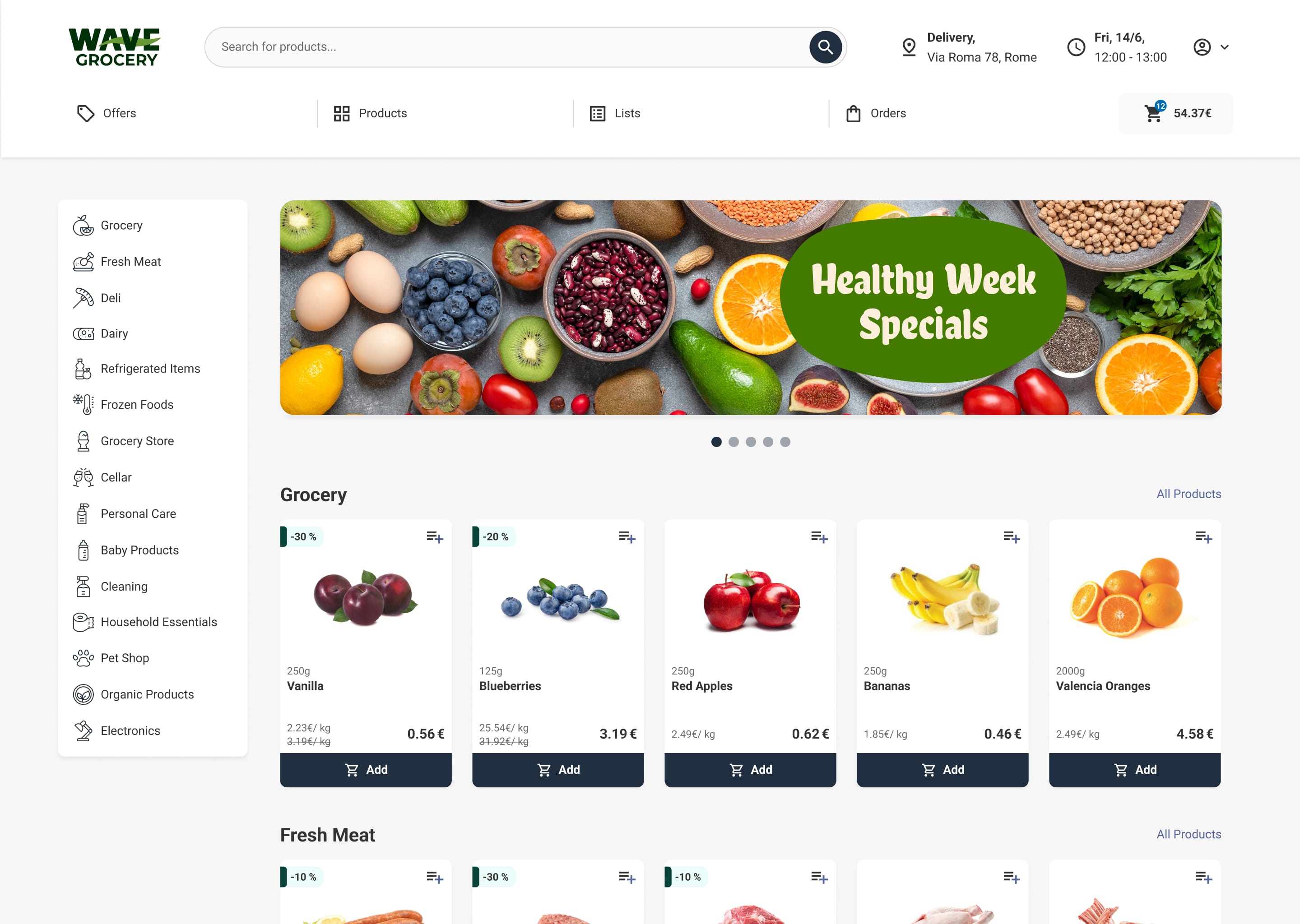
Platforms like Wave Grocery offer specialized tools for grocery ecommerce, including real-time inventory tracking, automated alerts for slow-moving stock, and analytics dashboards designed to help grocery managers keep inventory moving efficiently while maintaining freshness.
FAQs
How to find inventory turnover ratio?
To find the inventory turnover ratio, divide your cost of goods sold (COGS) by your average inventory value for the same period. Average inventory is calculated by adding the beginning and ending inventory values, then dividing by two. You can find COGS on your income statement and inventory values on your balance sheet.
Is a higher inventory turnover ratio better?
Generally, yes—a higher inventory turnover ratio suggests your business is selling products efficiently and not tying up capital in excess stock. However, an excessively high ratio could indicate understocking, which may lead to stockouts, lost sales, and dissatisfied customers. The key is finding the right balance for your industry and business model.
What does the inventory turnover ratio measure?
The inventory turnover ratio measures how many times a company has sold and replaced its inventory over a given period. It's an efficiency ratio that reveals how well a business manages its stock—strong ratios indicate effective inventory management, while weak ratios may point to overstocking, declining demand, or obsolete products.
What is a good inventory turnover ratio for grocery stores?
Grocery stores typically aim for an inventory turnover ratio between 10 and 20, significantly higher than the general retail average of 5–10. This is because grocery inventory includes a high proportion of perishable items like fresh produce, dairy, and meat. Higher turnover helps reduce spoilage, minimize waste, and maintain product freshness—all critical for a successful grocery operation.

Costas D. Aniston is Customer Success Manager, helping grocery retailers streamline operations, improve fulfillment accuracy, and achieve sustainable growth.

Our editorial team works hand-in-hand with grocery experts and digital specialists to deliver actionable content designed to help your business thrive online. Each article is built on real industry insights and practical guidance for grocers, providing actual solutions to real problems.