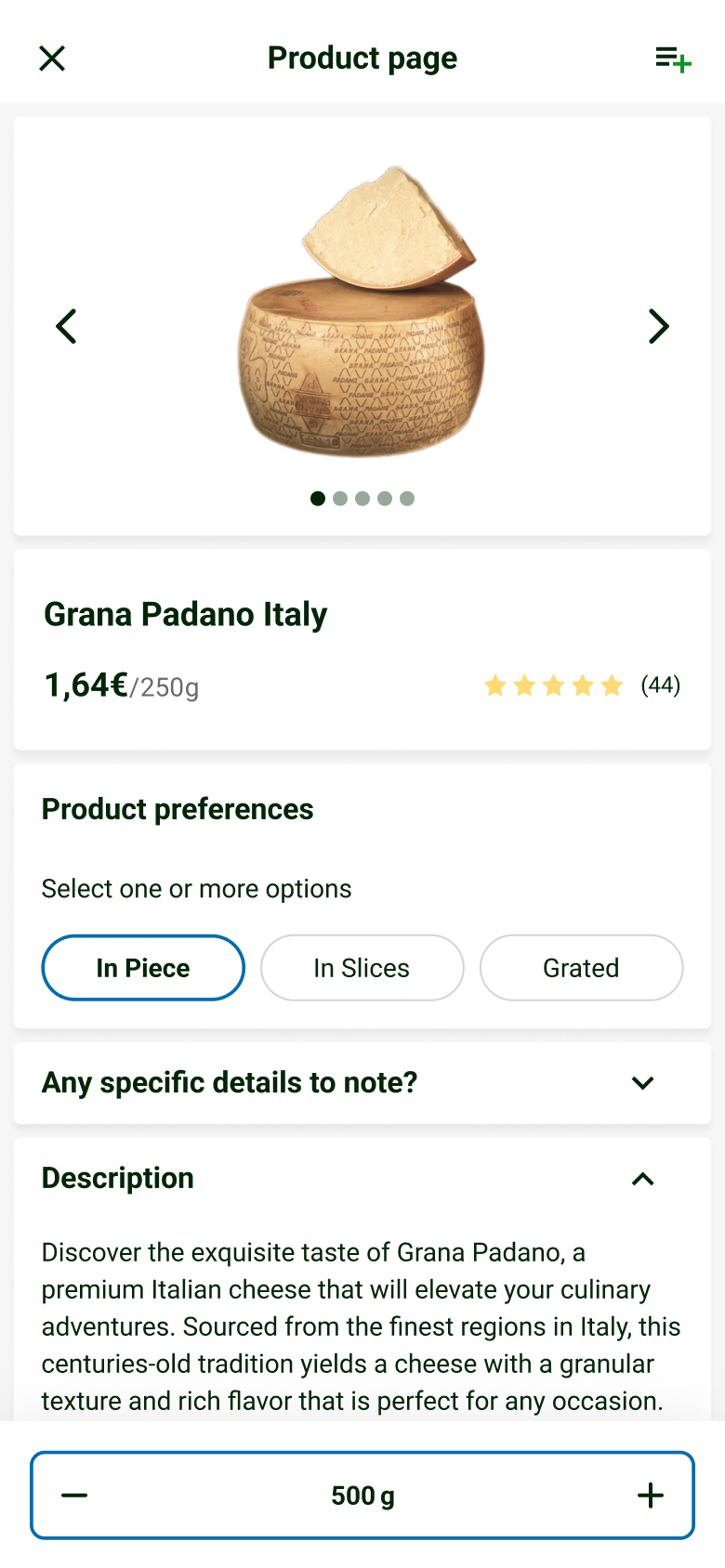
For years, grocery retailers treated mobile as a nice-to-have channel: useful for loyalty cards, promotional browsing, or the occasional delivery order.
That is no longer the case.
Today, the grocery app is often the primary digital touchpoint between a retailer and the customer. It is where shoppers build weekly baskets, save favorite products, redeem offers, choose delivery or pickup windows, approve substitutions, and decide whether the brand is convenient enough to return to next week.
That makes the platform behind the app a strategic decision, not just a software purchase.
A generic app can display products and process payments. A strong grocery mobile app development platform needs to do much more. It has to support large baskets, weighted products, store-level inventory, loyalty, substitutions, delivery slots, picker operations, and integrations with the systems grocers already use.
This guide compares the best grocery mobile app development platforms for retailers in 2026, with a practical look at who each one is best for, where it performs well, and where it may not be the right fit.
Quick comparison: the best grocery mobile app development platforms
What makes a grocery mobile app development platform different?
A grocery mobile app development platform is the technology foundation used to build, launch, and operate a mobile grocery shopping experience.
That can mean different things depending on the vendor:
- A white-label grocery platform that provides ready-made branded iOS and Android apps.
- A grocery ecommerce suite that includes web, mobile, fulfillment, and admin tools.
- A marketplace-connected solution that gives the grocer a branded storefront inside a larger delivery ecosystem.
- A custom development route where a retailer builds the app from scratch with an agency or internal team.
The important point is that grocery mobile apps are not the same as generic retail apps.
Grocery has its own operational complexity:
- Large weekly baskets with dozens of items
- Fresh and weighted products
- Store-level inventory differences
- Substitution rules
- Delivery and pickup time slots
- Loyalty cards, coupons, rewards, and personalized offers
- High-frequency repeat shopping behavior
- Picker and fulfillment workflows behind the scenes
If the platform does not support those requirements natively, the app may look polished at launch but become expensive and fragile as order volume grows.
How to choose a grocery mobile app development platform
Before comparing vendors, it helps to define what you are really buying.
You are not only buying an app. You are buying a mobile commerce channel that has to work every week, across real stores, real inventory, real customers, and real operational pressure.
Use these criteria when building your shortlist.
1. Native mobile experience
A native iOS and Android app usually gives grocers a stronger foundation for speed, push notifications, personalization, saved lists, loyalty flows, and repeat usage than a wrapped mobile website.
Mobile grocery is habitual. Shoppers return to the app when it makes weekly buying easier. That means speed, reliability, and convenience matter more than novelty.
2. Grocery-specific functionality
Look for support for weighted items, substitutions, delivery slots, loyalty, store-level inventory, promotional mechanics, large baskets, and fulfillment workflows. These should not all depend on plugins or custom workarounds.
3. Ownership of the customer relationship
Marketplace apps can bring demand, but they often sit between the retailer and the shopper. A retailer-owned app keeps the brand, data, pricing strategy, loyalty program, and customer relationship under the grocer’s control.
4. Integration flexibility
A grocery mobile app needs to connect with POS, ERP, CRM, payments, loyalty, analytics, and fulfillment tools. The more stores and SKUs you operate, the more important integration reliability becomes.
5. Time to launch
Some grocers need a fast go-live. Others are planning a multi-phase rollout across hundreds of stores. The right platform should match your timeline without forcing a rushed or underbuilt setup.
6. Scalability
An app that works for one store may not work for 50. An app that works for 50 may not work for 500. Ask how the platform handles multi-store operations, catalog scale, peak traffic, order routing, and operational support.
The 10 best grocery mobile app development platforms in 2026
1. Wave Grocery
Best for: Mid-market and enterprise grocery retailers that want a branded, grocery-first mobile app connected to the rest of their ecommerce and fulfillment stack.
Wave Grocery is a white-label grocery ecommerce platform with native mobile apps, web storefronts, order management, loyalty, picker workflows, delivery orchestration, and back-office tools built specifically for grocery retailers.
Its strongest advantage is that mobile is not treated as a separate add-on. The app connects into the same grocery-specific infrastructure that powers catalog management, checkout, loyalty, order fulfillment, and integrations. That matters for retailers that want the mobile channel to become a serious revenue and retention engine, not just a branded shopping interface.
Key mobile app strengths
- Native iOS and Android apps branded for each retailer
- Saved lists, favorites, smart reordering, and personalized shopping flows
- Loyalty, coupons, rewards, and promotional mechanics connected to the shopping journey
- Support for grocery-specific checkout complexity, including large baskets and fresh products
- Pickup and delivery scheduling
- Integration with picker and fulfillment workflows
- POS, ERP, payment, and loyalty integrations through a grocery-specific architecture
Pros
- Built specifically for grocery, not adapted from generic ecommerce.
- Strong fit for retailers that want to own the customer relationship, brand, and data.
- Modular platform: retailers can connect mobile, web, loyalty, fulfillment, and delivery without re-platforming later.
Limitations
- Implementation involves more configuration than the simplest plug-and-play tools, since the platform is built to scale with the retailer's operations as the business grows.
- Not a marketplace, so retailers still need their own acquisition and retention strategy.
Best-fit scenario: A supermarket chain wants to launch or upgrade its own branded grocery app, connect it with existing systems, and make mobile a core weekly shopping channel.
👉 Learn more about Wave Grocery’s mobile app solution or book a demo.
2. Mercatus
Best for: Regional grocery chains in North America that want a mature white-label ecommerce and mobile experience.
Mercatus is a well-known grocery ecommerce platform serving regional grocers, especially in the US and Canada. Its platform supports branded digital commerce across web and mobile, with a strong focus on helping retailers compete against marketplaces while preserving brand ownership.
Key mobile app strengths
- White-label grocery shopping apps
- Digital storefront and fulfillment capabilities
- Grocery-specific product, promotion, and order flows
- Strong positioning around retailer control and profitability
Pros
- Mature grocery ecommerce offering.
- Good fit for regional grocers with established operations.
- Strong brand-ownership narrative.
Limitations
- Primarily focused on the North American market.
- Implementation may be heavier than fast-launch tools for small independents.
Best-fit scenario: A North American grocer wants a credible, retailer-owned mobile app and ecommerce platform without building in-house.
3. Local Express
Best for: Independent grocers, specialty food stores, ethnic markets, and smaller chains that want to launch quickly.
Local Express offers ecommerce and mobile app solutions for food retailers, with a clear emphasis on fast deployment and usability for independent grocery operators.
For smaller retailers, the appeal is straightforward: launch a branded online grocery experience without hiring a full digital product team.
Key mobile app strengths
- Branded grocery app and ecommerce storefront
- Delivery and pickup support
- Promotions and customer engagement tools
- Multi-language and specialty-retail use cases
Pros
- Strong fit for independents and specialty grocers.
- Faster path to market than enterprise platforms.
- Practical feature set for smaller teams.
Limitations
- May not offer the same depth for complex multi-store enterprise operations.
- Advanced integrations and customization may depend on package or scope.
Best-fit scenario: A specialty grocer wants to launch a branded app quickly and compete locally without joining a marketplace.
4. Instacart Storefront Pro
Best for: Retailers that already rely on Instacart and want a branded ecommerce layer connected to its fulfillment ecosystem.
Instacart Storefront Pro gives retailers a branded digital storefront while connecting them to Instacart’s technology and fulfillment network.
The advantage is speed and access to an established delivery infrastructure. The tradeoff is dependency. For grocers that want full control over data, loyalty, commercial terms, and the long-term customer relationship, a marketplace-connected model needs to be evaluated carefully.
Key mobile app strengths
- Fast digital launch for retailers already in the Instacart ecosystem
- Access to Instacart’s fulfillment and shopper network
- Familiar user experience for existing Instacart shoppers
Pros
- Strong delivery network.
- Useful for retailers that want speed and fulfillment support.
- Reduces operational burden in some markets.
Limitations
- Less control than a fully retailer-owned app.
- Long-term economics and data ownership may be less attractive for some grocers.
- Custom loyalty and app experience may be more constrained.
Best-fit scenario: A grocer wants to expand digital ordering quickly and is comfortable building on top of Instacart’s ecosystem.
5. Freshop / NCR Voyix
Best for: Grocery chains that prioritize POS connectivity and established grocery ecommerce infrastructure.
Freshop, now part of NCR Voyix, has long served the grocery ecommerce market with digital storefronts, mobile apps, fulfillment support, and POS-related capabilities.
Its biggest strength is its grocery-specific background and connection to NCR’s retail technology ecosystem. For grocers with legacy POS requirements, that can be a meaningful advantage.
Key mobile app strengths
- Grocery ecommerce app experience
- POS-oriented grocery infrastructure
- Multi-store ecommerce support
- Digital weekly ads and promotions
Pros
- Established grocery ecommerce provider.
- Strong fit for retailers already working within NCR-related environments.
- Good understanding of grocery workflows.
Limitations
- User experience may feel less modern than newer mobile-first platforms in some cases.
- Best fit depends heavily on the retailer’s existing technology stack.
Best-fit scenario: A multi-store grocer wants a grocery ecommerce app connected closely with POS and retail operations.
6. MyCloudGrocer
Best for: Supermarkets with complex catalogs and grocery-specific ecommerce requirements.
MyCloudGrocer focuses on grocery ecommerce for supermarkets, with support for branded online shopping experiences and operational workflows built around supermarket needs.
It is most relevant for grocers that need a platform designed around complex product data, store catalogs, and grocery shopping patterns rather than a general ecommerce setup.
Key mobile app strengths
- Grocery-specific ecommerce and mobile experience
- Support for complex supermarket catalogs
- Branded digital storefronts
- Operational tools for online grocery
Pros
- Grocery-specific positioning.
- Strong fit for supermarkets with large SKU counts.
- More relevant than generic ecommerce for operationally complex retailers.
Limitations
- Mobile experience and implementation approach should be reviewed carefully during vendor evaluation.
- May be more web-ecommerce-led than mobile-first depending on scope.
Best-fit scenario: A supermarket needs a grocery ecommerce foundation with mobile support and complex catalog handling.
7. Swiftly
Best for: Retailers that see mobile as both a shopping channel and a retail media channel.
Swiftly combines digital shopping tools with retail media and shopper engagement capabilities. That makes it interesting for grocers that want their mobile app to support not only ecommerce, but also ad revenue, promotions, and personalized brand engagement.
Key mobile app strengths
- Mobile shopper engagement
- Retail media and advertising capabilities
- Personalized promotions and offers
- Digital tools for larger retail organizations
Pros
- Strong fit for grocers with a retail media strategy.
- Mobile engagement is central to the proposition.
- Useful for retailers looking beyond transaction revenue.
Limitations
- Retail media focus may be less relevant for grocers that only need ecommerce and fulfillment.
- Grocery operations depth should be validated against your specific requirements.
Best-fit scenario: A larger grocer wants a mobile app that supports ecommerce, promotions, personalization, and retail media monetization.
8. Rosie / ShopHero
Best for: Small and independent US grocers that want a simple ecommerce and app solution.
Rosie and ShopHero serve independent grocers and smaller chains that want to get online without building a complex technology stack from scratch.
These tools are often attractive because they simplify the path to online grocery: storefront, order management, basic picking, pickup, delivery, and customer-facing shopping tools.
Key mobile app strengths
- Simple branded shopping experience
- Basic online ordering and fulfillment workflows
- Support for independents and small chains
- Lower operational complexity than enterprise systems
Pros
- Practical for smaller retailers.
- Faster and easier than custom development.
- Designed with independent grocers in mind.
Limitations
- Less suitable for complex enterprise use cases.
- Scalability, integrations, and advanced loyalty may be limited compared with larger platforms.
Best-fit scenario: A local grocer wants to offer online shopping and a basic mobile experience without a large digital team.
9. Shopify / WooCommerce with grocery plugins
Best for: Early-stage pilots, small retailers, or teams testing demand before investing in a grocery-specific platform.
Shopify and WooCommerce are not grocery mobile app development platforms in the strict sense. They are generic ecommerce platforms that can be extended with apps, plugins, mobile themes, or app wrappers.
For a small pilot, this route can make sense. It is affordable, familiar, and easy to start. But grocery complexity arrives quickly. Once you need weighted products, substitutions, time slots, store-specific inventory, loyalty integration, and fulfillment workflows, plugins can become fragile.
Key mobile app strengths
- Mobile-responsive storefronts
- Large app and plugin ecosystems
- Fast setup for simple ecommerce use cases
- Low initial cost
Pros
- Easy to launch.
- Familiar admin experience.
- Good for proving demand before larger investment.
Limitations
- Not built for grocery operations.
- Advanced grocery workflows usually require plugins or custom development.
- Technical debt can grow quickly as the business scales.
Best-fit scenario: A small grocer wants to test online demand before committing to a purpose-built grocery app platform.
10. Custom app development agency
Best for: Retailers with unusual workflows, large budgets, and internal teams capable of owning a custom product long term.
Some grocers consider building a custom mobile app from scratch with an agency or internal product team. This can be the right route when the business has unique workflows that no platform supports, or when the retailer wants full control over every technical and design decision.
But custom development is not only about launch. The harder question is maintenance. Grocery apps require ongoing work: operating system updates, payment changes, loyalty updates, fulfillment improvements, analytics, bug fixing, security, and new feature development.
Key mobile app strengths
- Fully custom UX and feature set
- Maximum control over roadmap
- Potential fit for unusual workflows
- No dependency on a SaaS product roadmap
Pros
- Highest flexibility.
- Can be tailored to very specific operational needs.
- Full control over design and architecture.
Limitations
- Expensive to build and maintain.
- Longer time to market.
- Requires strong internal ownership.
- Grocery-specific edge cases must be solved from scratch.
Best-fit scenario: A very large retailer has internal product maturity and wants to build a proprietary grocery mobile ecosystem over multiple years.
Platform vs marketplace vs custom build: which route is right?
The right choice depends less on the app interface and more on the business model behind it.
For most growing grocery retailers, the strongest middle ground is a grocery-first platform: fast enough to launch without a multi-year build, but specialized enough to avoid the operational problems that generic ecommerce creates.
What features should a grocery mobile app include?
A modern grocery mobile app should cover more than browsing and checkout. At minimum, evaluate whether the platform supports:
- Fast product search with filters, categories, and typo tolerance
- Large-basket checkout built for weekly grocery orders
- Saved lists and smart reordering to make repeat shopping easier
- Favorites and personalized recommendations to increase frequency and basket value
- Delivery and pickup scheduling with time-slot availability
- Substitution preferences so out-of-stock items do not break the order
- Weighted product handling for fresh food and variable-weight items
- Loyalty integration with points, coupons, rewards, and member pricing
- Push notifications based on shopping behavior, not generic spam
- Secure payments with multiple payment methods
- Order tracking from confirmation to delivery or pickup
- Integration with picker workflows so front-end promises match operational reality
- Admin tools for catalog, promotions, content, pricing, and reporting
The more of these capabilities exist natively, the easier the app will be to operate at scale.
Final recommendation
If you are a grocery retailer choosing a mobile app development platform in 2026, start by deciding what you want to own.
If you want a simple demand test, a generic ecommerce setup may be enough. If you want fast access to a delivery network, a marketplace-connected model may help. If you have unusual requirements and a large internal team, custom development may be worth considering.
But if your goal is to build a branded grocery app that customers use every week, with full support for loyalty, fulfillment, delivery slots, substitutions, and your own customer relationship, a grocery-first white-label platform is usually the strongest route.
That is where platforms like Wave Grocery stand out: they give retailers the speed of a ready-made solution, but with the grocery-specific architecture needed to make mobile work in real operations.
👉 Ready to see what a grocery-first mobile app could look like for your stores? Book a Wave Grocery demo.
%2520copy.jpeg)
Tasos Koskolos is Head of Product, applying an engineering mindset to e-grocery tools that boost throughput, accuracy, and customer loyalty.

Our editorial team works hand-in-hand with grocery experts and digital specialists to deliver actionable content designed to help your business thrive online. Each article is built on real industry insights and practical guidance for grocers, providing actual solutions to real problems.