Grocery retailers don't lose customers at the storefront. They lose them at the seams between systems. A shopper builds a €70 basket on a Tuesday night. At checkout, the payment fails not because the card is declined, but because the gateway and the POS disagree on the basket total after a last-second promo applied. She doesn't try again. She opens a competitor's app. That order is gone. Eventually, so is she.
This is what disconnection looks like in grocery: a slow leak of orders, trust, and margin at every handoff between systems.
The point most enterprise grocers miss
Most large grocers have already bought the tools they need. The problem isn't the toolset. It's that no two tools agree on the same version of the truth at the same moment.
The storefront thinks there are 12 units of a SKU in stock. The picker app, an hour later, finds 3. The customer receives a refund and an apology for the substitution. Multiply that by a few hundred SKUs a day, and you have a structural margin problem, not a UX one.
The loyalty engine doesn't see the basket in time, so a 10% members' discount silently disappears at checkout. The customer doesn't complain; she just stops opening the app.
The ERP and the payment gateway reconcile overnight instead of in real time. Finance spends the first two hours of every day fixing what shouldn't have broken.
Each of these reads as a customer experience problem, an operations problem, or a finance problem. They're the same problem: the systems aren't talking in real time.
Why integration is now a strategic question, not a technical one
Marketplaces Instacart, Wolt Market, Glovo solved this problem by replacing the retailer's stack with their own. That works until the retailer notices they no longer own the customer, the basket data, or the margin. The marketplace owns the relationship; the grocer becomes a fulfillment node.
The alternative isn't to rip out the stack and start over. It's to connect what already works. That's a strategic position, not just an engineering one: the retailer keeps the brand, the data, and the customer relationship, and only invests in the connective tissue between systems that already exist.
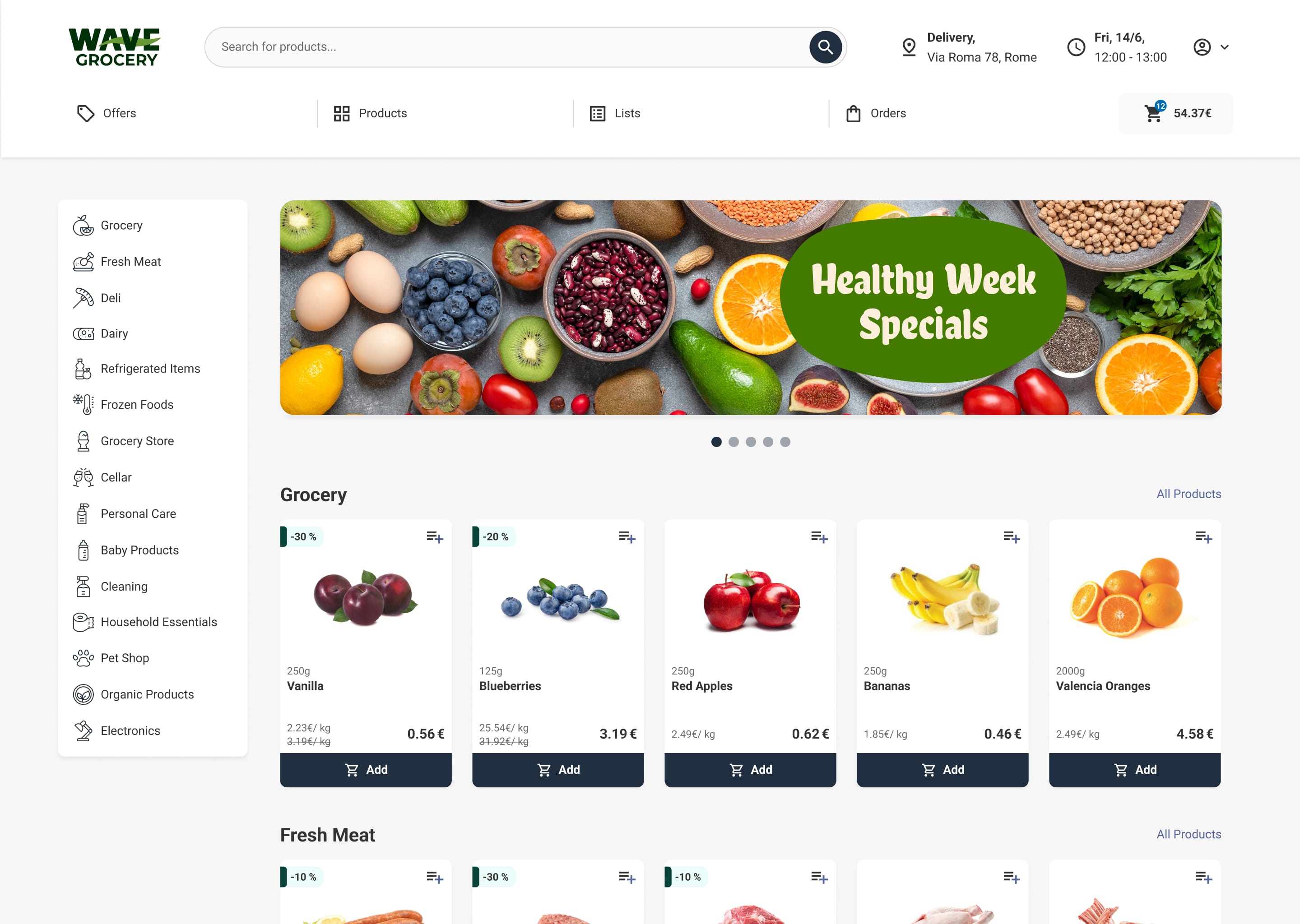
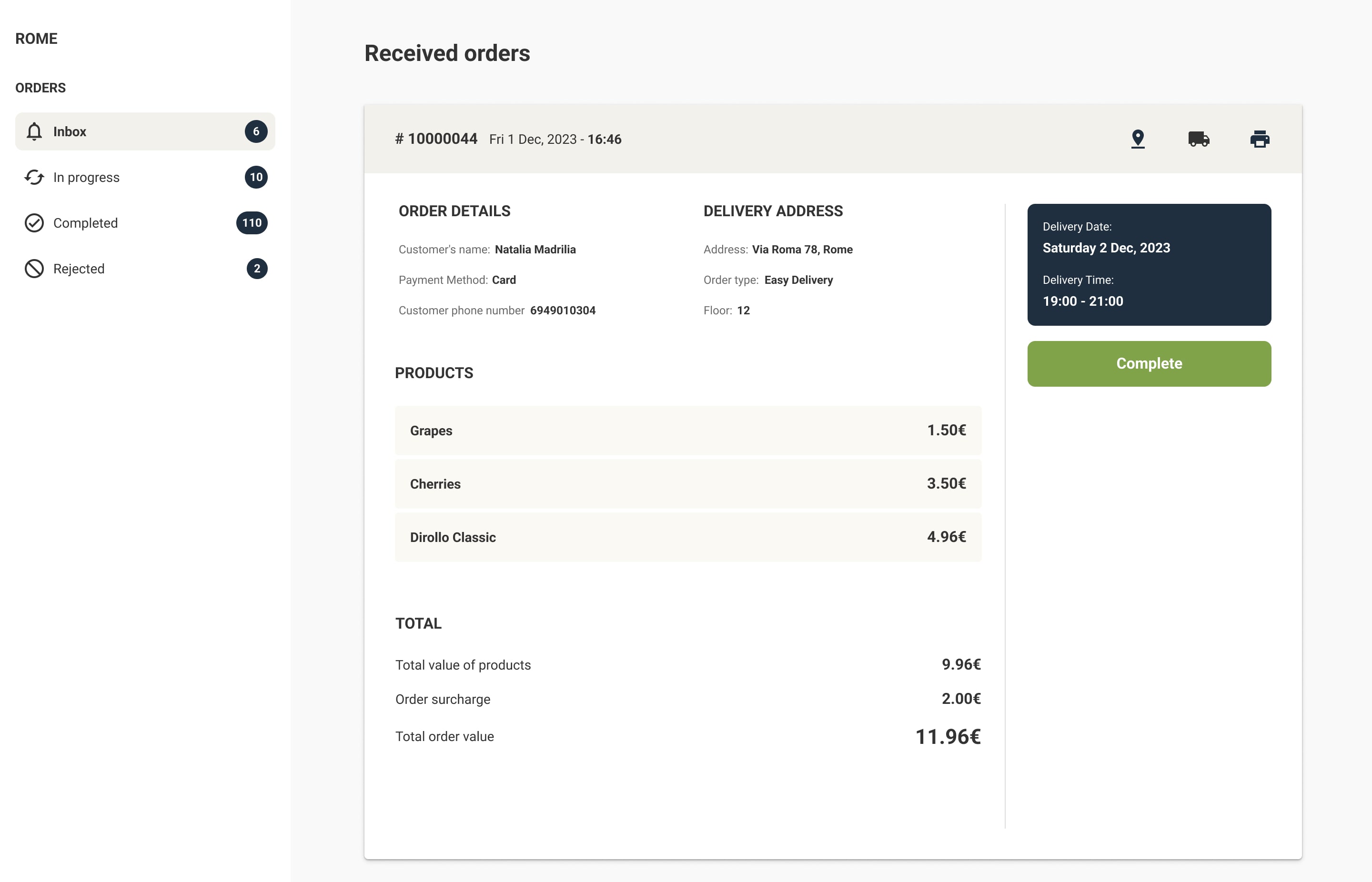
This is what Wave Grocery is built to be: connective tissue, not a replacement platform. It plugs into the retailer's existing infrastructure (ERP, POS, payments, delivery, loyalty) through documented, monitored, API-based connectors, and adds the operational layer the retailer is missing: a storefront and apps, an admin panel, a picker app, and an optional delivery layer.
A price change in the ERP is reflected on the storefront, in the picker app, and in the loyalty engine without anyone touching a spreadsheet. That's the whole product.
What "integration-first" actually means in practice
Integration-first isn't a marketing line. It changes what the retailer has to do to go live, and what they have to keep doing afterwards.
The retailer's ERP stays the system of record. Wave Grocery doesn't ask the retailer to migrate their catalog or their store hierarchy into a new database. It syncs to the existing one using the retailer's own product IDs, with a create-or-update model, in real time or on a schedule. The ERP stays in charge; Wave Grocery follows it.
Payments aren't a feature; they're a routing problem. Different markets, different stores, and different basket types often need different gateways. Wave Grocery supports multiple gateways per merchant and per store, so launching in a new country doesn't mean rebuilding the checkout.
Fulfillment is bidirectional, not one-way dispatch. When an order is placed, Wave Grocery hands off to the retailer's delivery partner and pulls live status back into the customer experience and the ops dashboard. The picker app closes the loop in-store: pickers scan, substitute, and confirm totals, and the POS sees the result automatically.
Loyalty runs on the same data layer as the basket. Through Wave CXM, points, tiers, and personalized offers see the basket in real time, so the discount actually applies. Retailers with an existing loyalty system connect it via API instead. Wave CXM today processes 1.8M+ loyalty transactions a month for 350K+ customers.
Analytics is unified, not stitched together. Sales by channel, time-slot performance, top spenders, fulfillment KPIs all in one dashboard, with hooks into the BI tools the retailer already uses for teams that want to go deeper.
Why does this de-risk the migration
The reason platform replacements stall in enterprise grocery isn't price. It's risk. No CFO signs off on a project that could take the live operation offline.
Because Wave Grocery connects to existing systems instead of replacing them, the migration is staged: connect, validate flows in staging, test, and switch over by store or by market. Most retailers go live within 30 days without taking the existing operation down.
One national delivery app, backed by one of the largest telecom groups in its market, used this model to launch its grocery vertical: Wave Grocery connected the app's order flow, fleet, and customer accounts to its own catalog, inventory, payments, and picker app. The grocery vertical launched at scale on existing delivery infrastructure, with no parallel rebuild.
The numbers behind the claim
Wave Grocery today supports 700+ stores and processes €2M+ in monthly grocery sales across 45,000+ transactions. It's built by Desquared, a digital product company founded in 2012 and backed by Deutsche Telekom.
The full picture of what's connected across ERP, CRM, POS, payments, delivery, support, analytics, and loyalty lives on the integrations page.
The takeaway
The retailers winning online aren't the ones with the prettiest storefronts. They're the ones whose storefront is backed by a connected operating model where the ERP, the checkout, the picker, and the loyalty engine see the same basket at the same time.
Integration isn't a feature on the roadmap. It's the product.
See how Wave Grocery connects to your existing stack.
%2520copy.jpeg)
Tasos Koskolos is Head of Product, applying an engineering mindset to e-grocery tools that boost throughput, accuracy, and customer loyalty.

Our editorial team works hand-in-hand with grocery experts and digital specialists to deliver actionable content designed to help your business thrive online. Each article is built on real industry insights and practical guidance for grocers, providing actual solutions to real problems.