Online grocery is no longer a side channel. According to Insider Intelligence, online grocery will account for more than 13% of total U.S. grocery sales by 2027, and McKinsey's State of Grocery Retail reports that digitally engaged shoppers spend up to 1.5x more per year than store-only customers. The question for most retailers is no longer whether to go digital, it's how.
And that's where the build-vs-buy-vs-marketplace debate starts. Custom builds are expensive and slow. Marketplaces like Instacart or Wolt give you volume, but hand your customer relationship and your margin to someone else. A white label grocery app platform sits in the middle: a ready-made, grocery-native foundation that you rebrand and launch as your own.
This guide cuts through the noise. We've evaluated ten white label grocery app platforms side-by-side, with honest notes on where each one shines and where it doesn't. If you're shortlisting a branded grocery ecommerce app for 2026, start here.
For a deeper look at what a high-performing grocery stack actually needs under the hood, our The Technical Blueprint for a High-Performance Grocery App + Loyalty (Expert article) is a useful companion read.
What is a white label grocery app?
A white label grocery app is a pre-built, customisable software platform that a grocery retailer rebrands and deploys as its own, typically covering a web storefront, native iOS/Android apps, an in-store picker tool, and an admin back-office. Unlike a marketplace, every touchpoint carries your brand, not someone else's. And unlike a custom build, the hard engineering problems (checkout, weighted items, substitutions, delivery windows, payments, loyalty) are already solved.
It's worth drawing three distinctions:
- White label vs. custom build. Custom gives you total flexibility but typically costs $250K–$1M+ and takes 9–18 months before you see revenue. A white label grocery app platform compresses that to weeks.
- White label vs. aggregator marketplace. Instacart-style marketplaces bring instant traffic, but you lose margin (commissions of 15–30%), data ownership, and direct customer loyalty. A private label grocery app keeps the relationship, and the P&L, yours.
- White label vs. generic ecommerce. Shopify or WooCommerce can sell anything, but they weren't built for grocery's edge cases: random-weight items, substitutions, multiple temperature zones, picker workflows, or store-level inventory. Grocery-native platforms handle these out of the box.
If payments are top of mind for your team, our guide on How to Accept Online Payments for Grocery: Why POS Integration Matters is a practical next read.
How we evaluated each platform
Rather than scoring every feature under the sun, we focused on the three criteria grocery operators actually use when shortlisting:
- Time to launch — how fast can a new grocer be live and transacting?
- Grocery-native feature depth — does it handle weighted items, substitutions, picker workflows, loyalty, and promotions without custom work?
- Integration flexibility — how cleanly does it plug into existing POS, ERP, WMS, and payment stacks?
Pricing is intentionally not a ranking factor: almost every vendor in this space quotes custom, and comparing apples to apples is impossible without your specific volume and store count. We flag pricing signals in the body where they're publicly known.
The 10 best white label grocery app platforms in 2026
1. Wave Grocery
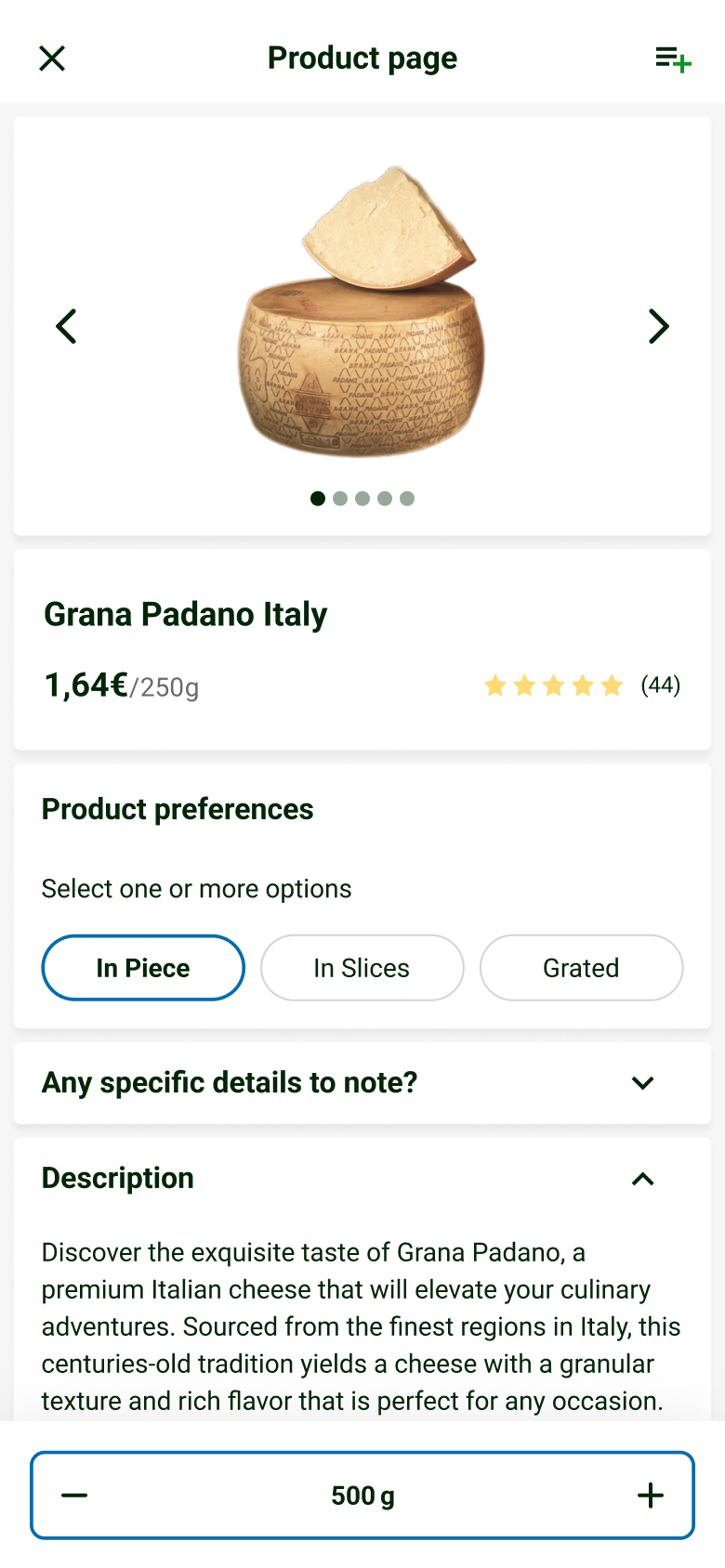
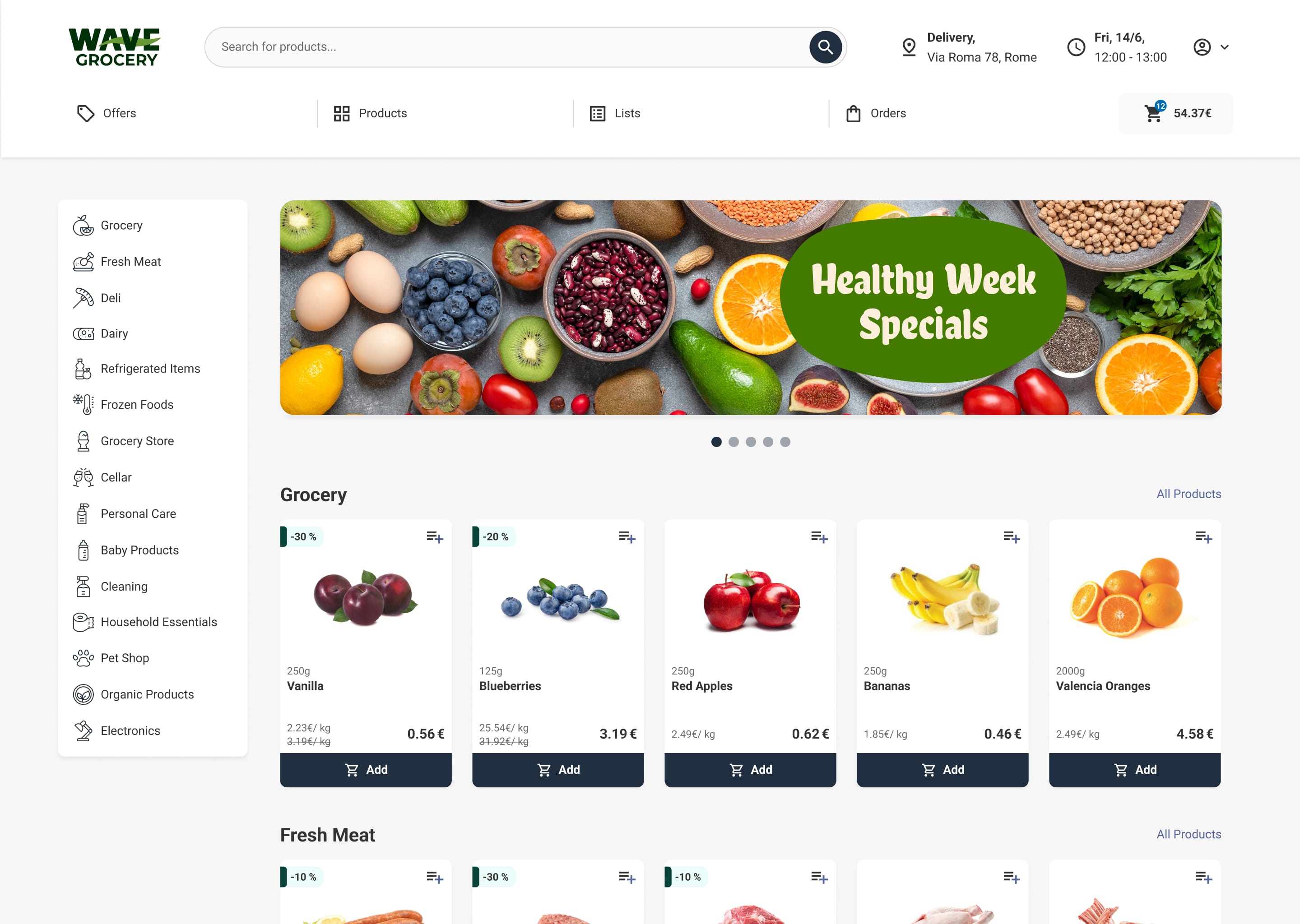
Wave Grocery is an end-to-end white label grocery ecommerce platform covering a branded web storefront, native mobile apps, a picker app, loyalty, and a back-office, designed specifically for supermarket chains that want to own the digital channel without running an in-house product team.
Strengths
- Fully branded mobile + web apps configured to match each retailer's identity.
- Purpose-built picker app that speeds in-store fulfillment and reduces substitution errors.
- Native loyalty and promotions engine, so retention tooling isn't a third-party bolt-on.
Limitations
- Best suited for mid-market and enterprise grocery chains; very small independents may not use the full breadth of the platform.
- Primarily focused on the grocery vertical, not a fit for retailers looking for a generic commerce stack.
Best for: Regional and national grocery chains that want a branded, grocery-native ecosystem live in weeks, not quarters. See how it plays out in practice in our [Case Studies] How grocers win on mobile with Wave Grocery.
2. Mercatus
Mercatus is a long-standing grocery ecommerce platform focused on regional grocers in North America. Its strength is depth, it has been built around the operational realities of running a supermarket chain online.
Strengths
- Deep grocery-native feature set (weighted items, substitutions, promotions).
- Mature shopper-behavior research baked into the product roadmap.
Limitations
- Heavier implementation process; less suited for fast, lightweight launches.
- Primarily North-America-centric.
Best for: Established regional grocers in the US/Canada looking for a mature partner.
3. Instacart Platform (Storefront Pro)
Instacart's white label offering lets US retailers launch a branded ecommerce experience that plugs into Instacart's fulfillment and shopper network.
Strengths
- Immediate access to Instacart's shopper and delivery network.
- Fast to launch for retailers already in the Instacart ecosystem.
Limitations
- Dependency on Instacart's infrastructure and commercial terms.
- Less flexibility for bespoke loyalty or deeply custom flows.
Best for: US retailers who want to outsource fulfillment without losing their brand.
4. Local Express
Local Express positions itself as a flexible white label grocery app for independents and mid-sized chains, with ecommerce, delivery, and marketing tools bundled together.
Strengths
- Quick onboarding, clear pricing tiers.
- Good fit for specialty and ethnic grocers.
Limitations
- Feature depth varies by tier, advanced capabilities require higher plans.
Best for: Independents and specialty grocers that want to go live quickly.
5. MyCloudGrocer
MyCloudGrocer is a grocery ecommerce software platform built exclusively for supermarkets, with strong support for complex inventories.
Strengths
- Handles random-weight items and complex SKU structures out of the box.
- Award-winning UX for supermarket shoppers.
Limitations
- Mobile experience has historically trailed web in feature parity.
Best for: Supermarkets with deep, complex catalogs.
6. Rosie
Rosie is a popular grocery app builder for retailers serving independent grocers across the US.
Strengths
- Purpose-built for independents, with a vibrant customer community.
- Straightforward onboarding and training.
Limitations
- Less suited to large multi-store chains or complex loyalty needs.
Best for: US independent grocers.
7. Freshop
Freshop specialises in grocery ecommerce with deep POS integrations, a favourite among chains with legacy in-store systems.
Strengths
- Strong POS integration catalog.
- Mature back-office for multi-store operations.
Limitations
- Front-end experience can feel dated compared to newer entrants.
Best for: Multi-store chains with complex POS/ERP environments.
8. Swiftly
Swiftly blends a branded grocery ecommerce app with retail media and in-store advertising capabilities.
Strengths
- Monetisation beyond basket margin through retail media.
- Solid mobile-first experience.
Limitations
- Retail-media focus makes it less relevant for grocers not pursuing ad revenue.
Best for: Retailers with scale and ambition in retail media.
9. ShopHero
ShopHero is a quick-launch custom grocery app solution with grocery-specific features like interactive digital circulars.
Strengths
- Very fast time to launch.
- Digital circulars and weekly-ad features built in.
Limitations
- Integration options are narrower than enterprise-grade competitors.
Best for: Smaller grocers who want a low-friction go-live.
10. Self Point
Self Point combines a white label storefront with delivery orchestration, helping grocers manage in-house and third-party fleets side by side.
Strengths
- Flexible delivery orchestration across couriers.
- Strong operations-side tooling.
Limitations
- Front-end customisation less granular than some competitors.
Best for: Grocers balancing in-house and outsourced delivery.
How to choose the right white label grocery app platform
The right choice is less about the longest feature list and more about the sharpest fit. Five questions to pressure-test any shortlist:
- Do we need native mobile in year one, or is web-first enough? Mobile drives repeat behaviour, but some retailers sequence it in phase two.
- How tight must POS/ERP integration be? Real-time inventory is non-negotiable for chains with high SKU churn.
- What does our picking workflow actually look like? A picker app that saves 30 seconds per order compounds fast at scale.
- Is loyalty a core pillar — and is it built-in or bolted on? Native loyalty reduces integration debt and unlocks personalisation earlier.
- What is our realistic go-live date? If it's under six months, rule out any platform whose typical implementation runs longer than that.
The bottom line
There is no single "best" white label grocery app platform, there's the best fit for your footprint, tech stack, and ambition. Narrow by the three criteria that matter (speed, grocery depth, integrations), then stress-test the shortlist against the five questions above.
FAQ
What is a white label grocery app?
A white label grocery app is a ready-made, customisable software platform that a grocery retailer rebrands and launches as its own, covering the storefront, mobile apps, picker tooling, and back-office. It gives retailers a grocery-native foundation without the time and cost of a custom build.
How much does a white label grocery app cost?
Most vendors quote custom pricing based on store count, SKU volume, and required integrations. As a rough benchmark, expect setup fees in the low tens of thousands, plus a recurring subscription or revenue-share. That is typically 70–90% cheaper than a comparable custom build, and far faster to deploy.
White label vs. custom build; which is better for grocers?
Custom builds make sense only when you have highly unusual workflows, significant engineering capacity in-house, and the patience for a 12-month-plus timeline. For 90% of grocers, a white label grocery app platform delivers the same outcomes in a fraction of the time and cost.
How long does it take to launch a white label grocery app?
Fast-launch platforms can have a branded storefront live in 4–8 weeks. Enterprise implementations with deep POS and ERP integrations typically take 3–6 months. Anything longer than that and you should ask hard questions about scope.
Can a white label grocery app integrate with my existing POS?
Yes, most serious platforms in this space ship with connectors or APIs for major grocery POS systems (LS Retail, ECRS, ISS45, Retalix, GK, and more). Confirm your specific POS is supported before you sign; ad-hoc integrations add time and cost.
Is a white label grocery app worth it compared to listing on Instacart?
Marketplaces bring volume, but they sit between you and your shopper and take a meaningful slice of the margin. A white label grocery app keeps the customer relationship, the data, and the upside with you, and you can still complement it with marketplace listings for acquisition. The best operators use both, but own the core experience.
%2520copy.jpeg)
Tasos Koskolos is Head of Product, applying an engineering mindset to e-grocery tools that boost throughput, accuracy, and customer loyalty.

Our editorial team works hand-in-hand with grocery experts and digital specialists to deliver actionable content designed to help your business thrive online. Each article is built on real industry insights and practical guidance for grocers, providing actual solutions to real problems.