Building an online grocery brand customers come back to starts with one question: how do I enhance customer experience at every step of the shopping journey? Between an endless homepage scroll, a slow checkout, a missed substitution and a late delivery, there are dozens of moments where a shopper decides to stay or delete your app.
Grocery is now firmly a digital channel. U.S. online grocery sales hit a record $12.7 billion in December 2025, up 32% year-over-year, and an estimated 61% of U.S. households now shop for groceries online at least occasionally. But rising demand is not the same as rising loyalty. Shoppers are mobile-first, price-sensitive and one bad experience away from switching.
This guide is a 2026 playbook for the 5 pillars that separate a top-rated grocery app from one that never earns a second order, with the latest data to back each one and the features that actually move the needle.
Why customer experience is essential for online grocery shopping
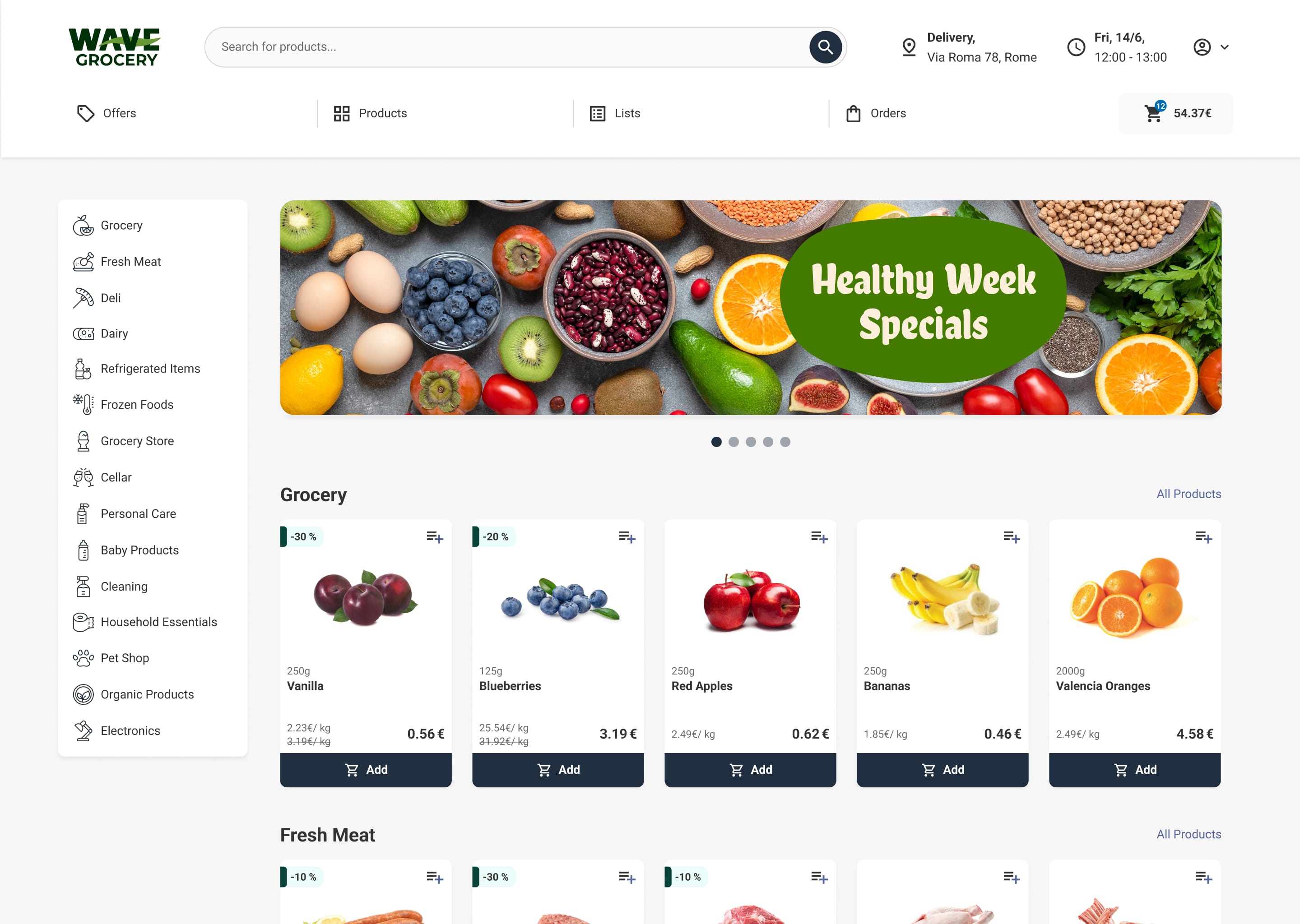
Customer experience in online grocery is the sum of everything before, during and after a purchase: how fast someone finds a product on your homepage, how smooth checkout feels at a 40–80 item basket, whether substitutions make sense, how accurately the order arrives, and how quickly support answers when something goes wrong.
There is no weak link you can afford. PwC’s 2025 Customer Experience Survey found that 70% of executives believe customer expectations are outpacing their organization’s ability to adapt, which is exactly where competitors win. Zendesk’s 2025 CX Trends Report makes the same point: today’s shoppers expect AI-powered, personalized service that still feels human, and they reward brands that deliver it with loyalty and punish the ones that don’t.
Grocery is especially unforgiving. When shoppers rated their most recent online grocery experience, supermarkets scored the highest satisfaction of any channel: 4.45 out of 5, ahead of Amazon (4.32), mass retailers (4.25) and dollar stores (3.68). That’s the benchmark. And 79% of online grocery customers plan to maintain or increase their use of the channel over the next year, so the category is not shrinking for any grocer that drops the ball.
Convenience was the entry ticket. In 2026, CX is the game.
5 ways to enhance customer experience in your online grocery store
These five pillars are the difference between an app customers open every week and one they uninstall after a single bad substitution. Each maps to a capability you can measure, invest in and improve today.
1. Remove friction from the ordering and checkout process
A grocery checkout is not a $20 impulse buy. It’s a 40–80 item basket and a disrupted weekly routine if it fails, which is why every extra tap costs you a customer.
Grocery already has the lowest cart abandonment rate of any e-commerce category: around 50% of online grocery carts are abandoned, vs. 70–77% across the wider industry. But on mobile, where most grocery shopping now happens, cart abandonment climbs to 78.7%. And checkout UX improvements alone can deliver a 35.3% conversion lift.
Optimize your online grocery checkout with:
- Fewer taps from cart to “order placed”: a zero-friction flow, not a multi-page form.
- Multiple payment methods including Apple Pay, Google Pay, local options and saved-card autofill.
- Guest checkout for first-time shoppers and persistent, cross-device carts for returning ones.
- Hardened retries on payment and loyalty calls, so a single integration hiccup does not cost you the basket.
- Real-time stock validation at checkout, not after the order is placed, to prevent cancellation surprises.
On mobile especially, the difference between a 4.8-rated app and a 3.2-rated one often comes down to whether the last three taps before “Pay” feel effortless or flaky.
2. Personalize the shopping journey to drive retention
Personalization is no longer a differentiator. It’s the baseline. A WebEngage study of grocery shoppers found 93% prefer personalized promotions for products they actually buy, and grocers that personalize using purchase history report 3x higher offer redemption, 15% higher customer satisfaction scores and 20% more loyalty-program participation. Separately, 70% of shoppers now expect personalized experiences across retail touchpoints, especially in grocery.
The reason is simple: grocery is habitual. If your store slows the weekly shop, you don’t lose a sale; you lose the customer for a month. And since 50% of new grocery customers don’t return after their first month, earning that second basket is the whole game.
High-performing grocery apps use personalization to remove decisions, not add them:
- Smart reorder and favorites on the home screen, so a weekly customer gets to a 55-item basket in one tap.
- AI “For You” recommendations based on shopper segments, past orders and basket composition.
- Semantic search with typo tolerance, dietary filters and local-language handling.
- Frequently bought together prompts at the product and cart level.
- Behavior-triggered push: restock alerts, price drops on favorites, smart reorder nudges, not generic broadcast spam.
Investments in personalization are generating conversion lifts of up to 45% for grocery retailers, making it one of the highest-ROI CX levers available today.
3. Nail fulfillment: stock accuracy, substitutions, and flexible delivery
This is where generic e-commerce breaks down, because a grocery basket is not packaged SKUs alone. It’s fresh, weighed, substitutable and time-sensitive.
Three fulfillment failures destroy online grocery CX faster than anything else.
1. Silent out-of-stocks. Research shows that more than a quarter of online grocery shoppers experience an out-of-stock every six months, and at some retailers that rate climbs to 48%. A joint Boston College / Instacart study of 840,000 shoppers found that showing low-stock alerts before checkout increased per-customer revenue by 5.3% and order frequency by 4.9%, because shoppers could switch to a better-stocked alternative themselves.
2. Bad substitutions. 79% of shoppers want to be notified when an out-of-stock item is back, and 20% want the item automatically returned to their cart. Weak substitution logic erodes trust; a good one (customer-approved in advance, with intelligent picker defaults, and clear in-app communication on every change) protects the order and the relationship.
3. Delivery that doesn’t fit the customer’s day. U.S. online grocery delivery surged 30% year-over-year to $5.0 billion in August 2025, now 45% of total eGrocery spend, while pickup still captures 36.5%. Speed matters: 40% of consumers expect grocery delivery within two hours, but reliability matters more. McKinsey research shows 90% of consumers are willing to wait 2–3 days if it means avoiding fees and will trade raw speed for on-time, in-window delivery.
A grocery-ready fulfillment stack should include:
- Real-time inventory synced across web, app and in-store, with no overnight batches.
- Customer-approved substitution rules set per item, not per order.
- The “counter” experience: weighted goods, cutting preferences and item-level notes (e.g. “unripe mangoes please”).
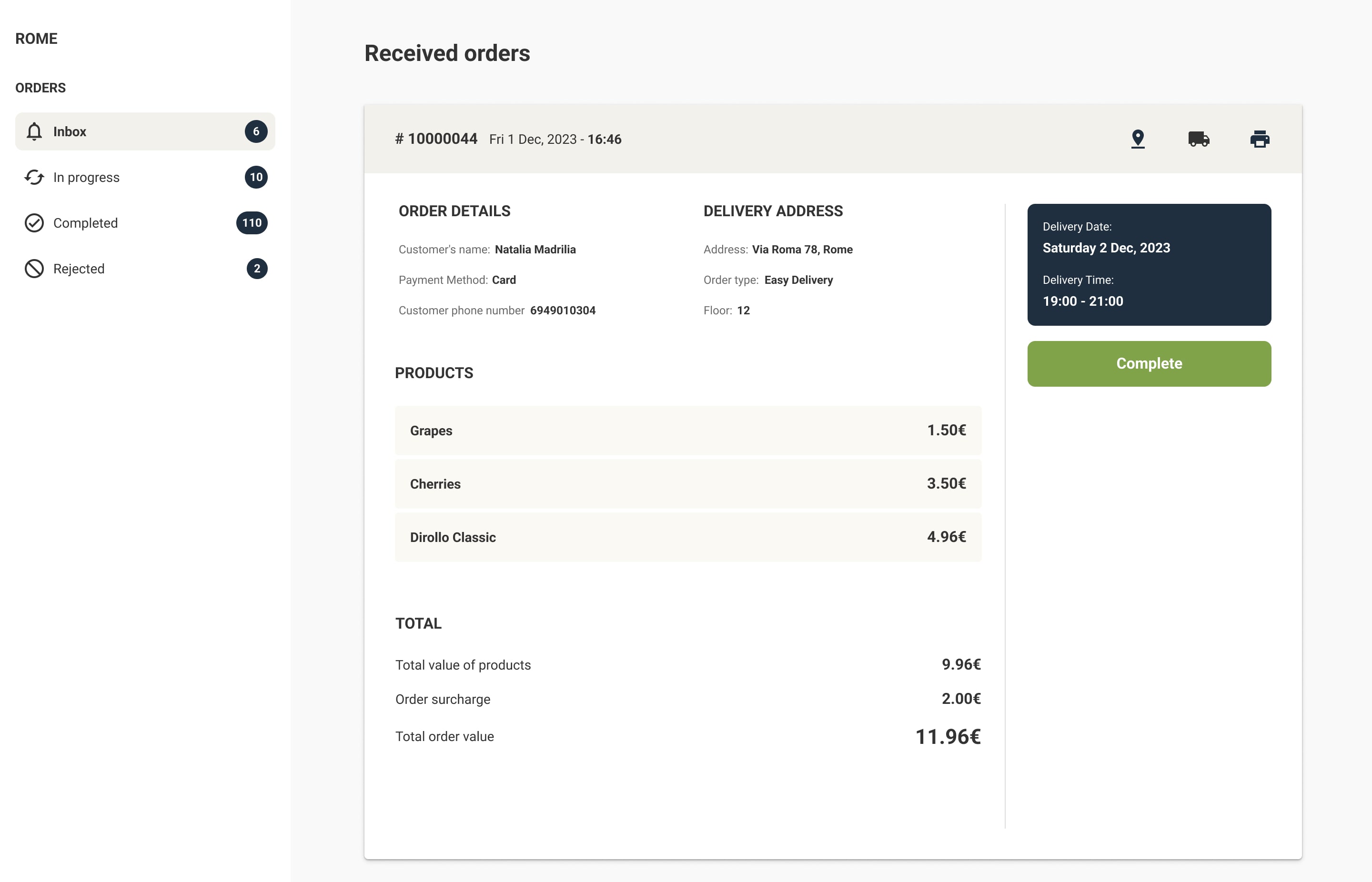
- Post-purchase order editing, because customers always remember the eggs after checkout.
- Flexible fulfillment: same-day delivery, scheduled delivery, click-and-collect and in-store pickup.
- A picker app that runs on any smartphone with live order visibility for the customer.
Grocers that nail this also solve the core delivery challenges that drag down the rest of the category’s NPS, and use the data analytics they capture along the way to refine every route and timeslot.
4. Build a grocery loyalty program customers actually open
Loyalty is no longer a points balance tucked into an account page. It’s the single biggest reason customers open your app in the first place.
88% of grocery shoppers are enrolled in at least one grocery loyalty program, and 80% have a retailer’s app on their phone. 85% of consumers say a loyalty program influences their decision to repurchase, and that figure climbs to 95% for Gen Z and Millennial shoppers. The global loyalty market is projected to more than triple from $13 billion in 2024 to $41 billion by 2032, and grocery, with its habitual purchase cycle, is one of the fastest-growing segments.
A grocery loyalty program that actually drives retention should include:
- Points, coupons and cashback applied at checkout, not on the next visit.
- Tiered rewards and segment-based offers driven by purchase history and RFM data.
- Gamification: scratch cards, wheel-of-fortune, streaks and referral bonuses.
- Digital loyalty cards in Apple Wallet and Google Pay with barcode-scan for in-store.
- Omnichannel accrual and redemption so in-store and online count the same.
Loyalty is also where personalization and CX compound. Comarch’s 2025 research found that 56% of customers will shop more frequently with a brand that sends personalized offers, and the only scalable way to personalize is with the first-party data a strong loyalty program generates.
5. Build a reliable platform that feels human
A grocery app lives or dies by what customers don’t see: the backend.
When checkout times out under promo load, when loyalty doesn’t sync, when the picker app goes offline, when one slow ERP call cascades into a crash screen, none of that is invisible to the shopper. It shows up as a failed weekly order. And 52% of customers say they are willing to switch to a competitor after just one bad experience.
A CX-ready grocery platform demands:
- 99.999% uptime with auto-scaling through pay-day, holiday and promo peaks.
- Real-time, bi-directional integrations with ERP, POS, loyalty, payment providers and last-mile delivery.
- Graceful degradation: last-known-good state beats a crash.
- Fault tolerance so one slow integration does not break checkout.
Reliability is the invisible half of CX. The visible half is human, accessible support. Even with AI copilots handling more and more first-line contact, with 76% of CX leaders already using or piloting AI-driven personalization, the Zendesk 2025 research is blunt: trust and loyalty are built when AI makes support feel more human, not less.
Practically, that means:
- Live chat on web and native app, with clear escalation paths to a human.
- Mobile-first support channels, because most of your traffic is mobile.
- Proactive notifications (stock back, order updated, substitution confirmed) that head off tickets before they’re filed.
Reliability plus humane support is what keeps a 4.8 rating from slipping to a 3.2 after a busy weekend.
Conclusion
Online grocery is now a $363 billion U.S. category: mainstream, mobile, and unforgiving. Customer experience is the moat.
The grocers pulling ahead in 2026 are not the ones with the most features. They’re the ones who invest in five compounding pillars:
- Friction-free ordering and checkout, optimized for mobile.
- Personalization that removes decisions and earns the second basket.
- Grocery-native fulfillment: accurate stock, smart substitutions, flexible delivery.
- A loyalty engine customers actually open, powered by first-party data.
- A reliable platform and human-centered support that survive your worst day.
Happy shoppers support thriving grocers. The investment to enhance customer experience in your online grocery store pays back in higher conversion, deeper retention, bigger baskets and a 4.8 rating no competitor can copy overnight.
Frequently asked questions
What are the best ways to enhance customer experience in an online grocery store?
There are five pillars that separate top-rated grocery apps from the ones customers abandon: a friction-free ordering and checkout process, personalization that removes decisions, grocery-native fulfillment (accurate stock, smart substitutions, flexible delivery), a loyalty program customers actually open, and a reliable platform backed by human, accessible support. Winning grocers invest in all five together, because weakness in any one pillar drags the others down.
How do I reduce cart abandonment in my online grocery store?
Grocery has the lowest cart abandonment rate of any e-commerce category at roughly 50%, but on mobile it climbs to 78.7%. To reduce it, minimize the number of taps between cart and “order placed”, support multiple payment methods including Apple Pay and Google Pay, offer guest checkout plus persistent cross-device carts, build hardened retries into payment and loyalty flows, and validate stock in real time before the customer hits “Pay”. Even baseline checkout UX improvements can deliver a ~35% conversion lift.
How does personalization improve online grocery retention?
Personalization is now a baseline expectation: 93% of grocery shoppers prefer personalized promotions for products they actually buy, and 70% expect personalized experiences across retail touchpoints, especially in grocery. The most effective grocery personalization removes decisions rather than adding them: smart reorders, favorites on the home screen, AI “For You” recommendations, semantic search with typo tolerance, and frequently-bought-together prompts. Grocers that personalize well report conversion lifts of up to 45% and 3x higher offer redemption, the fastest path to the critical second basket.
What is the best substitution strategy for online grocery?
Over a quarter of online grocery shoppers experience an out-of-stock every six months, and poor substitutions are one of the top causes of churn. A best-practice substitution strategy lets customers approve rules per item in advance, gives pickers intelligent defaults, and communicates every change via the app. Pairing this with low-stock alerts before checkout is especially powerful: research on 840,000 shoppers found that advance low-stock notifications increased per-customer revenue by 5.3% and order frequency by 4.9%, because shoppers switched to better-stocked alternatives themselves.
Does a grocery loyalty program actually increase customer retention?
Yes. 88% of grocery shoppers are enrolled in at least one grocery loyalty program, and 85% of consumers (rising to 95% for Gen Z and Millennials) say a loyalty program influences their decision to repurchase. Effective grocery loyalty programs combine points, coupons and cashback applied at checkout with tiered rewards, segment-based offers, gamification (scratch cards, streaks, referrals), digital loyalty cards in Apple Wallet and Google Pay, and omnichannel accrual so in-store and online count the same. Loyalty also generates the first-party data that makes personalization work at scale.
What do customers want from an online grocery store?
Online grocery shoppers want the convenience of buying from home without giving up the customization of a physical store. Core expectations include accurate real-time stock, weighted and cut-to-order fresh products, fast and reliable delivery or click-and-collect, personalized product discovery, a zero-friction mobile checkout, a meaningful loyalty program, and responsive customer support when something goes wrong. Increasingly, they also expect all of this on their phone: mobile is now the primary surface for grocery e-commerce.
What is the market potential for online grocery in 2026?
Online grocery is now a mainstream and still fast-growing channel. U.S. online grocery sales hit a record $12.7 billion in December 2025, up 32% year-over-year, and Americans are projected to spend more than $363 billion on online groceries in 2026. With 61% of U.S. households shopping for groceries online at least occasionally and Gen Z and Millennial shoppers continuing to drive category growth, the opportunity for grocers that get customer experience right is substantial, and the cost of getting it wrong is rising.
%2520copy.jpeg)
Tasos Koskolos is Head of Product, applying an engineering mindset to e-grocery tools that boost throughput, accuracy, and customer loyalty.

Our editorial team works hand-in-hand with grocery experts and digital specialists to deliver actionable content designed to help your business thrive online. Each article is built on real industry insights and practical guidance for grocers, providing actual solutions to real problems.