Online grocery fulfillment is a margin game. The difference between a profitable operation and a lossmaking one is often decided after checkout: how fast you pick, how accurately you substitute, how cleanly you stage, and how reliably you deliver.
The challenge is that “fulfillment software” can mean different things:
Storelevel picking + substitutions + staging (the “do we get the order right?” layer)
Order orchestration / OMS (the “where do we fulfill from?” layer)
Lastmile delivery orchestration (the “how do we deliver on time?” layer)
Warehouse / MFC execution (WMS + automation) (the “can we handle volume efficiently?” layer)
This list focuses on software that helps grocery retailers improve at least one of those layers and, ideally, connect them.
1) Wave Grocery Best endtoend grocery order fulfillment platform
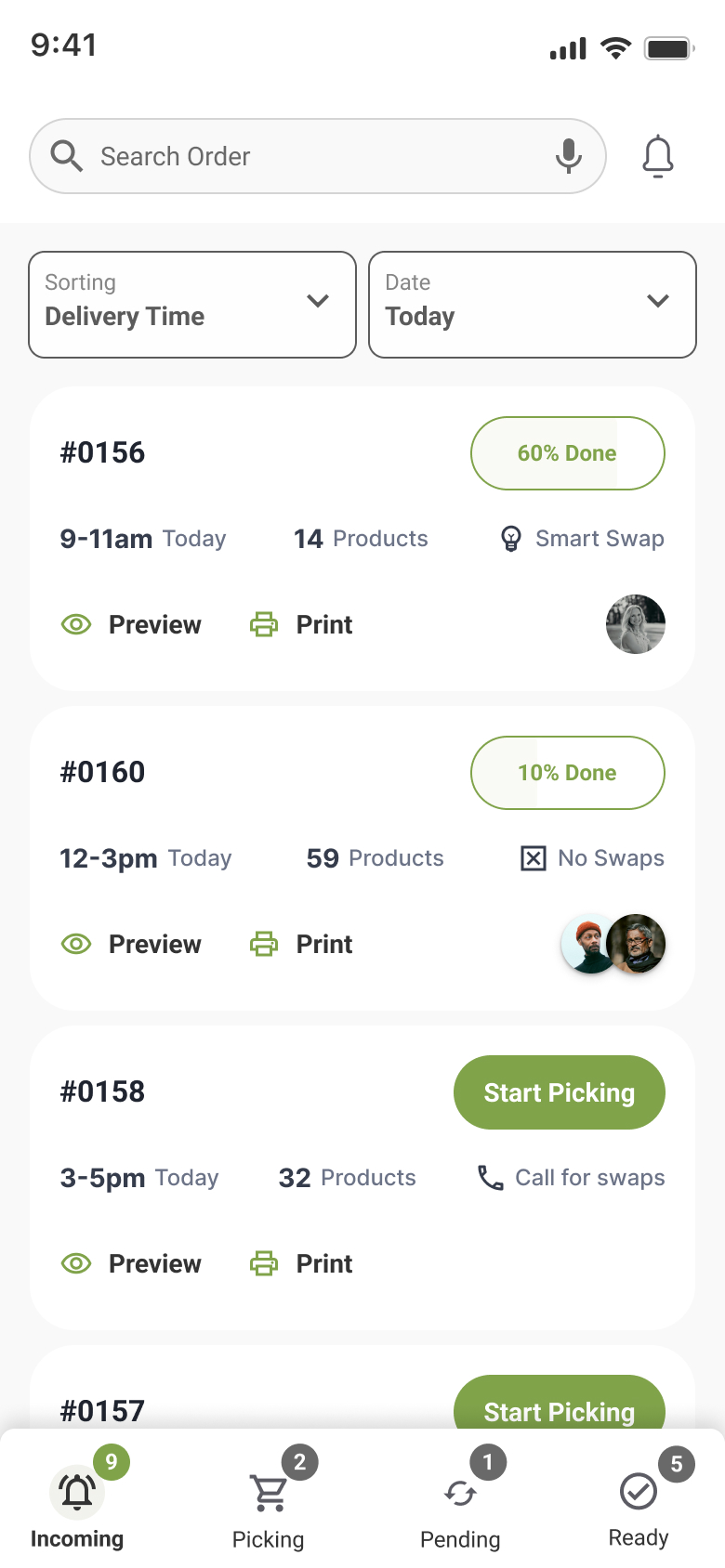
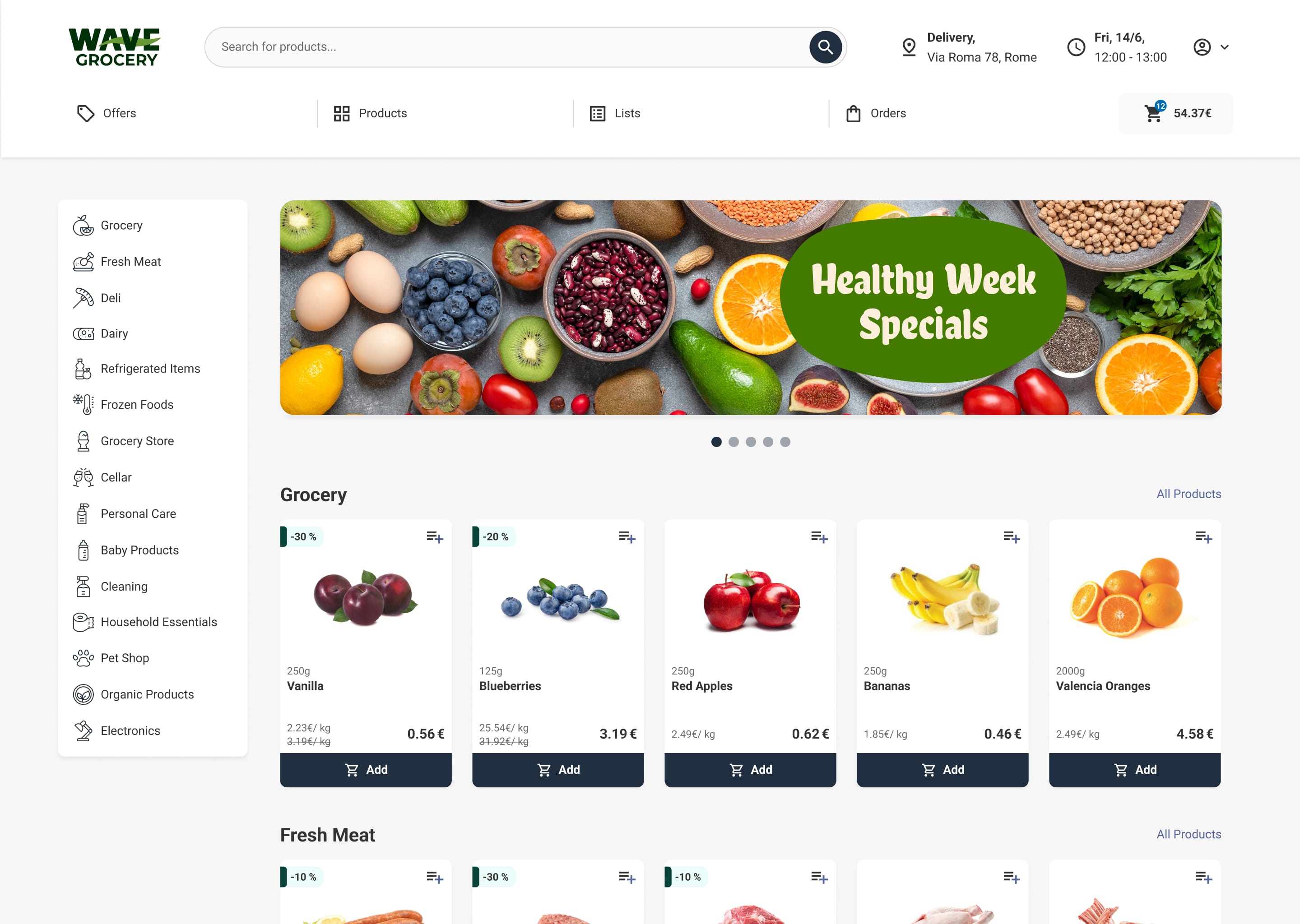
Wave Grocery is a groceryfirst ecommerce platform that’s designed to handle fulfillment complexity without stitching together multiple point tools. It covers the “from checkout to delivery” operational flow: order management, picking, substitutions, staging, and delivery execution with groceryspecific mechanics in mind (weighted items, outofstocks, delivery slots, high SKU catalogs).
What it does well (fulfillment lens)
Unified workflow: fewer handoffs between systems (less room for errors)
Picking execution: guided picking workflows built for store teams
Substitutions & availability: structured handling for outofstocks (critical for grocery CX)
Operational visibility: one view of order status across pickup and delivery
Pros
Built specifically for grocery fulfillment workflows
Supports storebased fulfillment and scalable operations
Designed to connect planning (what customers order) with execution (what staff picks & delivers)
Cons
Overkill if you only need a single narrow component (e.g., route optimization only)
Best for
Midtolarge grocery retailers who want to improve fulfillment KPIs without building a custom stack.
2) Mercatus Best for enterprise grocers managing fulfillment + multiple lastmile partners
Mercatus positions its fulfillment capabilities around costtoserve and flexible delivery options. The platform supports different fulfillment strategies (inhouse picking, hybrid, thirdparty delivery) and emphasizes integrations with lastmile partners so grocers can scale convenience without losing operational control.
Pros
Strong enterprise orientation (operational control + partner integrations)
Designed for complex omnichannel scenarios
Focused on profitability levers, not just “get it delivered”
Cons
Best fit when you have enough volume/complexity to justify a larger platform rollout
Best for
Grocery chains and enterprise grocers optimizing the economics of delivery and pickup.
3) Instacart Platform Best for speedtomarket + delivery capacity
Instacart Platform is a pragmatic route if your immediate priority is to offer online ordering and reliable delivery coverage quickly. It can be especially compelling when you’re resourceconstrained and need a working fulfillment/delivery experience without building a lot internally.
Pros
Fast route to a functional online ordering + delivery experience
Access to established delivery capacity
Familiar consumer UX patterns
Cons
Channel control and margin economics can be less favorable vs ownedstack approaches
Strategic dependency risk (policy/fees/experience changes)
Best for
Grocers who need to launch (or relaunch) online fulfillment quickly and validate demand.
4) Local Express Best allinone option for independent grocers
Local Express is often chosen by independent and regional grocers who need an ecommerce + fulfillment workflow that’s more grocerynative than generic ecommerce. It’s positioned around store enablement: online ordering, pickup and delivery flows, and daytoday operational support.
Pros
Groceryfirst orientation (vs general ecommerce tools)
Designed for local store operations and fast onboarding
Good fit for independent grocers and smaller chains
Cons
Depending on region, your integration ecosystem may be smaller than larger enterprise suites
Best for
Independent grocers and smaller chains that fulfill from stores and want an allinone platform.
5) Freshop (NCR Voyix) Best for POSconnected grocers
Freshop is commonly evaluated by grocers who want an ecommerce + fulfillment layer that connects well to core store systems (POS, loyalty, etc.). For many retailers, “fulfillment problems” start upstream: inaccurate stock, mismatched pricing, and disconnected promo data. A strong integration baseline reduces rework in picking and substitutions.
Pros
Strong grocery footprint and integration story
Supports omnichannel needs (pickup + delivery)
Familiar for grocers already in certain retail tech ecosystems
Cons
Experience/customization can be more constrained vs building a bespoke workflow
Best for
Grocers who want fulfillment execution improvements with dependable integration into store systems.
6) StrongPoint Best for instore picking efficiency
If you fulfill from stores, picking speed and accuracy can be your biggest controllable lever. StrongPoint is purposebuilt for picking execution: route optimization, store workflows, and training speed so teams pick more orders per shift with less friction.
Pros
Designed specifically for instore picking workflows
Fast onboarding and training (store teams adopt quickly)
Helps reduce labor waste in storebased fulfillment
Cons
It’s not an OMS/commerce platform; you’ll still need upstream order orchestration
Best for
Grocers with high storefulfillment volume who need measurable picking efficiency gains.
7) Manhattan Active® Warehouse Management Best for distribution centers & highvolume fulfillment
When grocery fulfillment shifts into dark stores, MFCs, or large DC operations, storelevel tools aren’t enough. Manhattan’s WMS is an enterprisegrade warehouse execution layer that can orchestrate receiving, putaway, picking, packing, automation, and shipping at scale.
Pros
Strong WMS capabilities for complex distribution environments
Built for high throughput, inventory visibility, and execution control
Suitable for automationheavy operations
Cons
Typically larger implementation effort than store picking tools
Not groceryspecific ecommerce out of the box (it’s the warehouse layer)
Best for
Large grocers, wholesalers, or operations building serious warehouse/MFC capacity.
How to choose the best grocery order fulfillment software (2026 buyer guide)
1) Start with your fulfillment model
Instore picking: optimize picking, substitutions, staging, capacity, and labor
Dark store / MFC / DC: prioritize WMS + automation + inventory control
Hybrid: ensure order routing logic is solid (what ships from where, and why)
2) Evaluate the “groceryspecific” requirements
Grocery fulfillment is different from standard ecommerce. Check support for:
weighted and variableweight items
substitution rules & customer preferences
slot management and capacity planning
multitemperature handling (if applicable)
high SKU discovery + picking practicality
3) Optimize for costtoserve (not just speed)
The cheapest delivery is the one you don’t have to redo:
fewer picking errors
fewer substitutions that cause complaints/refunds
fewer late deliveries
fewer split orders across locations
4) Confirm integrations early
Most fulfillment friction is integration friction:
POS + inventory accuracy
ERP/product master data
payments, loyalty, and promo logic
lastmile partners (or your own fleet)
Methodology (how this list was built)
We prioritized:
• grocery relevance (not generic warehousing only)
• direct impact on fulfillment KPIs (speed, accuracy, substitutions, ontime delivery)
• fit across store fulfillment vs warehouse fulfillment (so teams can shortlist based on model)
Final thoughts
The “best” grocery fulfillment software depends on where you fulfill from (stores vs DCs), how complex your operations are, and whether your priority is speed, margin, or customer experience.
If your goal is to reduce fulfillment chaos quickly, pick a stack that matches your fulfillment model, then optimize relentlessly around the few KPIs that actually move profit: pick rate, pick accuracy, substitution acceptance, and ontime delivery.


Our editorial team works hand-in-hand with grocery experts and digital specialists to deliver actionable content designed to help your business thrive online. Each article is built on real industry insights and practical guidance for grocers, providing actual solutions to real problems.