Global online grocery sales crossed $650 billion in 2025 and are projected to reach $810 billion by 2026. In the U.S. alone, 61% of households now buy groceries online, and the channel recorded its highest-ever monthly sales of $12.7 billion in December 2025, a 32% year-over-year jump.
Most grocery retailers already have a mobile app.
The problem is that many of those apps were never built for grocery.
They struggle with large carts, slow checkout processes, substitutions, loyalty integration, and the operational complexity of grocery fulfillment. The result isn't just a slightly worse experience; it's lost revenue, abandoned carts, and weakened customer loyalty.
Meanwhile, mobile has become the dominant e-commerce channel. More than 70% of online shoppers now buy through their phones, and mobile apps convert at rates up to 157% higher than mobile browsers.
For grocery retailers, the question is no longer whether to invest in a grocery mobile app.
It's whether the app you have is actually designed to convert, retain customers, and support grocery operations at scale.
This article breaks down what separates high-performing grocery mobile apps from those that quietly hold retailers back.
Why Mobile Is Becoming the Primary Grocery Channel
The shift toward mobile grocery shopping is not temporary. It represents a structural change in consumer behavior.
Online grocery penetration in the U.S. reached 14–15% of total grocery spending in 2025, with projections suggesting it may exceed 20% within the next few years. Globally, the online grocery delivery market is expected to grow from $391 billion to more than $1.5 trillion by 2031.
Yet many retailers approach mobile the wrong way.
They assume that joining a marketplace is the same as building a mobile strategy.
Platforms such as Instacart, Wolt, and Uber Eats provide distribution, but they do not give retailers ownership of the customer relationship.
On a marketplace:
- Customer data belongs to the platform
- Brand experience is standardized
- Customer loyalty shifts toward the marketplace brand
- Commission fees can reach 15–30% per order
In other words, retailers are renting visibility rather than building loyalty.
A retailer-owned grocery mobile app creates a fundamentally different dynamic.
It enables grocers to:
- Own their customer data
- Control the shopping experience
- Build direct loyalty relationships
- Run personalized promotions and retention strategies
Most importantly, it gives retailers control over the entire digital shopping journey, from discovery to checkout to post-purchase engagement.
Because in grocery ecommerce, small friction points can quickly translate into large revenue losses.
A failed checkout flow doesn't just lose a small purchase; it can mean losing a €120–€200 weekly basket and potentially the customer's entire routine.
The 5 Pillars of a High-Performing Grocery Mobile App
Instead of focusing on features, it's more useful to evaluate a grocery mobile app platform based on the outcomes it enables.
Across successful grocery retailers, five capabilities consistently determine whether an app becomes a growth engine or simply another digital channel.
1. Checkout That Protects Revenue
Checkout is where grocery apps either capture revenue or lose it.
Unlike other ecommerce categories, grocery orders often contain 40–80 items and represent an entire weekly shop. Losing a cart at this stage means losing a high-value order.
A conversion-safe checkout includes:
Fast and simple flows
Customers should be able to move from cart to confirmation in as few steps as possible.
Multiple payment options
Cards, digital wallets, and regional payment methods must work reliably, even during traffic spikes.
Reliable loyalty redemption
Coupons, cashback, and points must apply correctly at checkout. When loyalty flows fail, customers rarely attempt the transaction again.
Peak traffic stability
Grocery apps experience predictable spikes during weekends, holidays, and promotions. Infrastructure must remain stable during these moments.
Even modest improvements here can have a major impact:
- Checkout design improvements alone can increase conversion rates by 35% (Baymard Institute)
- Removing forced account creation can lift conversion rates by up to 30% (Baymard Institute / Amazon Pay)
To put this in context, grocery-focused mobile apps with checkout flows designed specifically for large baskets and complex payment scenarios have achieved conversion rates of 6.2%, more than double the industry average of 3%. The gap comes down to how well the checkout handles grocery-specific edge cases: weighted items, coupon stacking, loyalty redemption, and slot selection.
2. Retention That Builds Weekly Habits
Customer acquisition in grocery is expensive.
Retention is where profitability emerges.
A single grocery order may be worth €100, but a loyal weekly shopper can generate €5,000 or more annually.
The most successful grocery mobile apps focus on habit formation, not just transactions.
Key mechanisms include:
Saved shopping lists
Customers can quickly recreate their typical weekly baskets.
Smart reorders
Previously purchased items are surfaced automatically.
Personalized product recommendations
Machine learning identifies relevant items based on purchasing history.
Behavior-based push notifications
Notifications triggered by real shopping patterns, rather than generic promotional blasts.
Over time, these features turn the app into the default shopping channel for recurring grocery purchases.
3. Fulfillment Built for Grocery Complexity
Grocery fulfillment introduces challenges that traditional e-commerce platforms rarely address well.
Retailers must manage:
- perishable goods
- weighted products
- substitutions
- pickup scheduling
- delivery routing
- real-time inventory across multiple locations
A purpose-built grocery mobile app platform connects the customer experience directly to fulfillment operations.
Essential capabilities include:
Flexible pickup and delivery scheduling
Time slots based on delivery zones and operational capacity.
Smart substitution workflows
Customers can approve substitutions automatically or set replacement preferences in advance.
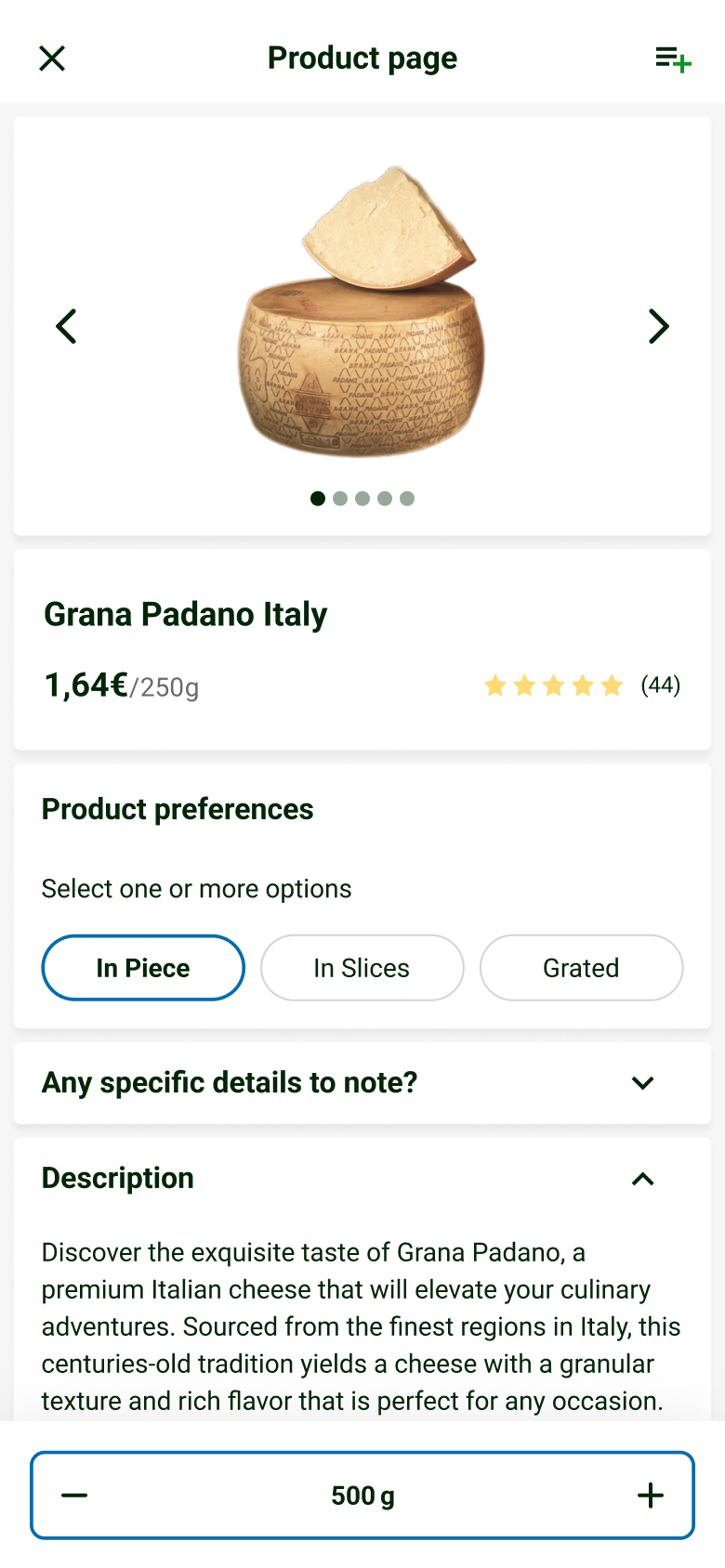
Items like produce, meat, and cheese require flexible quantity and weight management.
Store-based fulfillment support
Retail locations can operate as micro-fulfillment centers, reducing delivery costs and improving speed.
Generic e-commerce solutions rarely handle these scenarios effectively.
The difference shows up in real operations. One 400-store grocery chain in Greece converted more than 40 existing retail locations into micro-fulfillment centers in under three months using a purpose-built grocery platform. Picking time dropped from roughly 45 minutes to 22 minutes per order, delivery efficiency improved by 35%, and online fulfillment scaled 7×, all while maintaining a 4.7/5 app store rating.
4. A Loyalty Engine - Not Just a Loyalty Card
Many retailers technically have loyalty programs.
But those programs often exist outside the core shopping experience.
High-performing grocery mobile apps embed loyalty directly into the customer journey.
This includes:
Reward systems
Points, cashback, or stamps visible and redeemable throughout the shopping process.
Engagement mechanics
Instant rewards, challenges, and promotional games that increase app engagement.
Customer segmentation tools
Marketing teams can run targeted campaigns for high-value customers, lapsed shoppers, or specific regions.
Referral programs
Satisfied customers become a powerful acquisition channel.
When loyalty is integrated deeply into the mobile experience, retailers see higher purchase frequency, stronger retention, and larger basket sizes.
5. An Operational Backbone That Scales
A successful grocery mobile app depends on far more than customer-facing design.
Behind the interface sits a complex operational system.
A scalable grocery ecommerce platform must support:
Catalog and promotion management
Retail teams should manage products, pricing, and campaigns without requiring developer involvement.
Real-time connections with ERP, POS, CRM, and logistics systems ensure operational accuracy.
Operational tools
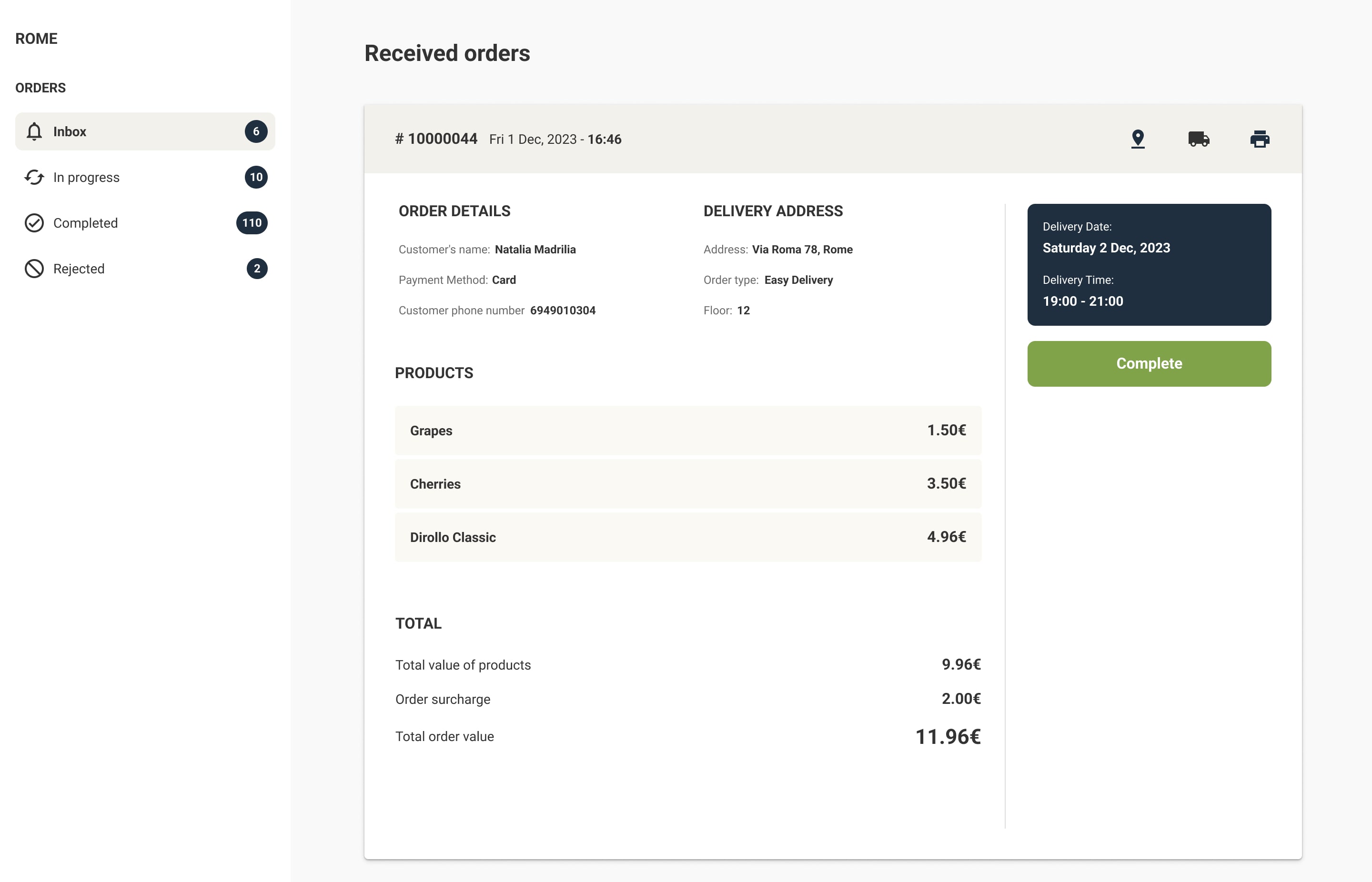
Picker apps, barcode scanning, delivery routing, and proof-of-delivery capabilities streamline order fulfillment.
Retailers gain visibility into sales performance, operational efficiency, and customer behavior.
When these systems work together effectively, digital grocery operations can scale smoothly as order volume grows.
How a Grocery Mobile App Drives Business Growth
A well-designed grocery mobile app is more than a digital storefront.
It becomes a key growth driver for modern grocery retailers.
Key impact areas include:
Every interaction inside a grocery mobile app generates valuable insights:
- purchase frequency
- category preferences
- price sensitivity
- shopping patterns
This data enables retailers to refine promotions, optimize inventory, and build stronger customer relationships over time.
The Cost of Waiting
Some grocery retailers delay investment in a stronger mobile experience because their current solution feels "good enough."
But the long-term cost of waiting can be significant.
Heavy reliance on marketplaces often leads to:
- shrinking margins due to commissions
- weaker brand differentiation
- limited access to customer data
- reduced long-term customer loyalty
Over time, the marketplace, not the retailer, becomes the brand customers remember.
A retailer-owned grocery mobile app reverses this dynamic by placing customer relationships back under the retailer's control.
The Technical Foundation of a High-Performing Grocery Mobile App Platform
From a technical perspective, grocery mobile apps must support demanding operational conditions.
Usage patterns often include predictable demand spikes, large cart sizes, and continuous synchronization with pricing and inventory systems.
A reliable grocery mobile app platform must support:
Auto-scaling infrastructure
Traffic surges during promotions or holidays should never cause downtime.
Graceful system degradation
If an external system slows down, the customer experience should remain usable rather than collapsing.
Hardened payment flows
Retry logic, clear error handling, and reliable coupon processing prevent checkout failures.
Stable integrations
Real-time synchronization between ERP, POS, CRM, and logistics platforms ensures pricing accuracy and inventory consistency.
These technical foundations are often invisible to customers, but they determine whether the platform performs reliably at scale.
How to Know If Your Current App Is Holding You Back
Not every retailer needs to rebuild their digital stack.
However, many grocery mobile apps struggle with issues that indicate deeper platform limitations.
Warning signs include:
- checkout abandonment spikes during peak hours
- loyalty features feel disconnected from the shopping experience
- substitution workflows frustrate customers
- large product catalogs are difficult to manage
- ERP or POS integrations fail regularly
- heavy reliance on marketplace orders
- commission fees eroding margins
If several of these issues sound familiar, the challenge may not be marketing or pricing, it may be the technology platform itself.
What to Look for in a Grocery Mobile App Platform
Retailers evaluating new solutions should prioritize several critical capabilities.
- Built specifically for grocery retail
- Native support for weighted products, substitutions, and fulfillment complexity.
- True native mobile apps
- iOS and Android apps provide faster performance and significantly higher conversion rates.
- Integrated loyalty and personalization
- Core capabilities rather than third-party add-ons.
- Reliable system integrations
- Proven connections with ERP, POS, CRM, payment gateways, and logistics platforms.
- A pricing model aligned with growth
- Costs scale alongside order volume rather than requiring heavy upfront investment.
- Proven performance at scale
- Strong uptime metrics, high app ratings, and successful deployments across multiple grocery retailers.
The Future of the Grocery Mobile App
Mobile commerce is becoming the primary digital channel for grocery retail.
But simply launching an app is no longer enough.
Retailers that succeed in the next phase of digital grocery will be those that invest in a grocery mobile app designed specifically for conversion, loyalty, and operational complexity.
When the mobile experience is fast, reliable, and deeply integrated into grocery operations, it becomes more than a convenience for customers.
It becomes the foundation of long-term digital growth.
FAQ
Why is a native grocery mobile app better than a mobile website?
Native apps load faster, support push notifications, enable one-tap checkout, and convert significantly better than mobile websites. For a high-frequency category like grocery, that performance difference translates directly into revenue.
What's the difference between owning a grocery app and using a marketplace?
Marketplaces provide distribution but limit brand control and customer ownership. A retailer-owned mobile app allows direct access to customer data, personalized marketing, and stronger long-term customer relationships.
How long does it take to launch a grocery mobile app?
With a purpose-built grocery ecommerce platform, launch timelines are often measured in weeks rather than months, since the core infrastructure, integrations, and mobile frameworks are already built.
How do we know if our current app is the problem, not our marketing?
Warning signs include: checkout abandonment spiking during peak hours, loyalty features that feel disconnected from the shopping flow, substitution issues frustrating customers, and ERP or POS integrations failing regularly. If several of these apply, the bottleneck is likely the technology platform, not your campaigns or pricing
What kind of conversion improvement can we realistically expect from a native app vs. our mobile website?
Industry benchmarks show native apps convert up to 130–157% higher than mobile browsers. In grocery specifically, where carts average 40–80 items and order values reach €120–€200, even small conversion gains at checkout translate into significant revenue recovery.
Can a grocery mobile app handle the operational complexity of large-scale fulfillment?
Yes, if the platform is built specifically for grocery. Purpose-built apps natively support weighted products, real-time substitution workflows, flexible pickup and delivery scheduling, and multi-location inventory sync. Generic ecommerce platforms typically lack these capabilities out of the box.

Costas D. Aniston is Customer Success Manager, helping grocery retailers streamline operations, improve fulfillment accuracy, and achieve sustainable growth.

Our editorial team works hand-in-hand with grocery experts and digital specialists to deliver actionable content designed to help your business thrive online. Each article is built on real industry insights and practical guidance for grocers, providing actual solutions to real problems.