The best grocery inventory management software depends on the inventory problem you need to solve.
- Wave Grocery is the best fit for ERP-connected online stock accuracy, grocery ecommerce, substitutions, and fulfillment.
- UpShop is a strong option for store-level inventory, ordering, production, and fresh operations.
- ECRS CATAPULT connects inventory closely with POS and store operations.
- IT Retail suits independent supermarkets that want POS and inventory tools in one system.
- MarketMan is best for prepared-food, foodservice, and commissary inventory.
- Cin7 can support multichannel specialty food retailers and wholesalers.
- Oracle Retail and SAP suit large enterprises with complex merchandising, replenishment, and supply-chain needs.
Grocery inventory is difficult for a simple reason: the stock figure in a system is rarely the same as the quantity a customer can actually buy.
Products sell in stores and online at the same time. Fresh items expire. Some products are sold by weight. Deliveries arrive late. Promotions change demand overnight. Stock may be distributed across dozens or hundreds of locations, while ERP updates do not always reach every customer-facing channel instantly.
That is why grocery inventory management software has to do more than count units. It should help retailers keep stock data accurate, reduce overselling and waste, improve replenishment, and connect inventory decisions with ordering, picking, substitutions, and fulfillment.
This guide compares eight grocery inventory management software options for 2026. The platforms do not all solve the same layer of the inventory problem: some focus on store execution, some on POS and replenishment, some on ecommerce availability, and others on enterprise planning. The right shortlist starts with identifying which layer is creating the most cost or customer friction.
Quick comparison
| Software | Best for | Primary inventory strength | Typical business size | Pricing model |
|---|---|---|---|---|
| Wave Grocery | Online grocery inventory and fulfillment | ERP-connected availability, stock-aware ordering, substitutions | Mid-market and enterprise grocers | Custom subscription |
| UpShop | Store-level grocery operations | Ordering, production, fresh inventory, task execution | Regional and enterprise grocers | Custom quote |
| ECRS CATAPULT | POS-connected supermarket inventory | Unified POS, item, pricing, purchasing, and inventory data | Independent and regional grocers | Custom quote |
| IT Retail | Independent supermarkets | POS, stock tracking, purchasing, reporting | Small and mid-sized grocers | Subscription / custom |
| MarketMan | Prepared foods and foodservice | Ingredient inventory, purchasing, recipe costing, waste | Small chains, commissaries, foodservice teams | Subscription |
| Cin7 | Multichannel specialty food retail | Inventory and order synchronization across channels | Growing SMB and mid-market businesses | Subscription tiers |
| Oracle Retail | Large retail enterprises | Merchandising, replenishment, forecasting, supply chain | Enterprise grocery chains | Enterprise custom quote |
| SAP | Complex global grocery operations | Enterprise planning, procurement, inventory, finance | Large and global retailers | Enterprise licensing |
What is grocery inventory software?
Grocery inventory management software helps retailers track, control, and plan stock across stores, warehouses, ecommerce channels, and fulfillment locations. Depending on the platform, it may support purchasing, receiving, replenishment, forecasting, waste tracking, stock counts, transfers, ecommerce availability, or all of the above.
A grocery-specific system should account for challenges that generic inventory tools often treat as exceptions:
- Perishable products and short shelf lives
- Weighted and variable-weight items
- High SKU counts and frequent price changes
- Store-level assortments and availability
- Fast-moving promotional demand
- Substitutions when an ordered item is unavailable
- Online and in-store sales drawing from the same stock
- Multiple stores, warehouses, or micro-fulfillment locations
- Batch, expiry, or production requirements in fresh departments
The goal is not simply to report how much inventory exists. It is to help the business decide what can be sold, what should be ordered, where stock should be positioned, and how exceptions should be handled before they affect the customer.
How we evaluated the platforms
We compared the software against five practical criteria:
- Grocery relevance: Does the platform support supermarket, fresh-food, or grocery workflows rather than generic retail alone?
- Inventory accuracy: Can it help teams synchronize stock, reduce overselling, and understand availability by location?
- Operational coverage: Does it connect inventory to purchasing, replenishment, production, POS, ecommerce, picking, or fulfillment?
- Integration fit: Can it work with the retailer's existing ERP, POS, ecommerce, accounting, and logistics systems?
- Scalability: Is it appropriate for an independent store, a regional chain, or a complex enterprise environment?
No single platform is the best at every inventory layer. The rankings below focus on fit, not simply feature count.
The 8 best platforms in 2026
1. Wave Grocery — Best for ecommerce inventory accuracy and fulfillment
Best for: Mid-market and enterprise grocers that need to connect ERP stock with online ordering, substitutions, picking, and fulfillment.
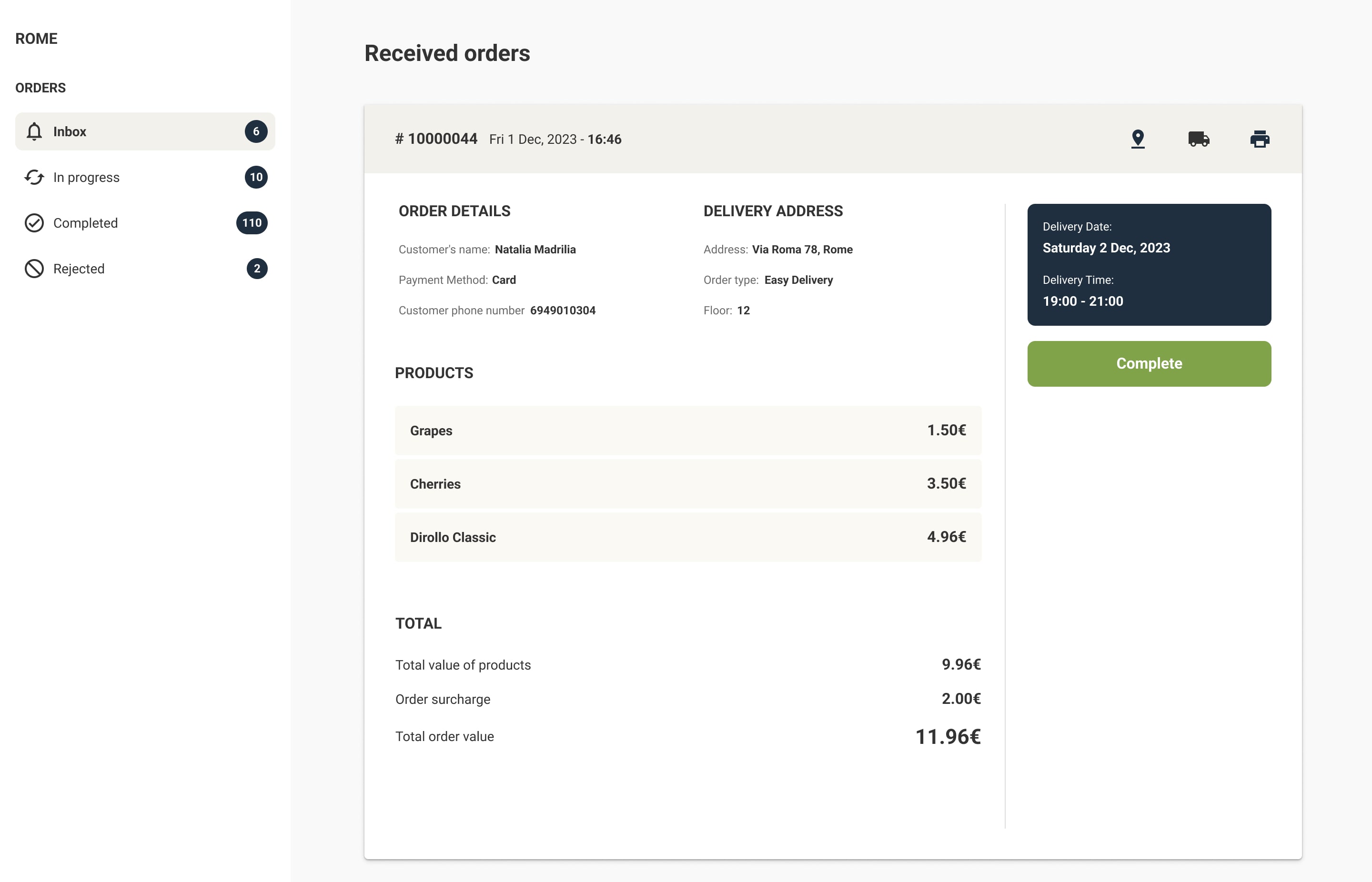
Wave Grocery is a grocery ecommerce and operations platform rather than a traditional standalone replenishment system. Its inventory strength is the connection between back-office stock data and the customer-facing ordering experience.
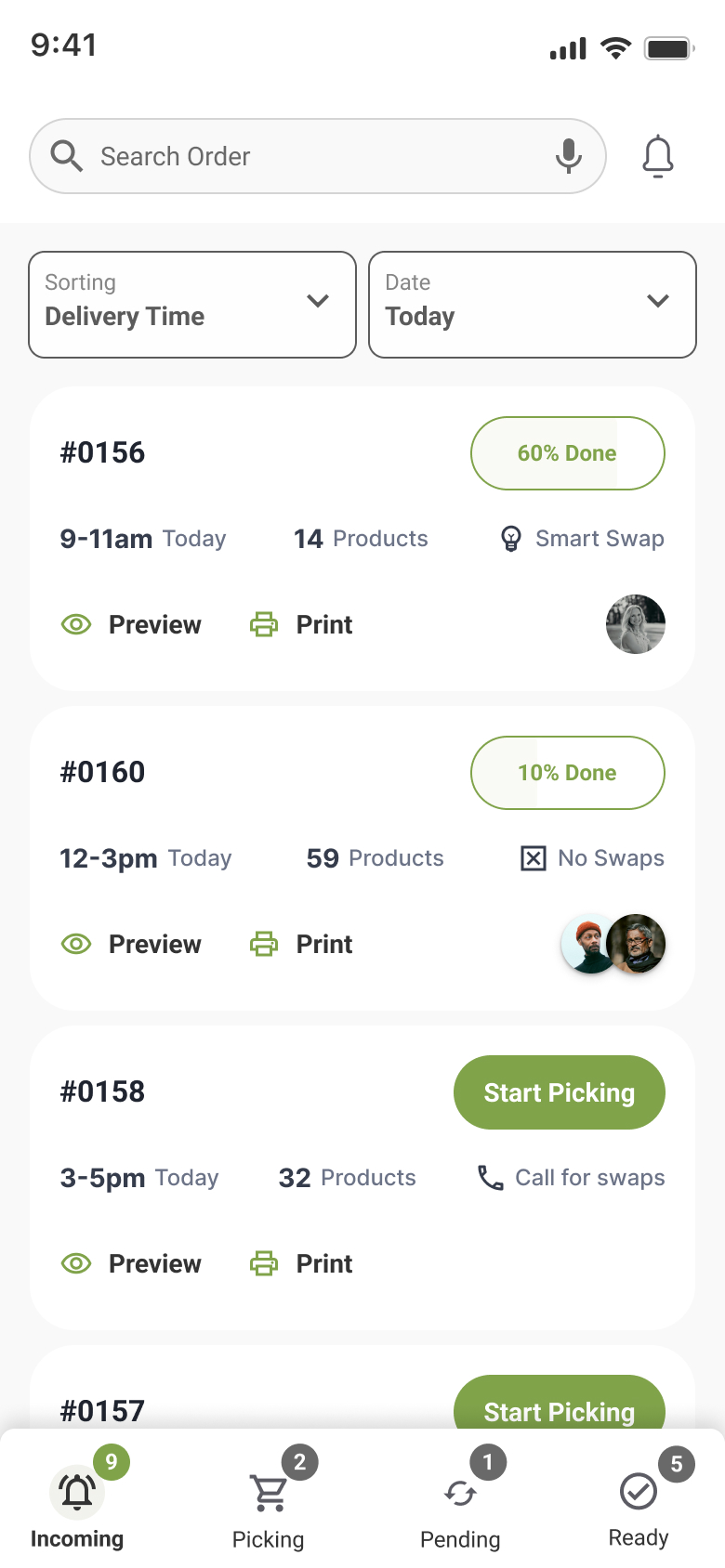
The platform can synchronize product, pricing, and stock information with ERP and retail systems, helping grocers keep online availability aligned with store operations. It also connects availability with grocery-specific workflows such as weighted products, replacements, picker execution, multi-store ordering, delivery slots, and fulfillment.
That makes Wave Grocery particularly relevant when the inventory problem appears online: customers ordering unavailable items, pickers discovering stock discrepancies, high substitution rates, or disconnected availability across stores and channels.
Key inventory strengths
- ERP and POS connectivity for stock, product, pricing, and order data
- Store-level catalogs and availability
- Grocery-specific handling for weighted products
- Stock-aware ordering and checkout validation
- Substitution workflows when an item is unavailable
- Picker tools that connect inventory exceptions with fulfillment
- Multi-store operations and local fulfillment support
- Operational dashboards for online orders and stock-related performance
Pros
- Purpose-built for online grocery rather than generic ecommerce.
- Connects stock accuracy directly to the customer and picker experience.
- Supports a broader grocery stack, including storefront, mobile app, order management, picking, delivery, and loyalty.
- Designed to integrate with existing systems instead of forcing every retailer into the same ERP or POS.
Limitations
- It is not a replacement for every procurement, warehouse, or enterprise planning capability in an ERP.
- It may be more platform than a single-store grocer needs.
- Best suited to retailers where ecommerce and fulfillment are central to the inventory problem.
Pricing: Custom subscription pricing based on modules, stores, order volume, and implementation requirements.
Best-fit scenario: A supermarket chain has inventory in its ERP, but ecommerce availability becomes stale between updates, creating overselling, substitutions, and picker friction. Wave Grocery acts as the grocery-specific commerce and fulfillment layer that turns stock data into a more reliable customer experience.
👉 Explore Wave Grocery's management software, integrations, or book a demo.
2. UpShop — Best for store-level inventory and fresh operations
Best for: Grocery chains that want to improve ordering, production planning, inventory visibility, and execution inside stores.
UpShop focuses on store operations and is especially relevant to grocers managing fresh departments, prepared foods, production, ordering, and compliance. Its value is not limited to a central inventory number; it helps store teams translate plans and forecasts into daily actions.
For grocery businesses where waste, out-of-stocks, and inconsistent store execution are major problems, this operational focus can be more useful than a broad generic inventory tool.
Key inventory strengths
- Store ordering and replenishment workflows
- Fresh-item and production planning
- Inventory visibility and task management
- Waste-reduction support
- Store execution and compliance workflows
- Forecast-informed operational decisions
Pros
- Strong grocery and fresh-food specialization.
- Connects inventory planning with actions performed by store teams.
- Useful for reducing waste and improving on-shelf availability.
Limitations
- Broader ecommerce and last-mile requirements may need separate systems.
- Implementation value depends on store adoption and process discipline.
- Pricing is not generally positioned as self-serve.
Pricing: Custom quote.
Best-fit scenario: A regional grocer wants tighter ordering and production processes across fresh departments while giving store teams a consistent daily workflow.
3. ECRS CATAPULT — Best for POS-connected grocery inventory
Best for: Independent and regional grocers that want POS, item management, purchasing, pricing, and inventory in a closely connected retail system.
ECRS CATAPULT is designed for retail environments including grocery and supermarket operations. Its inventory capabilities sit close to transaction data, allowing retailers to connect sales, purchasing, item files, pricing, promotions, and stock management.
This can reduce the friction created when the POS and inventory systems operate as separate sources of truth.
Key inventory strengths
- POS-connected inventory tracking
- Item, pricing, and promotion management
- Purchasing and receiving workflows
- Store and enterprise reporting
- Support for grocery retail operations
Pros
- Grocery-aware retail platform.
- Tight connection between sales and inventory data.
- Suitable for operators who want fewer disconnected store systems.
Limitations
- Retailers committed to another POS ecosystem may face a larger change project.
- Enterprise or highly customized ecommerce requirements should be validated early.
- Pricing requires a vendor conversation.
Pricing: Custom quote based on locations, hardware, modules, and implementation.
Best-fit scenario: An independent or regional supermarket wants a unified retail platform instead of maintaining separate POS, purchasing, and inventory tools.
4. IT Retail — Best for independent supermarkets
Best for: Independent grocers and smaller supermarket chains that need practical POS and inventory management without an enterprise-scale implementation.
IT Retail combines grocery POS capabilities with inventory, purchasing, reporting, and store-management tools. Its positioning is particularly relevant to independent supermarkets that want software designed around grocery checkout and back-office workflows.
The platform can be a pragmatic option when the main goal is to understand what is selling, manage stock, place purchase orders, and keep day-to-day store operations connected.
Key inventory strengths
- Inventory tracking tied to grocery POS
- Purchase orders and receiving
- Vendor and item management
- Reporting and sales analysis
- Multi-store options for growing operators
Pros
- Built with independent grocery operations in mind.
- More accessible than large enterprise suites.
- Connects front-of-store transactions with back-office inventory.
Limitations
- May not provide the same planning depth as enterprise merchandising suites.
- Complex ecommerce, warehouse, or global supply-chain needs may require integrations.
- Exact package fit depends on store count and hardware requirements.
Pricing: Subscription or custom package; confirm current pricing and implementation costs with the vendor.
Best-fit scenario: An independent supermarket is replacing legacy checkout software and wants inventory and purchasing to live in the same operational environment.
5. MarketMan — Best for prepared foods, commissaries, and foodservice inventory
Best for: Grocery retailers with substantial prepared-food, central-kitchen, café, bakery, or commissary operations.
MarketMan is primarily known as a restaurant and foodservice inventory platform. It becomes relevant to grocery when the operation includes recipes, ingredients, production, purchasing, supplier invoices, and food-cost control.
It is not a complete supermarket item-management suite. However, for prepared-food departments, it may offer more useful control than software designed only around packaged retail units.
Key inventory strengths
- Ingredient-level inventory
- Purchasing and supplier management
- Invoice processing
- Recipe and food-cost management
- Waste and variance tracking
- Multi-location reporting
Pros
- Strong fit for recipe-based inventory and prepared-food margins.
- Helps connect purchasing, usage, waste, and food cost.
- Suitable for multi-location foodservice operations.
Limitations
- Not designed to manage the entire supermarket catalog.
- Ecommerce stock availability and grocery fulfillment require other systems.
- Less relevant to retailers without prepared-food operations.
Pricing: Subscription plans; verify current tiers and included locations before publication.
Best-fit scenario: A grocer operates a central kitchen and multiple prepared-food counters and needs to control ingredients, recipe costs, supplier invoices, and waste.
6. Cin7 — Best for multichannel specialty food retail
Best for: Specialty food retailers, wholesalers, and growing multichannel businesses that sell through stores, ecommerce sites, and B2B channels.
Cin7 is a broad inventory and order-management platform rather than a grocery-specific system. Its strength is connecting stock and orders across multiple sales channels, warehouses, and business systems.
It can be useful for shelf-stable, specialty, packaged-food, or wholesale operations. Traditional supermarkets should test grocery edge cases carefully, particularly weighted items, substitutions, fresh production, and store-based fulfillment.
Key inventory strengths
- Multichannel inventory synchronization
- Order and warehouse management
- Purchasing and supplier workflows
- B2B and ecommerce connectivity
- Reporting and accounting integrations
Pros
- Broad integration ecosystem.
- Useful for businesses combining retail, ecommerce, and wholesale.
- More approachable than enterprise retail suites for growing companies.
Limitations
- Not purpose-built for supermarket operations.
- Grocery-specific workflows may need configuration or separate applications.
- Complexity and cost can increase as channels and integrations expand.
Pricing: Subscription tiers, with final cost depending on product edition, users, order volume, and integrations.
Best-fit scenario: A specialty food brand sells through its own stores, ecommerce storefront, marketplaces, and wholesale accounts and needs one inventory view across those channels.
7. Oracle Retail — Best for enterprise merchandising and replenishment
Best for: Large grocery chains that need enterprise-grade merchandising, forecasting, replenishment, pricing, and supply-chain capabilities.
Oracle Retail offers a broad suite for complex retail operations. Its inventory capabilities are part of a larger merchandising and planning environment, making it suitable for retailers managing many stores, suppliers, categories, and distribution points.
The trade-off is implementation scope. Enterprise breadth brings process rigor and scale, but also requires data maturity, integration planning, specialist resources, and organizational change.
Key inventory strengths
- Enterprise merchandising and item management
- Forecasting and replenishment
- Inventory visibility across locations
- Pricing and promotion capabilities
- Supply-chain and warehouse connectivity
- Large-scale analytics and planning
Pros
- Built for complex, high-volume retail environments.
- Broad coverage across planning, merchandising, and operations.
- Suitable for multi-country and multi-format retailers.
Limitations
- Significant implementation and change-management effort.
- Higher total cost of ownership than SMB-focused systems.
- Grocery ecommerce execution may still require a specialized customer and fulfillment layer.
Pricing: Enterprise custom quote.
Best-fit scenario: A national grocery group wants to standardize merchandising, replenishment, and inventory planning across a large store and distribution network.
8. SAP — Best for complex global grocery operations
Best for: Large grocery retailers that want inventory connected to procurement, finance, supply chain, warehousing, and enterprise planning.
SAP provides enterprise systems that can manage inventory as part of a much broader operational model. For global or highly complex grocers, that breadth can provide a consistent backbone across procurement, suppliers, warehouses, stores, finance, and analytics.
SAP is not a quick plug-and-play grocery inventory app. It is most appropriate when the retailer is already operating at enterprise scale or has chosen SAP as a strategic technology foundation.
Key inventory strengths
- Enterprise inventory and materials management
- Procurement and supplier processes
- Warehouse and distribution integration
- Demand and supply planning
- Financial and operational data alignment
- Support for complex organizational structures
Pros
- Extremely broad enterprise coverage.
- Strong fit for organizations that already use the SAP ecosystem.
- Can connect inventory decisions with finance and supply-chain planning.
Limitations
- Long implementation timelines and high resource requirements.
- Requires specialist configuration and governance.
- Customer-facing grocery ecommerce and fulfillment often need a dedicated layer.
Pricing: Enterprise licensing and implementation pricing.
Best-fit scenario: A multinational retailer needs inventory, procurement, finance, warehousing, and planning to operate on a shared enterprise foundation.
How to choose your platform
1. Define the inventory layer you need to fix
Before comparing demos, identify where accuracy breaks down:
- Store execution: receiving, counts, ordering, production, waste, and shelf availability
- POS and purchasing: sales deductions, purchase orders, vendors, and item files
- Ecommerce availability: stock synchronization, overselling, substitutions, and checkout validation
- Warehouse operations: receiving, storage, transfers, picking, and distribution
- Enterprise planning: forecasting, replenishment, assortment, merchandising, and procurement
Buying an enterprise planning suite will not automatically fix poor picker workflows. Likewise, a good ecommerce availability layer does not replace procurement or warehouse management.
2. Test the grocery-specific edge cases
Ask each vendor to demonstrate your real workflows, not a generic retail scenario:
- How are weighted products represented and deducted?
- What happens when ERP stock is updated periodically rather than in real time?
- Can availability differ by store and fulfillment method?
- How are substitutions handled when a picker cannot find an item?
- Does the system support expiry, batches, fresh production, or waste?
- How are promotions and seasonal demand reflected in replenishment?
- What happens when two customers try to buy the final unit?
3. Confirm the source of truth
Inventory projects fail when multiple systems believe they own the same number. Define which system owns:
- Physical stock
- Sellable or purchasable stock
- Safety buffers and manual overrides
- Ecommerce availability
- Purchase orders and replenishment
- Reservations between checkout and fulfillment
Then document how frequently each system synchronizes and what happens when an integration is delayed.
4. Evaluate total cost, not just license price
The subscription or license is only one part of the investment. Include:
- Implementation and data migration
- ERP and POS integrations
- Devices, scanners, or POS hardware
- Training and change management
- Custom reports or workflows
- Support and maintenance
- Additional ecommerce, WMS, forecasting, or fulfillment software
A cheaper tool can become expensive if teams spend years maintaining workarounds.
5. Tie the decision to operational KPIs
Useful inventory metrics include:
- Inventory accuracy
- Out-of-stock rate
- Waste and shrink
- Inventory turnover
- Days of inventory on hand
- Forecast accuracy
- Fill rate
- Substitution rate and acceptance
- Orders affected by post-checkout stockouts
- Time spent on stock counts and corrections
Choose a baseline before implementation so the team can prove whether the software improved the operation.
Software by use case
- Best for online grocery stock accuracy: Wave Grocery
- Best for store execution and fresh operations: UpShop
- Best for POS-connected regional grocers: ECRS CATAPULT
- Best for independent supermarkets: IT Retail
- Best for prepared foods and commissaries: MarketMan
- Best for specialty food and multichannel businesses: Cin7
- Best for enterprise retail merchandising: Oracle Retail
- Best for global ERP-led operations: SAP
Frequently asked questions
What is the best grocery inventory management software?
The best option depends on your operating model. Wave Grocery is a strong choice when the priority is ERP-connected ecommerce availability, substitutions, and fulfillment. UpShop focuses on store and fresh operations. ECRS CATAPULT and IT Retail connect inventory closely with grocery POS. Oracle Retail and SAP are better suited to enterprise planning and supply-chain complexity.
What features should grocery inventory software include?
At minimum, look for location-level stock visibility, purchasing and receiving, stock adjustments, role-based access, reporting, and integrations with POS or ERP systems. Depending on the operation, grocery-specific requirements may also include weighted items, expiry tracking, waste, fresh production, substitutions, reservations, ecommerce availability, and automated replenishment.
How is grocery inventory software different from a POS?
A POS records transactions and typically reduces stock when products are sold. Inventory software manages a wider process that may include purchasing, receiving, counts, transfers, replenishment, forecasting, waste, and availability across locations. Some grocery platforms combine both capabilities, while larger retailers often connect several specialized systems.
Can inventory software prevent grocery overselling online?
It can reduce overselling if customer-facing availability is updated frequently and checkout validates the latest purchasable quantity. The retailer also needs clear reservation rules, reliable ERP or POS integrations, and atomic stock deductions so two orders cannot claim the same remaining inventory.
Does inventory management software reduce food waste?
It can help by improving ordering, visibility, expiry tracking, production planning, and variance reporting. Software alone does not eliminate waste; results depend on accurate data, forecasting, store processes, supplier performance, and staff adoption.
How much does grocery inventory management software cost?
Pricing ranges from monthly subscriptions for smaller POS or inventory tools to large custom enterprise agreements. Total cost depends on store count, users, modules, transaction volume, integrations, hardware, data migration, training, and support. Compare total cost of ownership over several years rather than the starting license alone.
Final thoughts
The best grocery inventory management software is the one that fixes the retailer's most expensive inventory gap without creating a second disconnected source of truth.
Independent grocers may benefit most from a POS-connected system. Fresh-heavy chains may prioritize store ordering, production, and waste. Large enterprises may need sophisticated merchandising and replenishment. For grocers whose biggest issue is the gap between ERP inventory and online execution, Wave Grocery provides a grocery-specific layer connecting availability with ordering, substitutions, picking, and fulfillment.
Before choosing a vendor, map the current inventory flow from supplier to shelf to checkout to picker. That map will usually reveal whether you need a new system of record, a better execution tool, or a stronger connection between the systems you already use.

Our editorial team works hand-in-hand with grocery experts and digital specialists to deliver actionable content designed to help your business thrive online. Each article is built on real industry insights and practical guidance for grocers, providing actual solutions to real problems.